How a river turns brief surges into lasting change
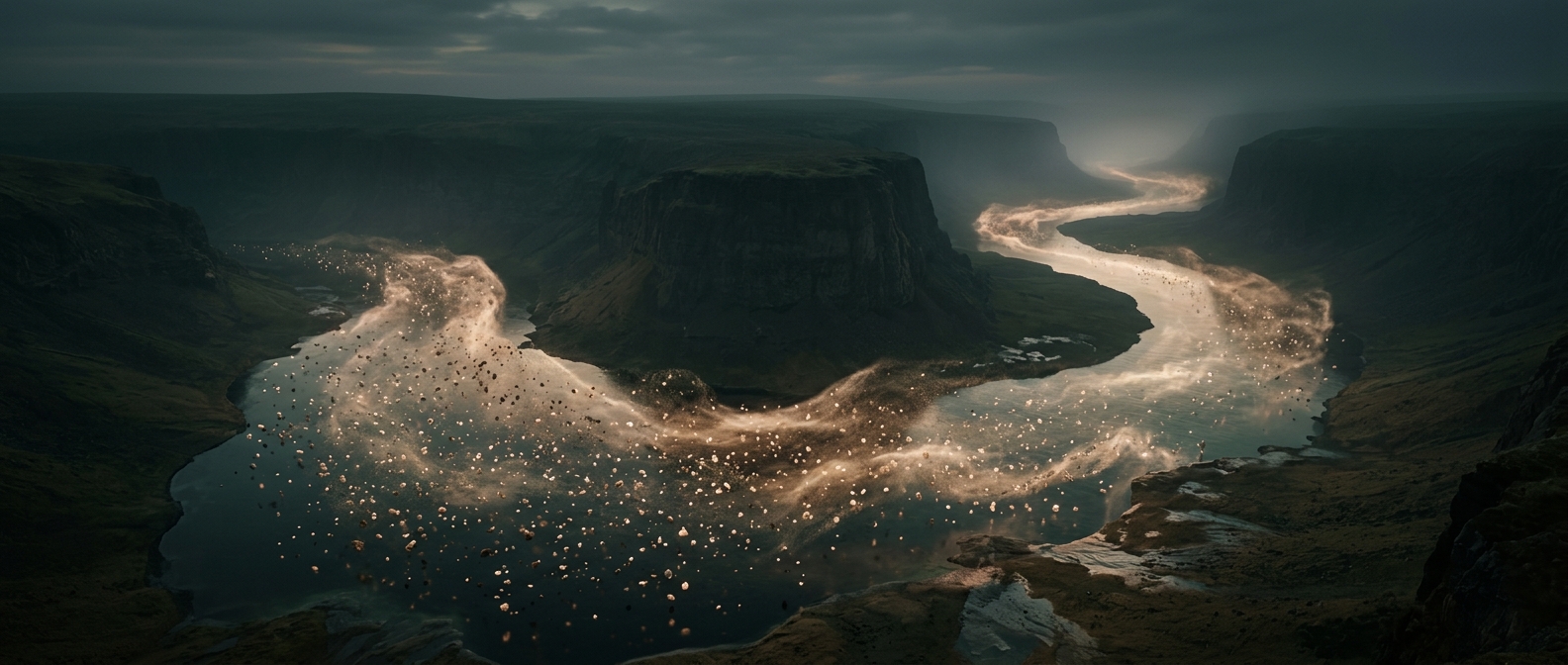
A river does not wear down its channel at a constant rate. On an ordinary day, the water may be too weak to move the largest grains on the bed. During a flood, rising speed and depth can set those grains rolling and bouncing downstream. Each one becomes a moving tool: it knocks against the bedrock, loosens small fragments, and grinds rough surfaces as it travels. This process is called abrasion.
The river’s tools also shape its power
Sediment is both the material a river carries away and the equipment it uses to erode. Sand can sandpaper a channel; larger pebbles can strike it with enough force to chip off pieces. Water can also prise loose fragments from cracks, especially where pressure and repeated impacts weaken the rock.
But a surge does not automatically carve deeply. The river needs enough force to move its tools, and the tools need to encounter rock they can wear down. If the load is too small, there is little grit to grind with. If the water cannot carry the sediment onward, it may pile up instead, covering parts of the bed rather than cutting them.
A landscape records many episodes
The channel’s shape reflects the cumulative effect of these uneven bursts. A flood may deepen a pool or shift a bend; later flows move the loosened debris farther downstream. Between powerful events, the river can appear nearly unchanged, even though the work of erosion is continuing in fits and starts.
That is why geological change can be both slow overall and intense in the moment: the long-term result is built from short periods when water can move heavy rock fragments. A river’s quiet surface is only a snapshot, not a measure of how much shaping its strongest flows can do.