A railway designed around Liverpool’s waterfront
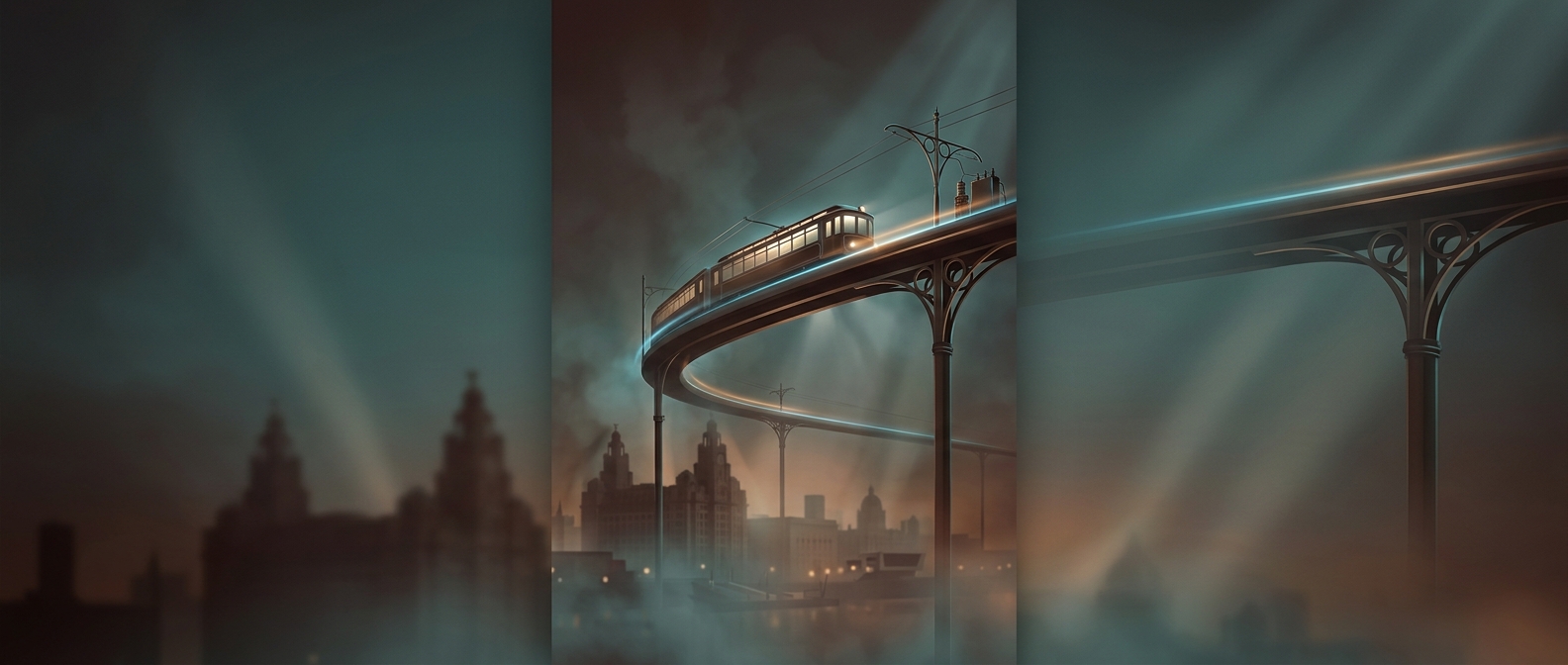
Liverpool’s docks stretched along the Mersey, while streets beside them were crowded with the daily movement of workers, carts, and goods. The Overhead Railway addressed a practical problem: how to carry passengers along this busy waterfront without adding another stream of traffic at street level. Its raised track let trains pass above the activity below and stop near the docks where people needed to go.
That elevated route was not just a striking piece of engineering. It made the railway useful as a working connection between dockside districts, especially for people travelling to and from jobs spread along the waterfront. Electric trains could serve the route without the smoke of steam locomotives, an important advantage on a line running close to workplaces and buildings.
The difference between a transport link and a park
The Overhead Railway and New York’s High Line both occupied elevated rail corridors, but they answered different needs. Liverpool’s line carried passengers while the docks were active; the High Line became a public promenade after its original railway use ended. Liverpool’s railway was built to move people through a working landscape, not to offer views of it.
That distinction explains why the railway’s legacy is more than its resemblance to a modern urban park. It shows how elevation can solve a city’s immediate transport problem—and how an infrastructure project’s purpose can change dramatically when the activity around it changes.