The desk stopped being the center of the job
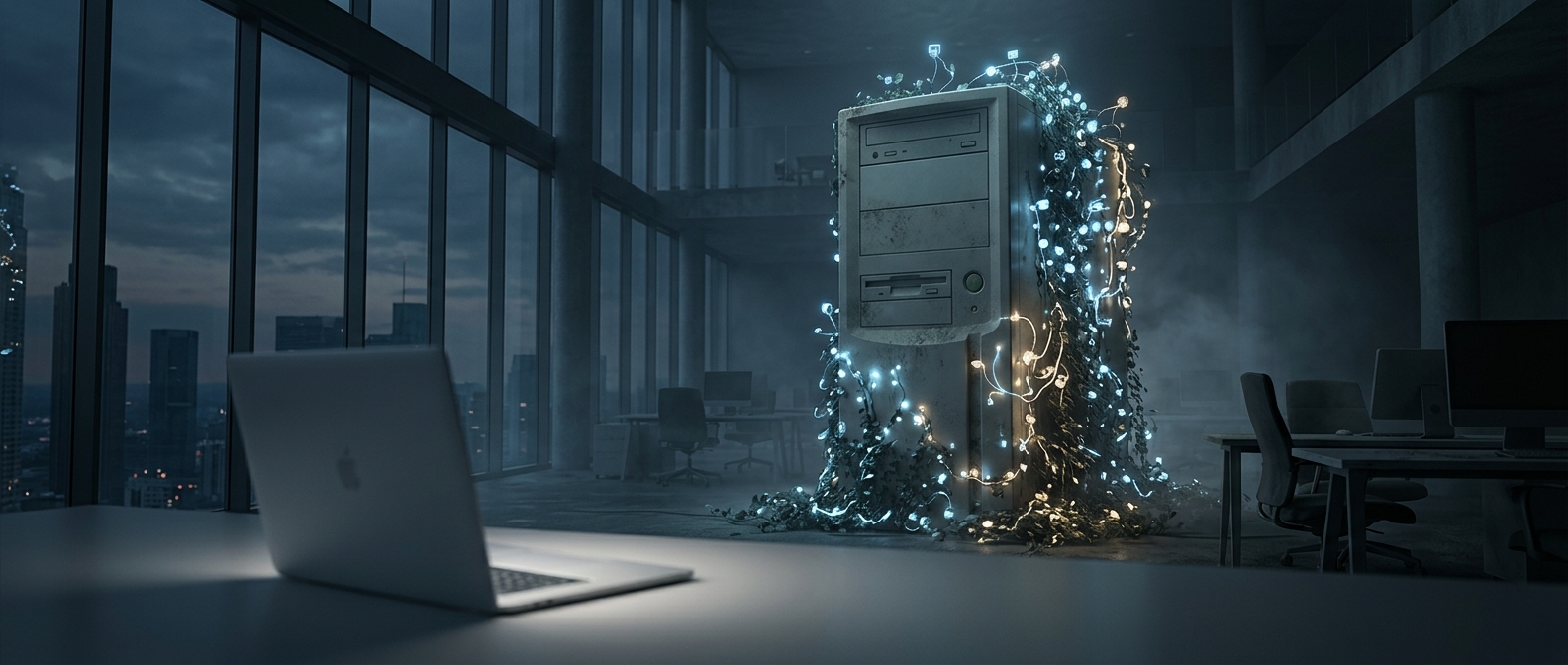
A desktop computer assumes a stable workplace: the main components sit under or beside one desk, connected to a monitor, keyboard, and power. When employees began splitting time among home, office, and other locations, that arrangement made the computer itself a logistical problem. A laptop combines the screen, keyboard, battery, and processing hardware in one portable machine, so the same device can travel with its user instead of being tied to a particular workstation.
The shift depended on more than smaller hardware
Portability works best when files and work tools are not trapped on one office computer. Cloud-based systems store or run information on remote servers and make it available over the internet, letting employees continue work from different devices and places. Company networks and software also had to support secure access outside the office. Together, those changes reduced the need for a powerful, fixed machine at every desk.
Laptops do involve tradeoffs: compact parts have less room for cooling and upgrades, and batteries eventually need recharging. But for many everyday office tasks, the convenience of carrying one computer between locations outweighed the advantages of a permanent tower. Offices could also use shared monitors, keyboards, and docking stations, giving a laptop a desktop-like setup when someone sat down at a desk.
The computer followed the worker
The deeper change was organizational: the workstation became something an employee could bring along, rather than a place the employee had to return to. That made it easier to move between home and office without switching machines or leaving work files behind.