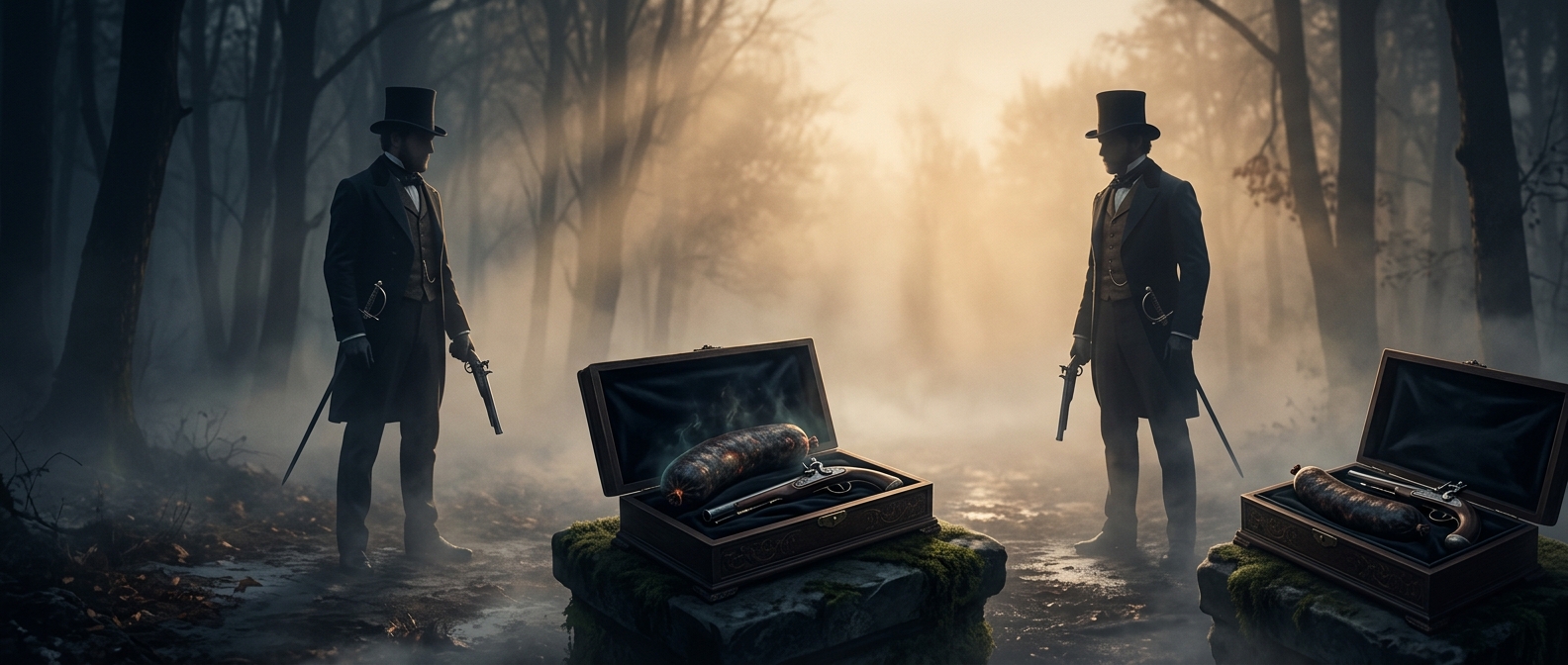
The rules that kept a duel from becoming a free-for-all
A duel was not simply two angry people reaching for guns. In many places and periods, it followed a negotiated procedure, often arranged by representatives called seconds. Their job was to communicate between the opponents, settle practical details, and sometimes find a way to end the dispute before anyone fired.
The rules could specify the weapons, distance, positions, and signal to begin. They could also determine who had the first shot and whether the other person was entitled to answer. Such details mattered: a duel was supposed to look like a test conducted under agreed conditions, not an ambush or an execution. Customs differed across time and place, so there was no single universal code.
Why an apology could matter as much as a shot
The underlying problem was often public reputation. An insult might be treated as a challenge to a person’s standing, especially among groups that considered formal combat an accepted way to demonstrate courage. A sincere apology or retraction could therefore settle the matter: it gave the offended party a recognized way to recover face without forcing either person to risk a wound.
If the dispute continued, the ritual still left room for restraint. Some participants deliberately fired into the air or away from their opponent. That choice could satisfy the outward demand to face the other person while signaling that killing was not the aim. It was not risk-free: the other duelist might still shoot, and an apparent refusal to fight could itself be judged dishonorable.
The code’s paradox was that it tried to manage violence by making it orderly and legible. Its rules could limit unfair advantages and create opportunities for reconciliation, but they also preserved the premise that a personal insult might be answered with gunfire. Even a missed shot could carry a message: the combatants had faced the danger, and one had chosen not to make it fatal.