The small movement behind a theatrical reaction
A monocle was a single lens fitted into the space around one eye, rather than attached to the face with an arm like a pair of spectacles. Its rim rested against the brow and cheek, and the wearer kept it in place by subtly tightening the muscles around the eye. The fit mattered: a lens shaped for one person could stay put with little effort, while a poor fit was more likely to slip.
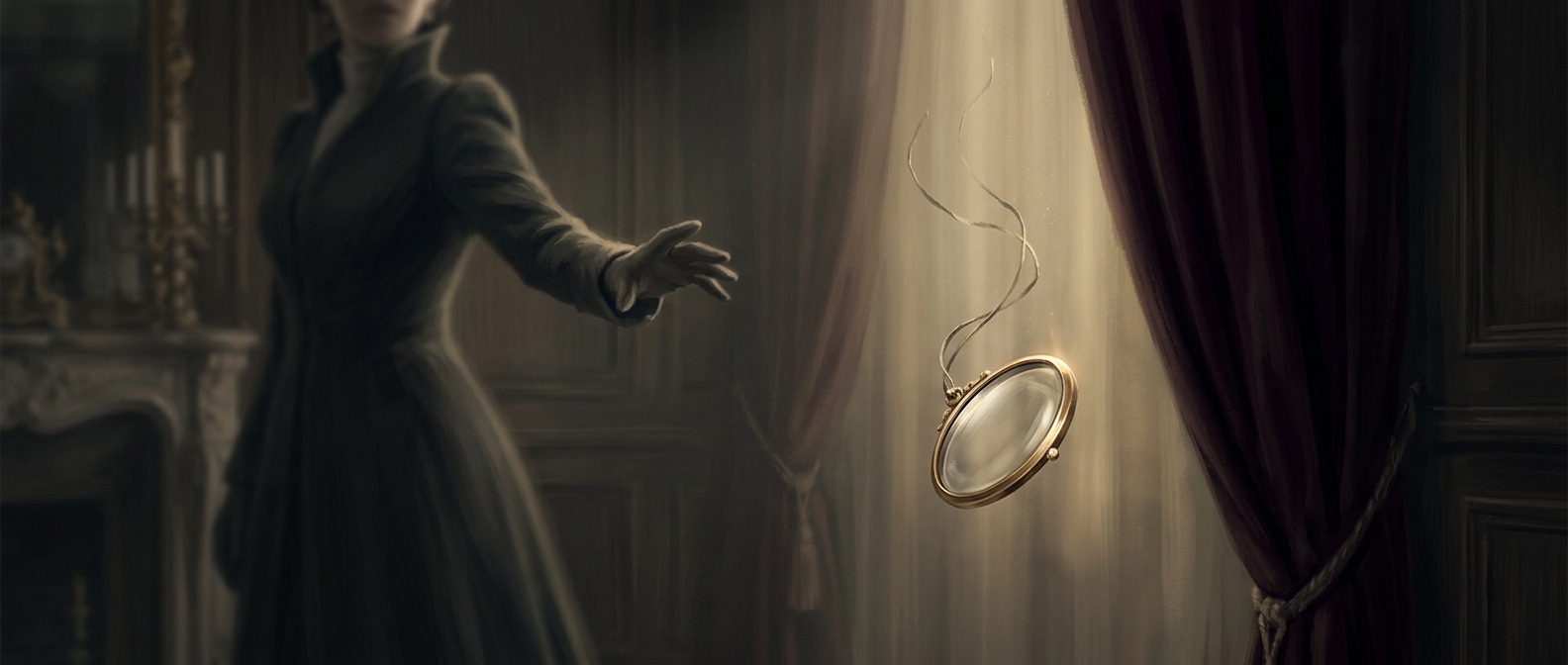
That arrangement made the monocle unusually responsive to changes in expression. If the muscles holding it relaxed, the lens could lose its grip and fall. A dramatic look of astonishment—eyes widening, face changing—could therefore be accompanied by a very literal drop.
From practical accessory to visual shorthand
The falling lens also worked as a piece of visual storytelling. A monocle was a conspicuous accessory, commonly associated in popular imagery with wealthy or high-status men. Letting it tumble turned an invisible change in facial tension into an instantly readable gesture: the composed figure had been startled enough to lose control, if only for a moment.
That is why the image became a comic shorthand for shock, not a reliable record of how every monocle behaved. The lens did not automatically fall whenever someone was surprised; it depended on its fit and the wearer’s expression. But the possibility gave artists and performers a neat physical punch line: one raised reaction, followed by a lens dropping from the face.