Why Shade Followed People Indoors
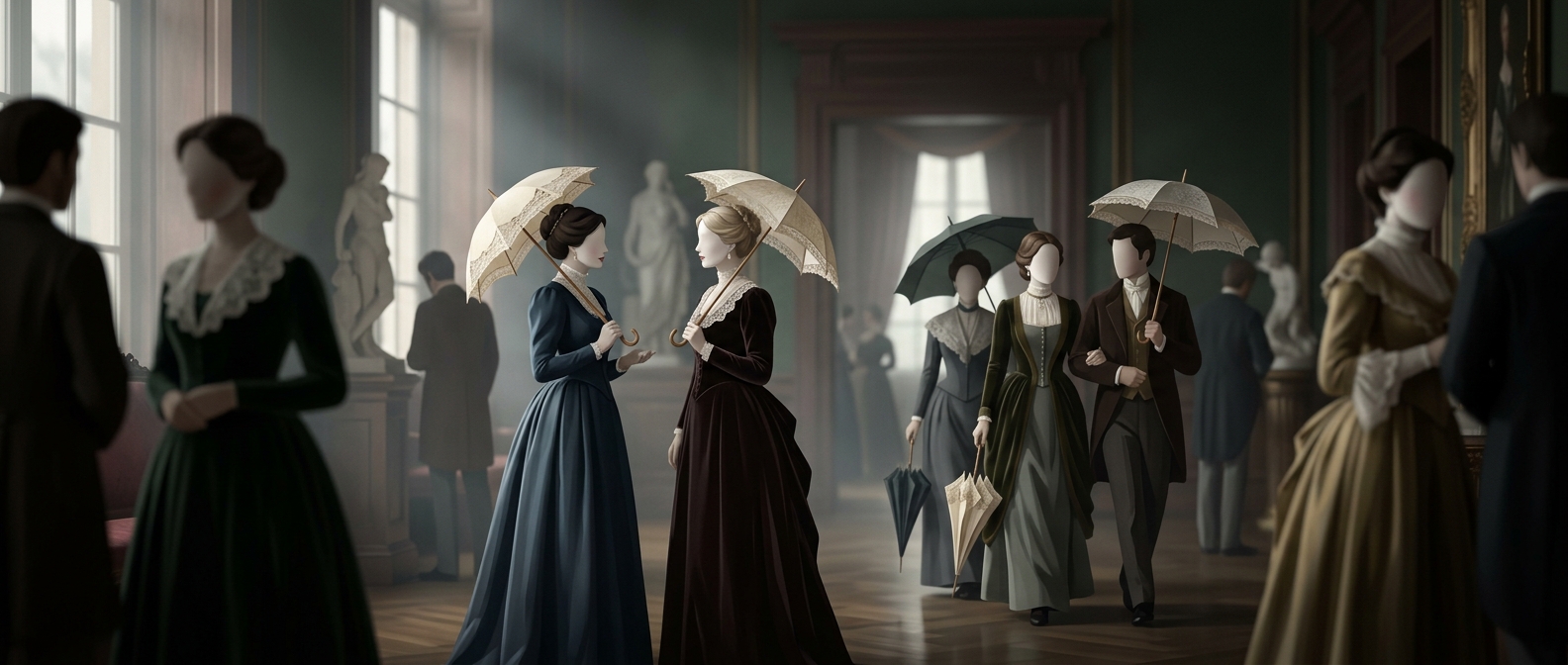
In societies where a pale complexion signaled refinement, avoiding a tan was not just a matter of staying out of the midday sun. A bright room or a sunny place beside a window could still expose someone to direct rays. An open parasol offered a small, personal patch of shade that moved with its owner, even when the owner was indoors.
A Portable Sign of Leisure
The parasol solved a practical problem, but carrying it also reflected social position. People who could worry about preserving a complexion were displaying distance from outdoor labor, where hours in the sun were harder to avoid. Keeping the canopy open inside made that concern visible—and made the parasol part of the wearer’s appearance rather than merely equipment for a walk outside.
The striking detail is how little a change of setting altered the routine: near a sunlit window, the boundary between “indoors” and “in the sun” could be thin enough that shade still had to travel along.