A shoe clasp turned into a public display of wealth
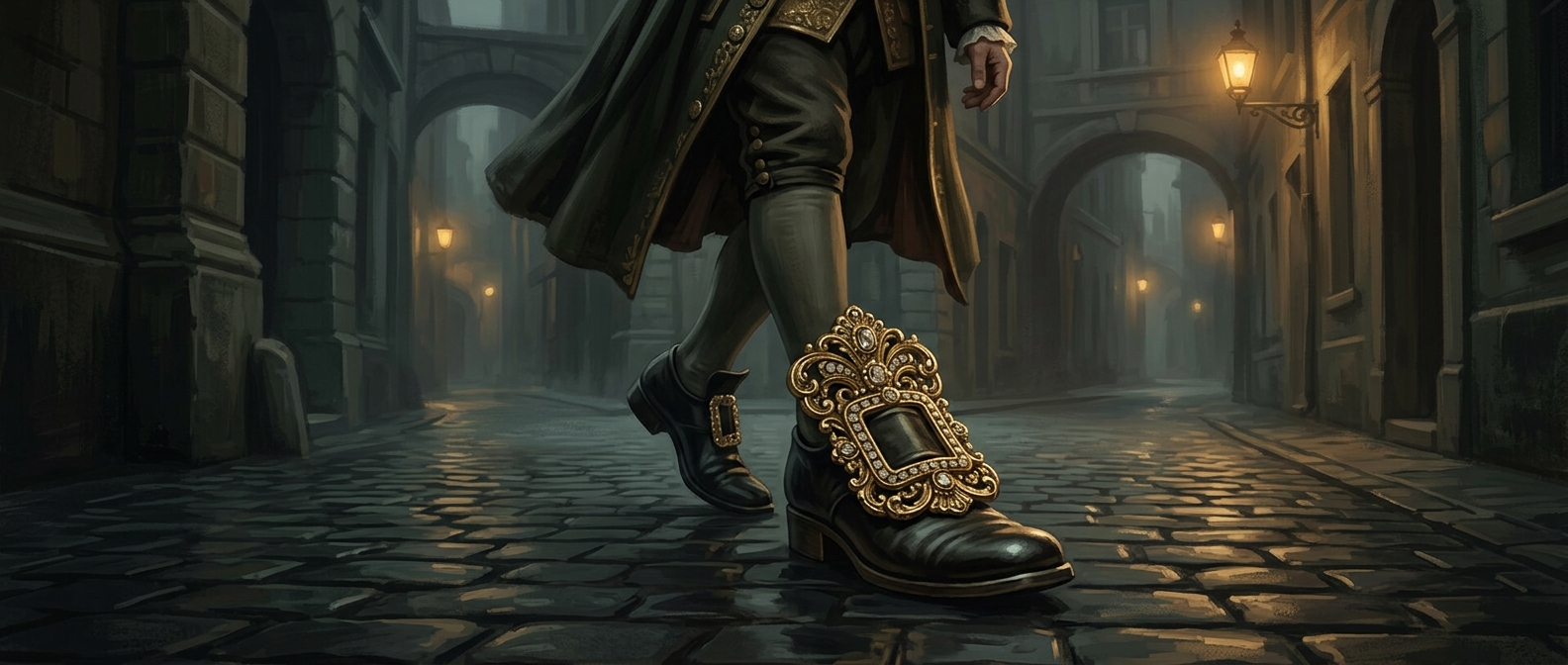
In the 17th and 18th centuries, a shoe buckle did more than fasten footwear. It sat in plain view, near the ground but easy to notice whenever its wearer moved. That made it a useful place to display costly materials and workmanship: a polished metal frame, sometimes set with sparkling stones, could announce expense without a person having to say a word.
The buckle’s status depended on visibility. A small clasp might do its practical job, but an oversized, ornamented one made the shoe—and its owner’s resources—harder to overlook. As fashion enlarged the decoration, the buckle became less like a discreet fastener and more like a piece of jewelry attached to the foot.
The accessory changed how its wearer moved
A display only worked if people could see it. Men therefore presented their shoes as they walked, using a more deliberate step or stance to bring the buckles into view. The accessory shaped behavior: instead of simply carrying someone from place to place, a walk could become a small performance of rank.
That is the odd logic of conspicuous fashion. The buckle’s bulk and sparkle made it impractical by ordinary standards, but impracticality could strengthen its message: the wearer could afford to prioritize display over convenience. The shoe became a moving showcase, and even a step could help put wealth on show.