The careful pressing behind a Victorian top hat’s shine
A silk top hat did not get its mirrorlike finish from a coat of polish. Its outer covering was silk plush: a fabric with a dense, short nap, or pile. Light reflected from that smooth surface in a way that made the hat look glossy and almost liquid-black.
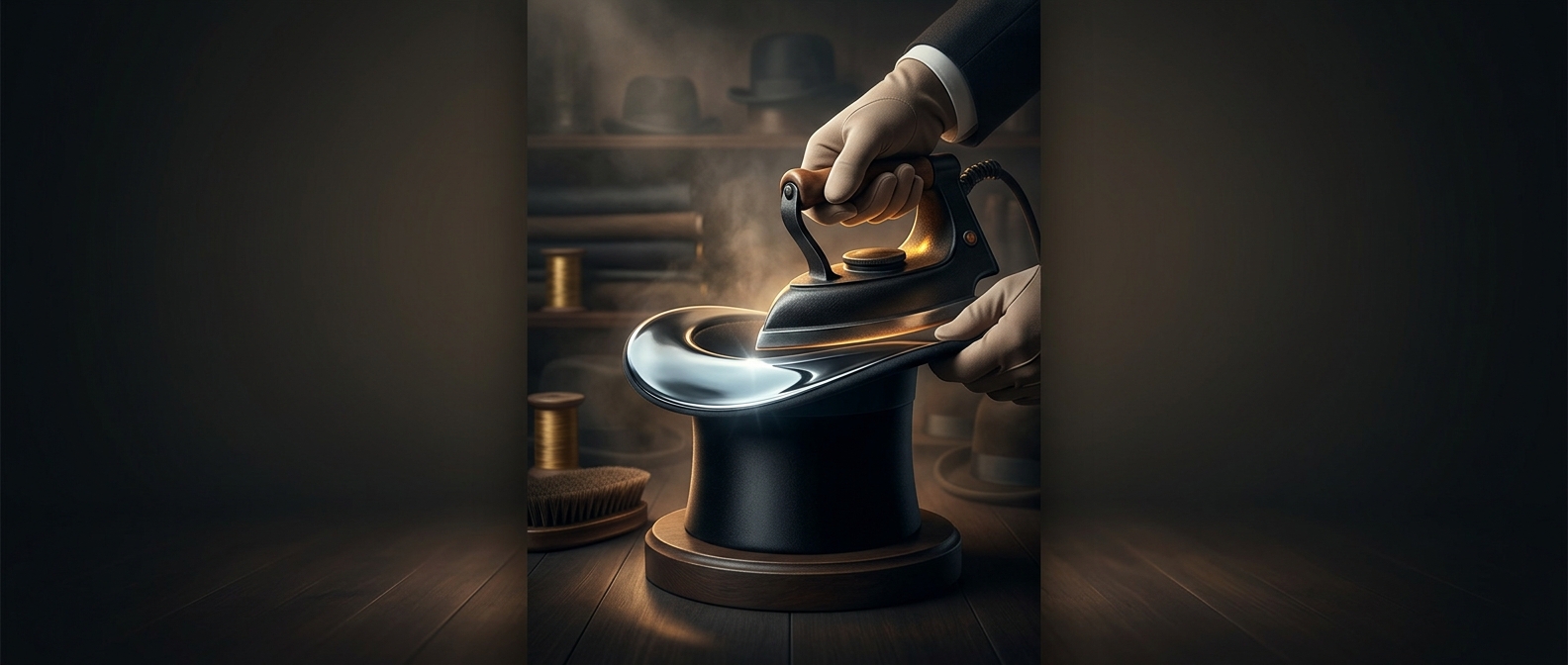
Wear disturbed the tiny fibers. Dust, rubbing, and handling could roughen or flatten the nap unevenly, making the surface look dull or marked. A heated hat press helped restore its evenness by smoothing the covering while supporting the hat’s shape. The aim was not simply to flatten the hat, but to bring its surface back into line without crushing it.
Why the shine demanded regular attention
That finish was both a feature of the material and a sign of care. A hat that was frequently worn needed its surface refreshed; heat and pressure could make it look sharp again, but careless treatment risked damaging the plush. Keeping a top hat presentable therefore meant more than brushing off dust: it required maintaining a delicate fabric stretched over a rigid form.
The daily press turned “looking pressed” into a literal part of dressing well. A gentleman’s polished appearance depended, in part, on someone taking the time to coax a fragile silk surface back into a uniform sheen.