The neckcloth was built, not simply tied
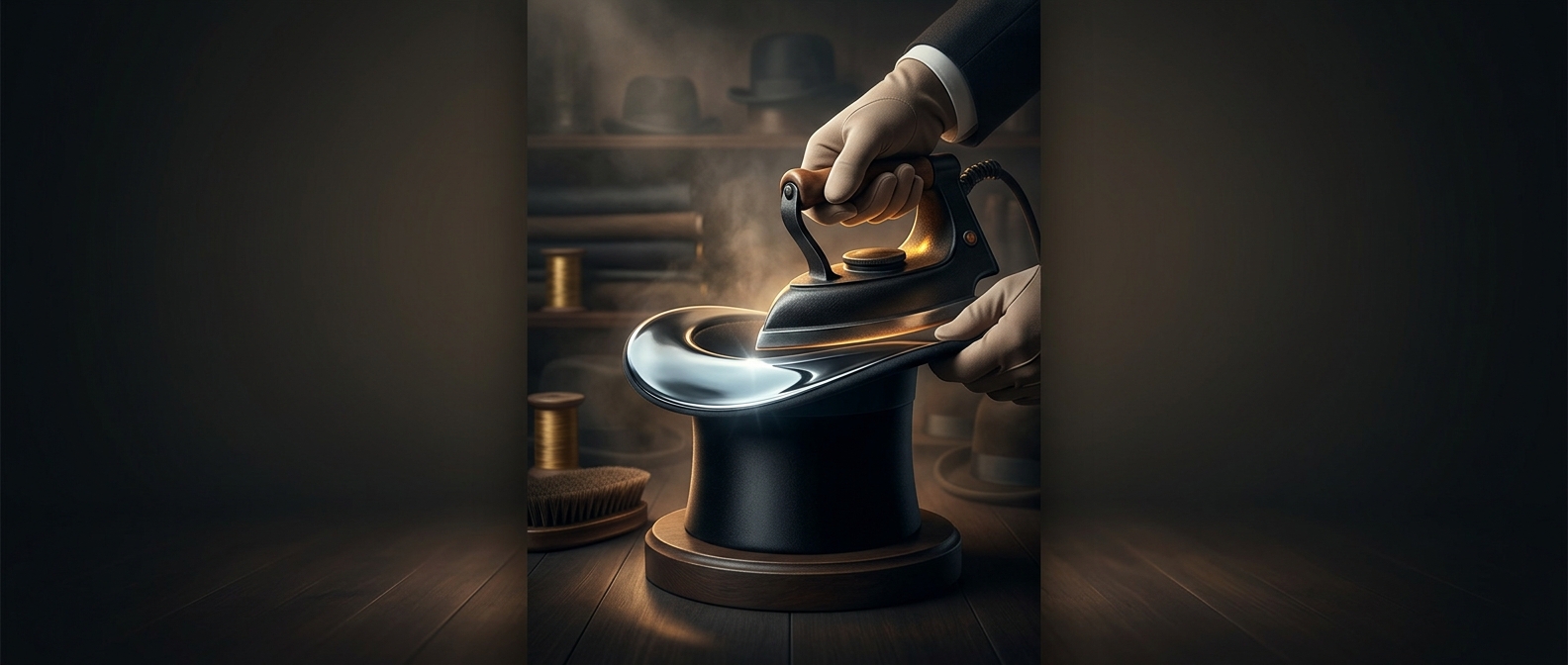
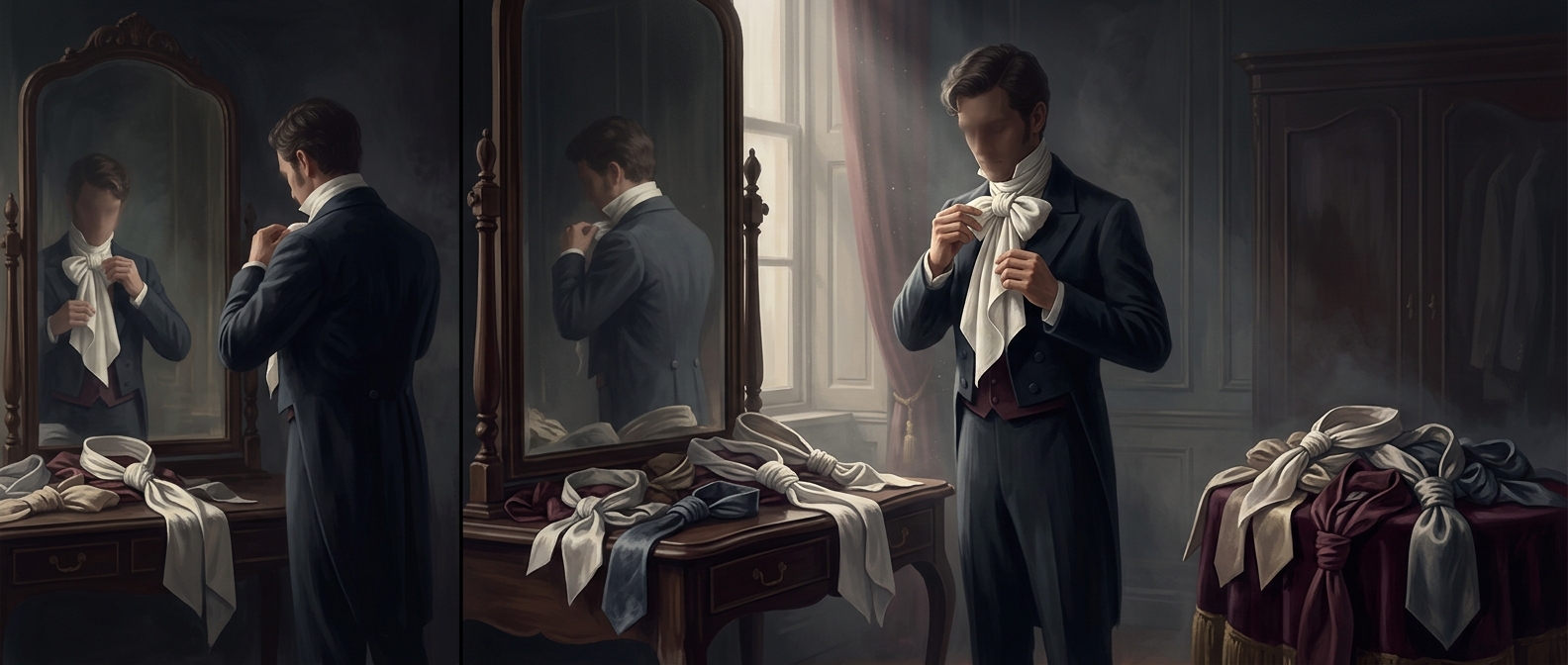
An elaborate neckcloth depended on more than a clever knot. The broad, starched fabric had to be folded and arranged so it held a deliberate shape around the collar. Starch stiffened the cloth, helping a carefully placed fold stay put—but also making the material less forgiving. A small adjustment could disturb the rest, so wrapping and knotting became a sequence of precise corrections rather than a quick tug and loop.
A mirror turned dressing into a craft
The wearer had to judge the result from the front: whether the folds sat evenly, the knot looked balanced, and the fabric lay cleanly. That is why dressing could occupy a whole morning. The mirror was not just for checking the finished look; it was part of the work, letting the wearer see and refine an arrangement that was difficult to assess by touch alone.
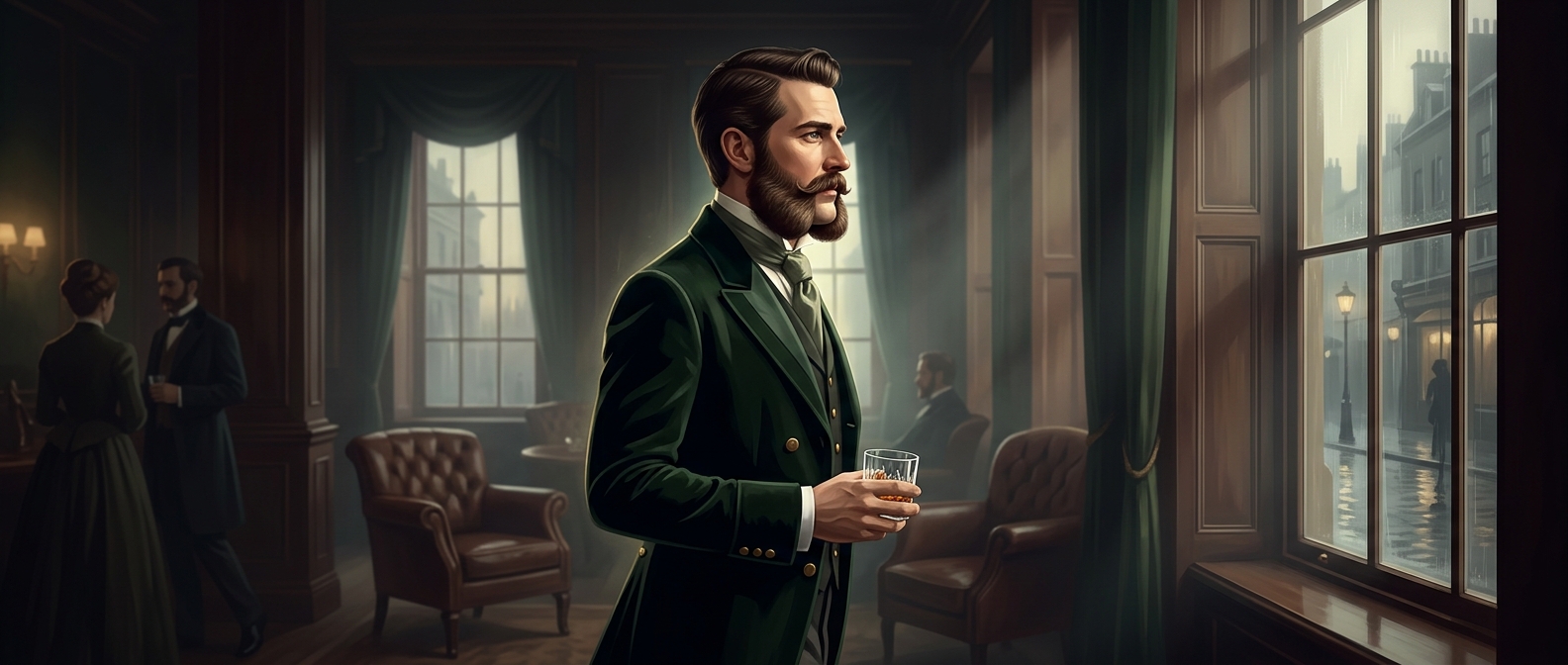
Such neckwear made personal appearance visibly labor-intensive. Its polished finish suggested time, care, and familiarity with fashionable dress—qualities that mattered in public settings. A visit to a coffeehouse could begin only after this private preparation was complete: before the wearer entered the social world, the cloth had to be persuaded to look effortless.