How a face cone made powdering safer
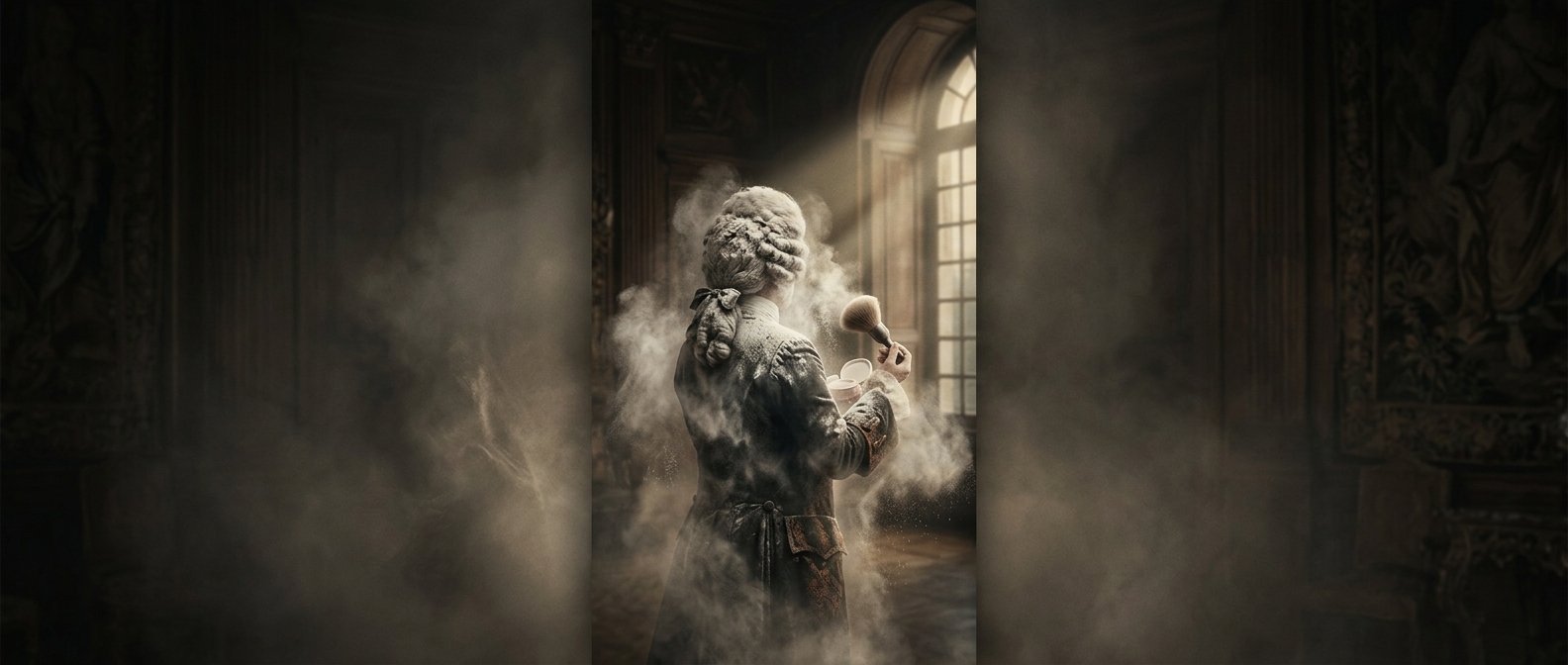
Powdering a dressed hairstyle was a hands-on job. The hair was coated with grease so powdered starch would cling to it, rather than simply falling away. A servant then sifted the powder over the hair, where it could settle into a pale, even coating. But the same fine particles that made the finish possible could drift through the air and be breathed in.
A cone placed over the wearer’s face served as a barrier during this step. It did not stop the powder from becoming airborne; it helped keep the cloud away from the nose and mouth while the servant worked close by. The awkward shape was practical equipment for a messy task, not an ornament meant to complete the look.
The hidden labor behind a polished style
The finished hairstyle could suggest effortless elegance, but producing it involved grease, loose powder, and another person’s careful labor. The cone makes that process visible: getting dressed sometimes meant protecting the wearer from the materials used to create the desired appearance. A fashionable finish began with a cloud of starch—and a simple shield between that cloud and the wearer’s lungs.