What happens between the wheels and the battery
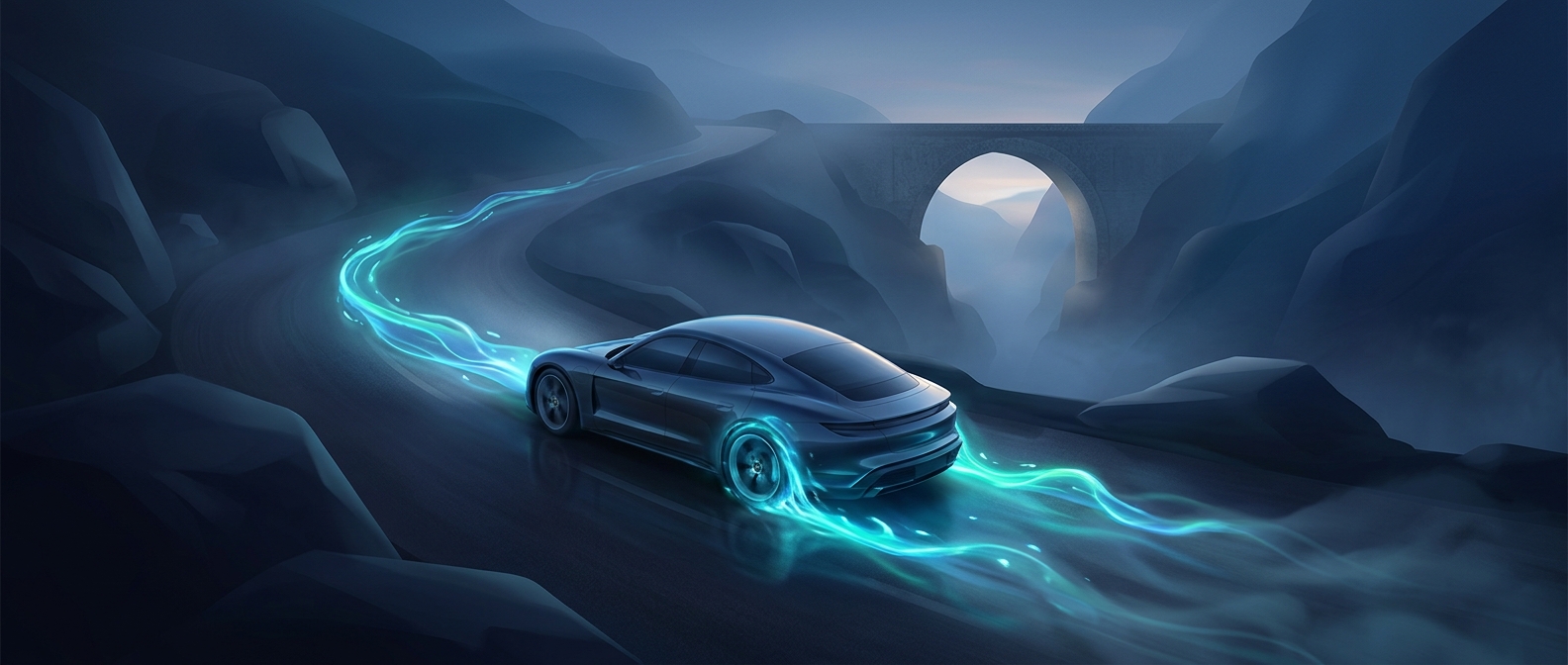
An electric car’s drive motor can run in reverse as a generator. When the driver lifts off the accelerator or presses the brake, the wheels keep turning the motor, which produces electrical current. The car’s power electronics—devices that control the flow of electricity—adjust that current so the battery can accept it.
The same process creates resistance at the wheels. That resistance is what slows the car: energy that would otherwise become heat in the brakes is instead captured in part and stored for later use.
Why regenerative braking has limits
The car cannot recover all the energy of a moving vehicle. Some is lost as heat and electrical resistance, and some braking still comes from ordinary friction pads pressing against discs. Those brakes are essential when the car needs to stop quickly, when the battery cannot accept much charge, or when the vehicle is moving too slowly for regeneration to provide enough braking.
How much the motor can recover also depends on conditions such as battery temperature and charge level. A nearly full battery has little room for incoming energy, so the car may rely more on its friction brakes.
A different feel at the pedal
Regenerative braking can make a car slow noticeably as soon as the driver eases off the accelerator, a behavior often called one-pedal driving. The driver still has a brake pedal, but in many situations the motor does much of the routine slowing. The practical payoff is not just a little electricity returned to the battery: it can also mean less frequent use of the brake pads.