Why the Medieval Diet Split Along Class Lines
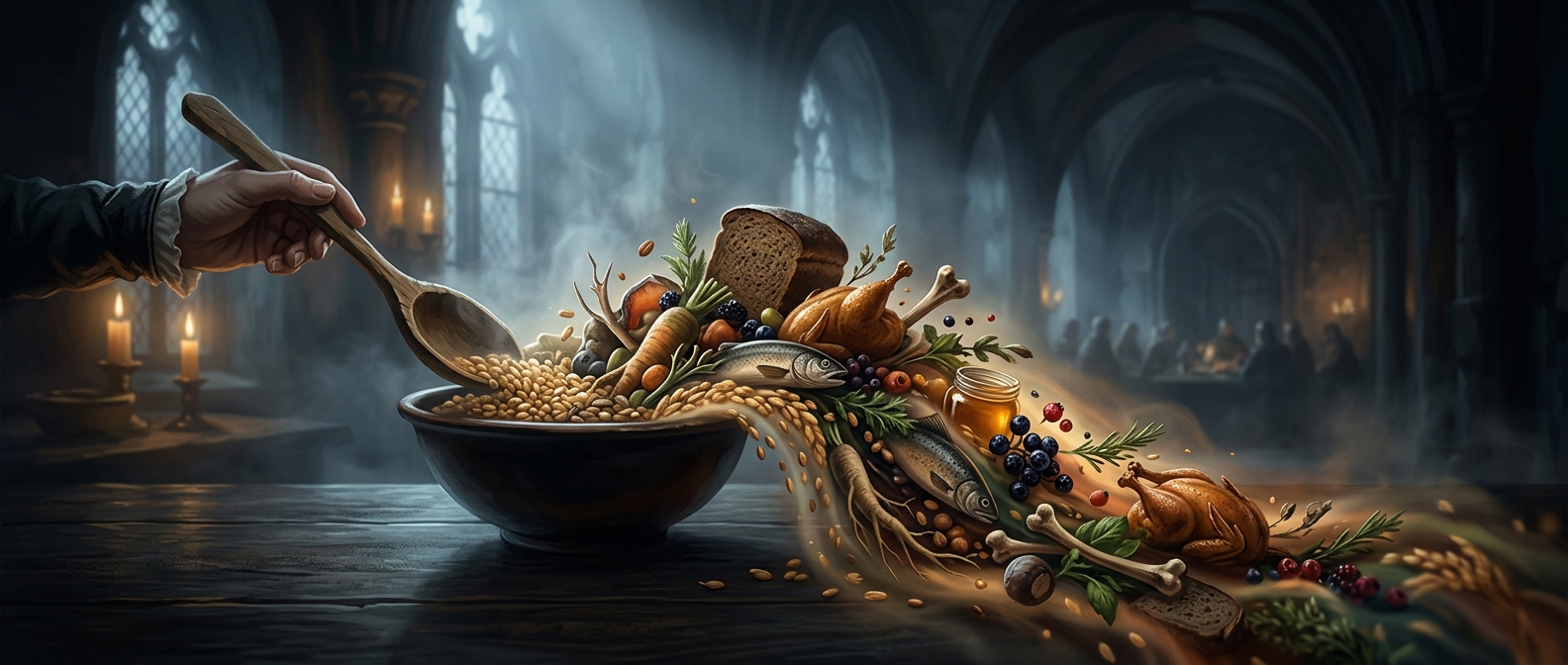
For many peasants, the everyday meal was built around what could be grown, stored, or gathered: bread and other grains, beans or peas, and seasonal vegetables. Meat was often too costly or valuable to eat regularly. That did not make peasant food plentiful or balanced—poor harvests could leave families hungry—but it meant animal flesh was less central to ordinary meals.
Noble households had greater access to meat, and serving it signaled wealth. A lord’s table could feature it far more often than a laborer’s. The contrast was not absolute: diets varied by region, season, and circumstance, and nobles also ate grains and vegetables. Still, status shaped what foods people could routinely afford.
How Meat Could Contribute to Gout
Gout is a painful form of arthritis caused when uric acid builds up in the blood and forms sharp crystals in a joint. The body makes uric acid while breaking down purines, compounds found in many foods and also produced naturally by the body. Meat—especially some organ meats—can add to that load, so a meat-heavy diet could raise the risk for people already susceptible to gout. It was not the only cause: inherited traits and other factors also affect how the body handles uric acid.
The irony is that a noble’s more prestigious menu could carry a health cost that a grain- and vegetable-based diet was less likely to impose in the same way. But lower exposure to gout did not mean peasants had the healthier life overall: hard labor, food shortages, and limited medical care brought their own risks. The contrast is a reminder that medieval status shaped not just what appeared at a feast, but also the kinds of strain a person’s body faced.