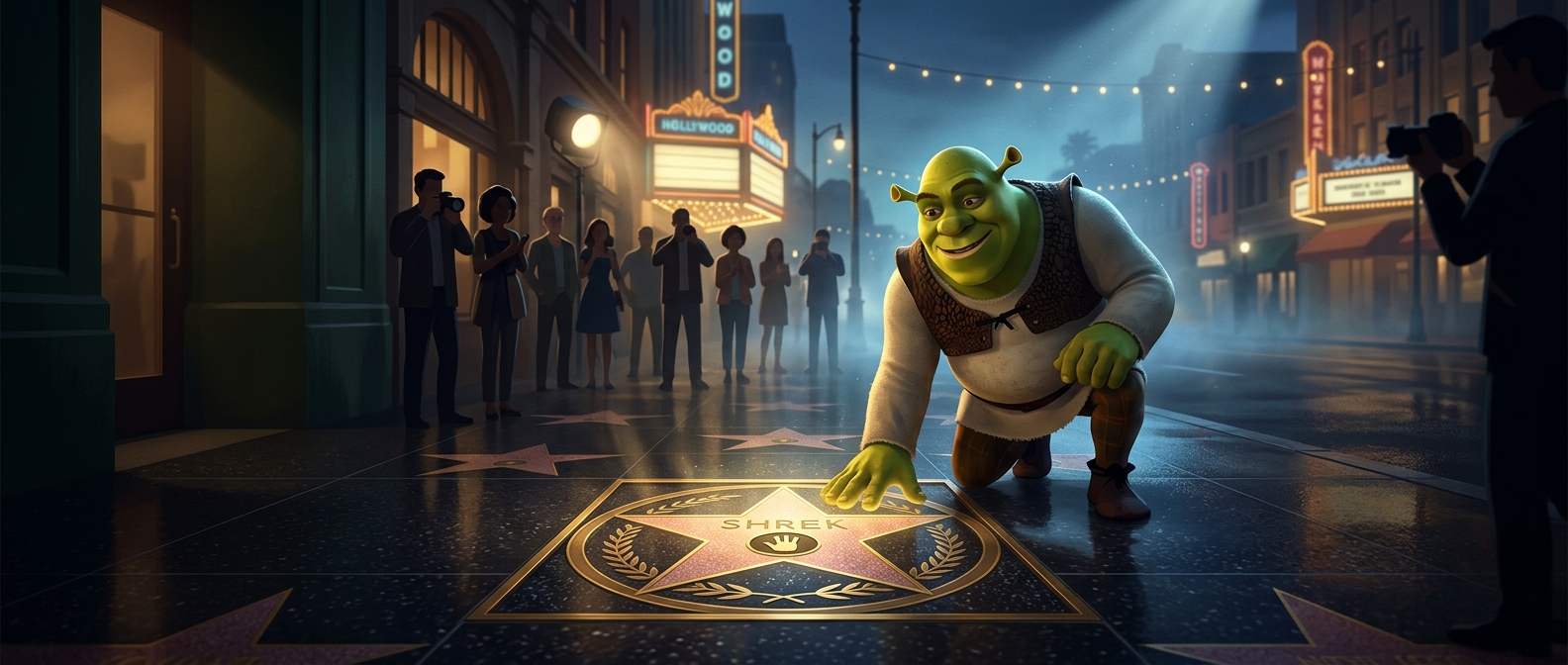
How an Animated Ogre Joined Hollywood’s Walk of Fame
A Walk of Fame star is not simply an award handed out by a film studio. The Hollywood Chamber of Commerce administers the landmark, and its selection process recognizes entertainers across several fields, including motion pictures, television, music, radio, and live performance. Shrek’s star, added in 2010, reflected how thoroughly the character had become a recognizable figure in movie entertainment.
A Character Built to Carry a Franchise
DreamWorks introduced Shrek in the 2001 film of the same name. The ogre’s appeal came partly from the way the movie played with familiar fairy-tale conventions: instead of a polished prince or a fearsome monster, its hero was a grouchy, swamp-dwelling outsider who wanted to be left alone. That comic contrast gave audiences an easy-to-recognize character—and gave the studio a center for sequels and related projects.
The series’ success also helped make animation’s cultural reach harder to separate from live-action stardom. Shrek was a fictional character, but audiences encountered him through performances, films, and a widely circulating image. A Walk of Fame star can honor a screen persona as well as the people whose work brings it to life.
What the Star Signaled
The placement put Shrek in a public roster usually associated with celebrated performers, including Humphrey Bogart and Marilyn Monroe. It did not mean an animated character had literally become a person or that the star ranked him above other honorees. It marked a different kind of Hollywood recognition: a fictional creation had become famous enough, through cinema, to be treated as a star in its own right.