Why a Bull’s Buck Can Hit So Hard
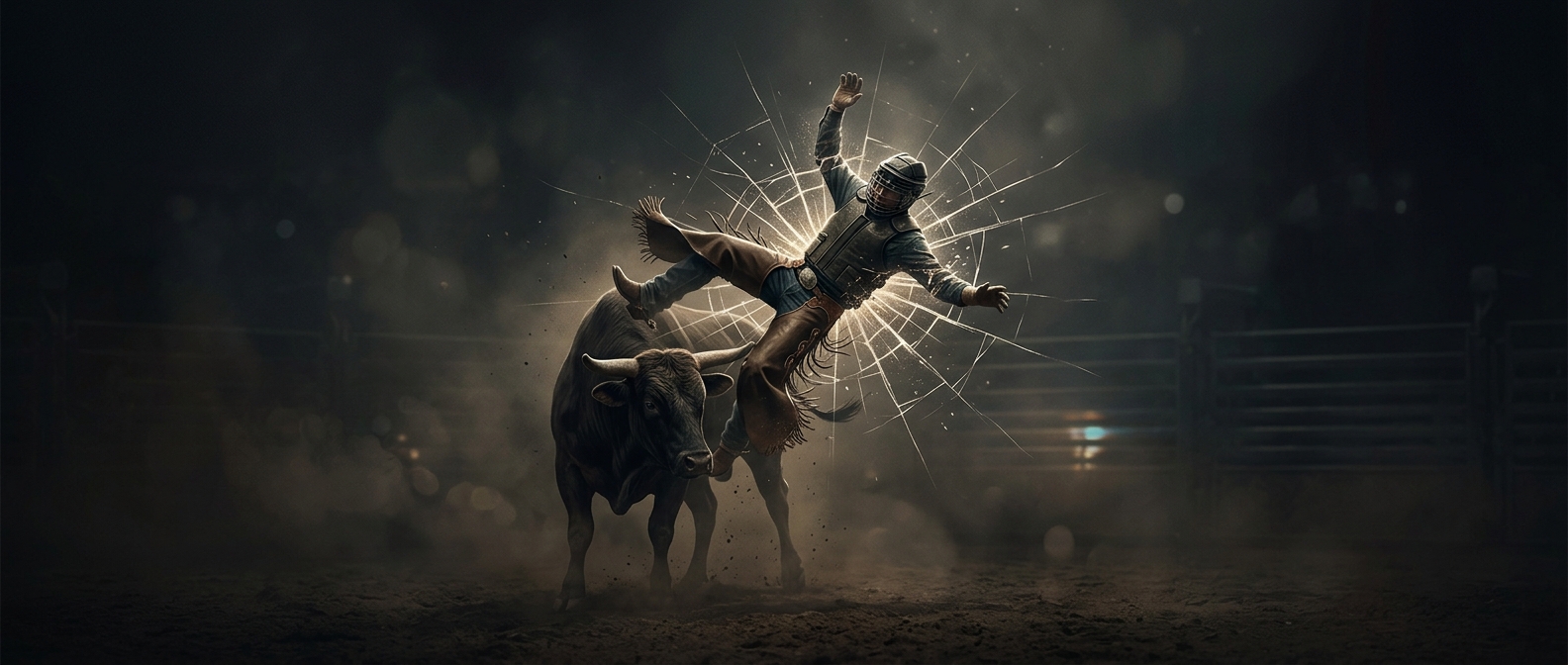
A bull does not simply throw a rider upward. Each buck can combine a sharp lift with a twist, changing the rider’s direction in an instant. The rider’s body resists that change because of inertia—the tendency of a moving body to keep moving. Muscles and joints must absorb the resulting jolt while the rider tries to stay aboard.
A fall can add a second, harsher stop. A rider may be moving with the bull, then strike the ground or the animal and decelerate abruptly. Sensors register these rapid changes in motion as forces on the body. How severe an impact feels depends not only on how fast the rider was moving, but also on how suddenly that motion changes and which part of the body takes the hit.
The Ride Leaves Little Room to Recover
Bull riding is a sequence of unstable movements, not one clean leap. A rider may be jolted repeatedly, with little time to regain balance between bucks. That makes the torso work to stabilize the body while arms and legs absorb movement and maintain contact. When a rider is dislodged, the direction and timing of the fall can be difficult to control.
Protective equipment can reduce some risks, but it cannot make a sudden collision harmless. The striking detail is that the danger comes from both the bull’s explosive movement and the abrupt stop that may follow: the body has to cope with each change before it can prepare for the next.