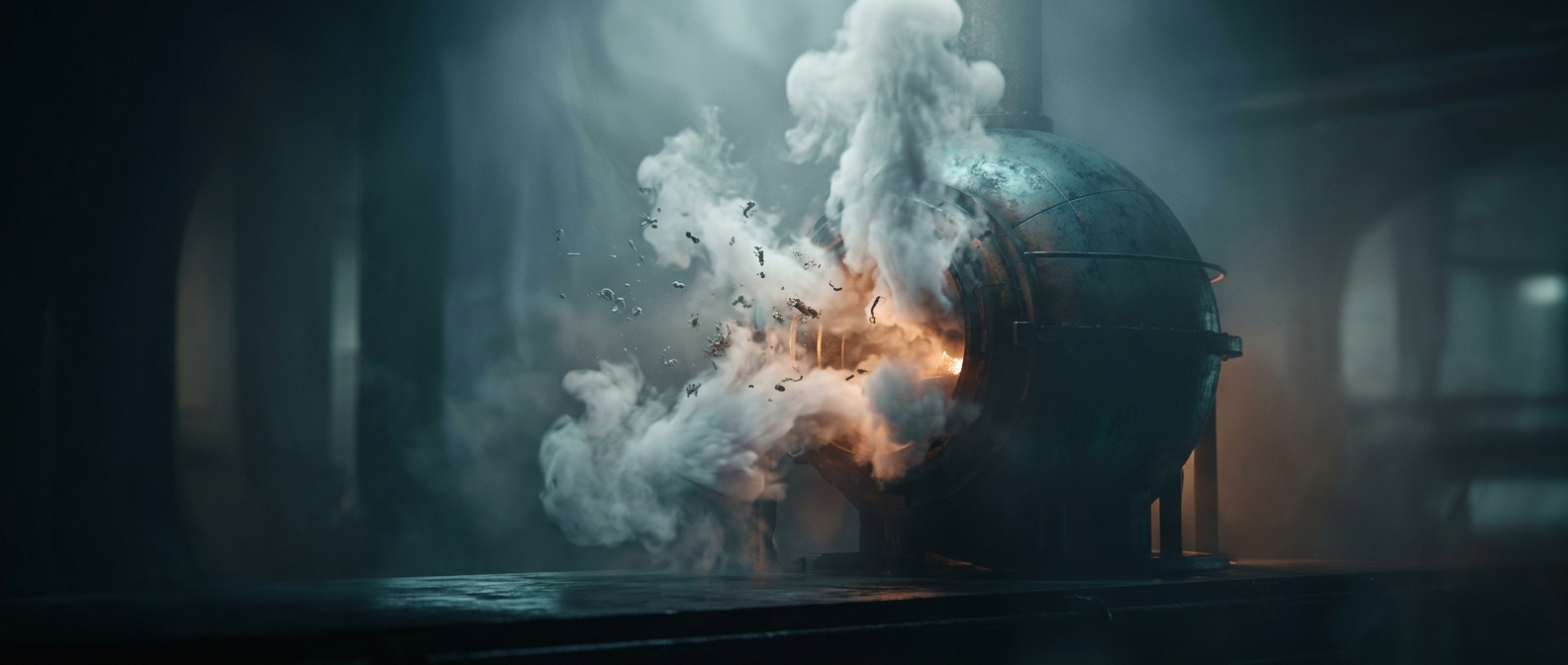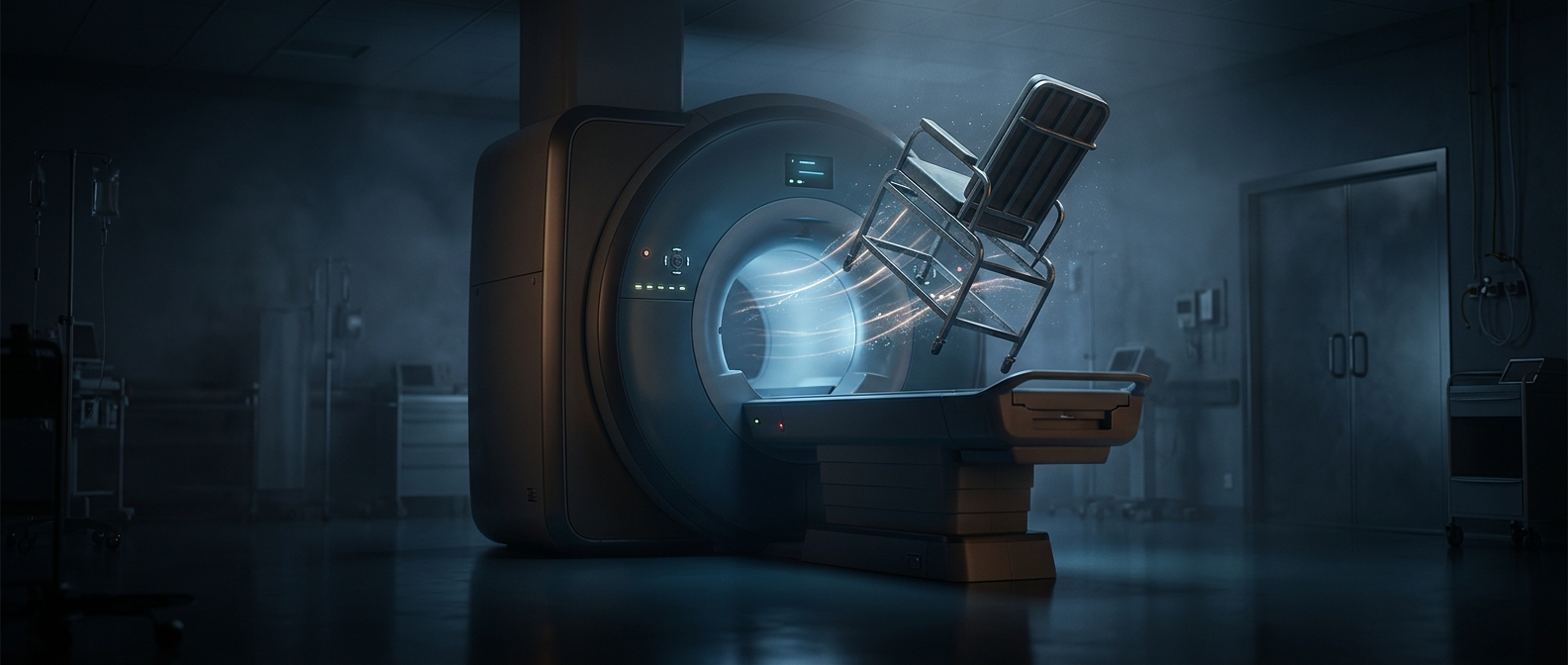
Why a steel oxygen cylinder can surge toward an MRI
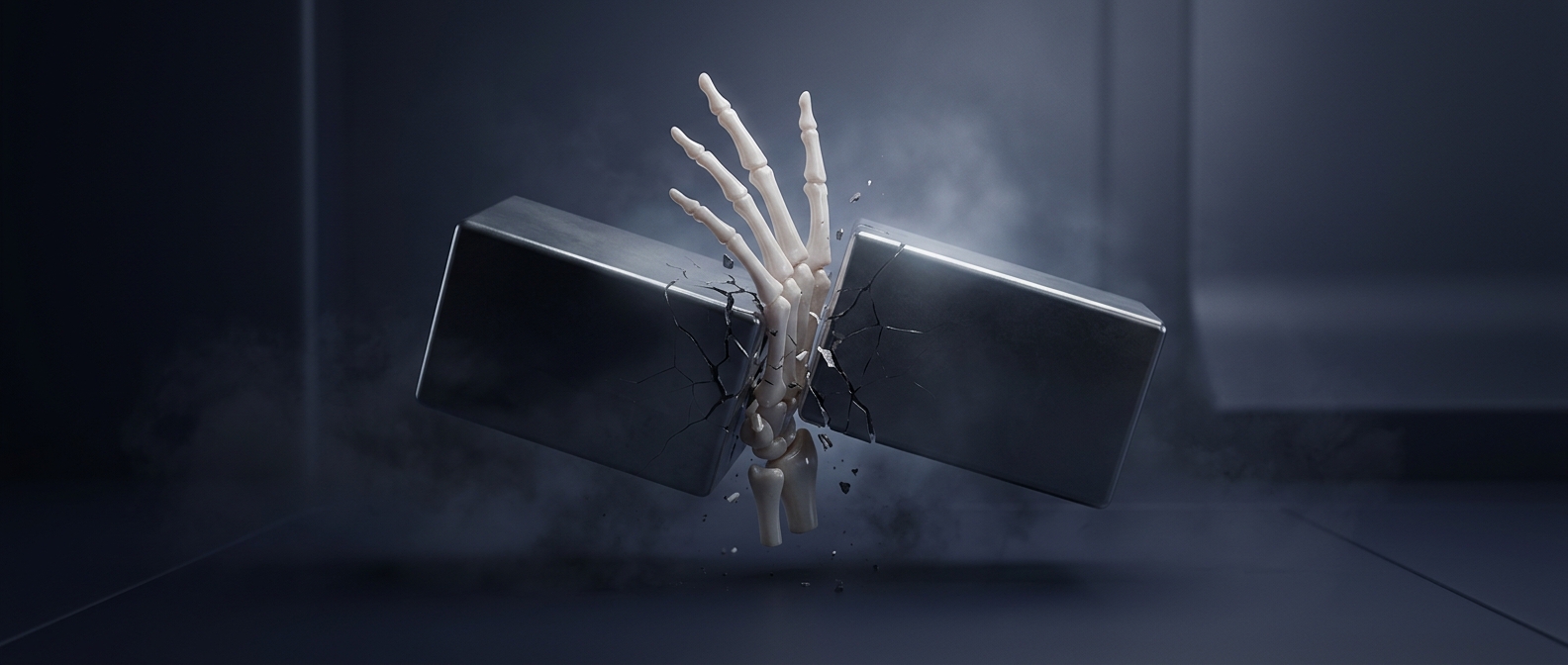
An MRI scanner is not just a magnet that switches on for a scan. Its main magnet produces a strong, persistent magnetic field, including in the space around the scanner. That field can attract ferromagnetic materials—metals such as iron and many kinds of steel.
The force depends not only on how strong the field is, but on how quickly it changes from one place to another. Near the scanner, that change can be steep. A steel oxygen cylinder entering the area may therefore be pulled toward the magnet, accelerating as it moves into a stronger field. If it is not restrained, it can strike the scanner or someone nearby.
The danger depends on the cylinder
“Oxygen tank” describes what the cylinder contains, not what it is made of. Some cylinders are made from magnetic steel; others use materials that are not attracted in the same way. A cylinder’s contents do not make it magnetic—the metal casing does.
That distinction is why MRI safety procedures treat ordinary equipment differently from items specifically designed and approved for use near the scanner. A cylinder that looks familiar or harmless in a hospital corridor can become hazardous once it crosses into the strong-field area. Its weight and rigid shape make an unexpected pull especially dangerous.
A room where ordinary equipment needs checking
MRI facilities control which objects can enter the scanner area, and oxygen delivery must use equipment suitable for that environment. The practical lesson is simple: a cylinder should never be brought near an MRI based only on appearance or assumption. The scanner’s field can turn a routine piece of medical equipment into a fast-moving impact hazard before anyone has time to react.