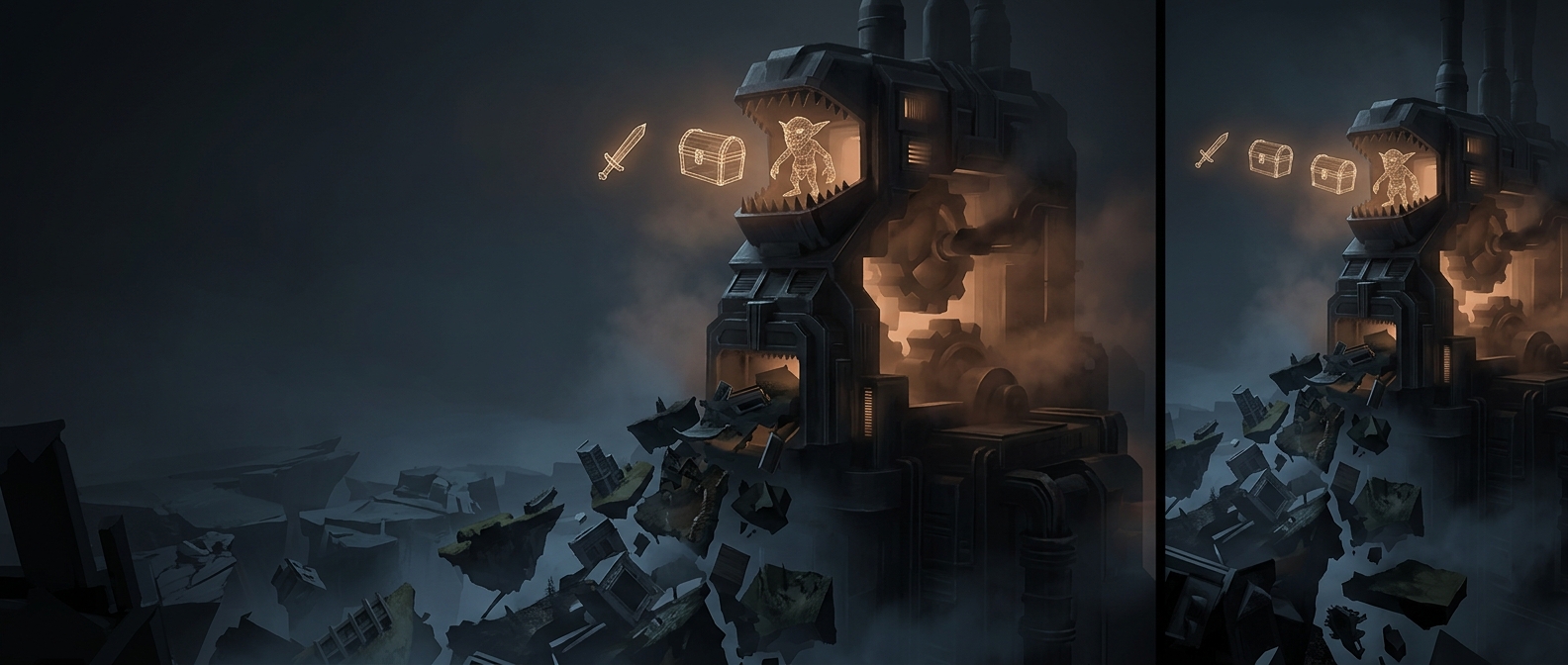
A game world assembled from parts
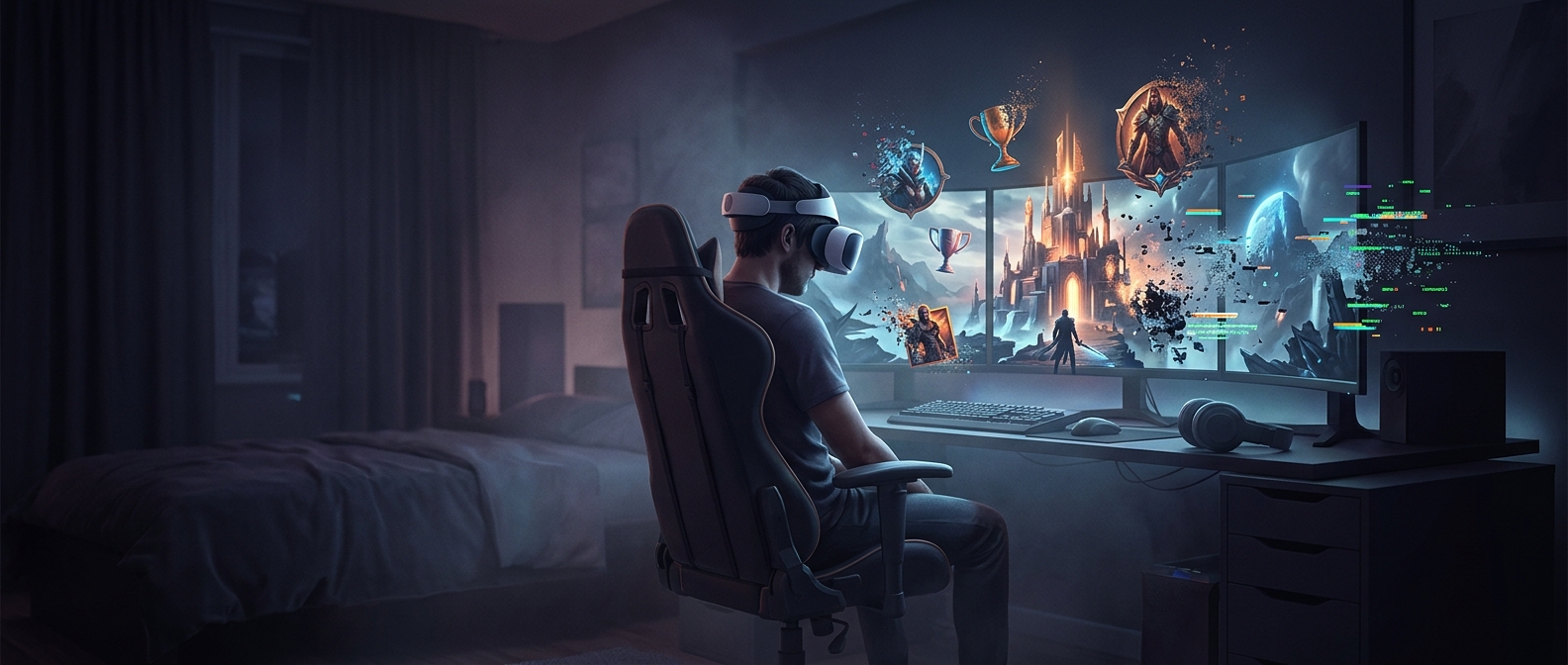
A game asset is a ready-made piece of digital content: a tree model, a character, a sound effect, or an animation. Online marketplaces let developers buy these pieces instead of building every object from scratch. Many are sold in packs, so a small team can fill a landscape quickly—especially when it needs content for a prototype or has little time for custom art.
The pieces may come from different creators, who make different choices about shape, color, texture, and detail. A realistic tree might have intricate bark and soft natural shading; a cartoon character might use broad outlines and simplified forms. Putting both into one game does not automatically make them look as though they belong together.
Why the mismatch survives
A game engine can place all the assets in the same scene, apply lighting, and make them respond to the same camera. But those technical adjustments cannot fully erase differences in artistic style. A character’s exaggerated proportions or a tree’s highly detailed surface remains visible even under shared lighting.
Making a collection feel cohesive takes additional work. Developers can recolor objects, change materials, adjust lighting, or alter models to bring them closer to a common look. That takes time, and some assets are difficult to modify. If the team prioritizes a playable level over visual polish, the contrast may remain—or become part of the game’s distinctive appearance.
The tradeoff behind the strange scene
Store-bought assets reduce the cost of making a world, but they shift effort from creating objects to selecting and adapting them. A pack that looks convincing on its own may not fit the rest of a project. The result can be an accidental visual clash, or a deliberately odd combination that gives a game an offbeat character. Either way, the world’s look reflects not just what the developers could buy, but what they had time to make fit.