The cliff that leans out over the valley
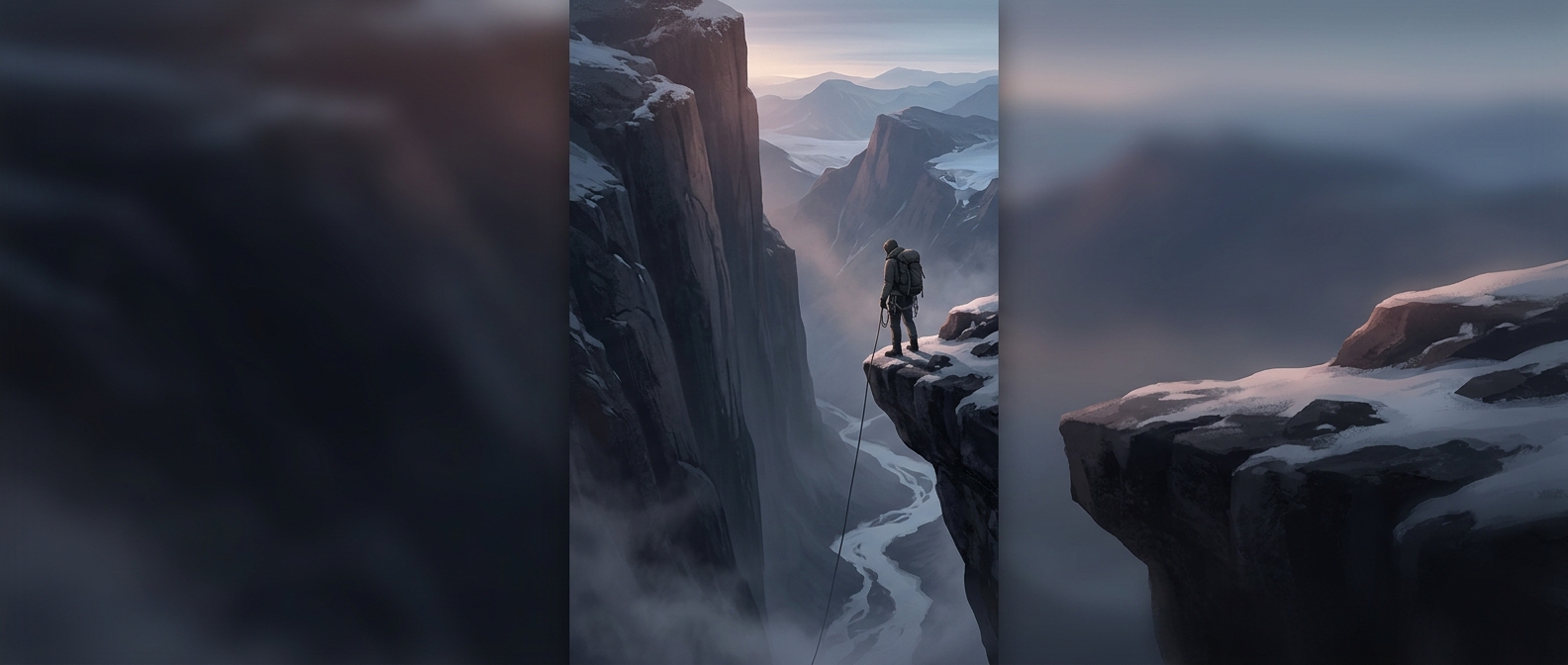
Mount Thor rises in Auyuittuq National Park on Baffin Island, in Nunavut. Its famous west face is a granite wall about 1,250 meters (4,101 feet) high. The striking detail is its angle: at roughly 105 degrees, the face tilts outward rather than standing perfectly upright. In practical terms, parts of the cliff overhang the ground below, making the wall look as if it is jutting into open air.
That shape is why the mountain is more than a tall summit. A sheer face gives climbers little room to stop or change direction; an overhanging face also makes retreat difficult, because the route can project beyond the rock beneath it. The height is measured as a vertical drop, not as the mountain’s elevation above sea level.
A landmark in a remote landscape
Thor stands beside Akshayuk Pass, a long valley cutting through the park’s rugged mountains. The setting gives the cliff its scale: the wall rises abruptly above a broad, glacially carved landscape, with no nearby city or road to soften the sense of isolation. Reaching the area is itself a substantial journey, typically involving travel to the park’s coastal gateways and then moving into the pass on foot or by other means suited to the season.
The result is a place where the headline measurement becomes visible in the terrain. From below, the overhang makes the cliff’s top seem to reach out over the valley—an unusually clear demonstration that “vertical” does not always mean straight up and down.