Why the Moai Can Look Like Heads
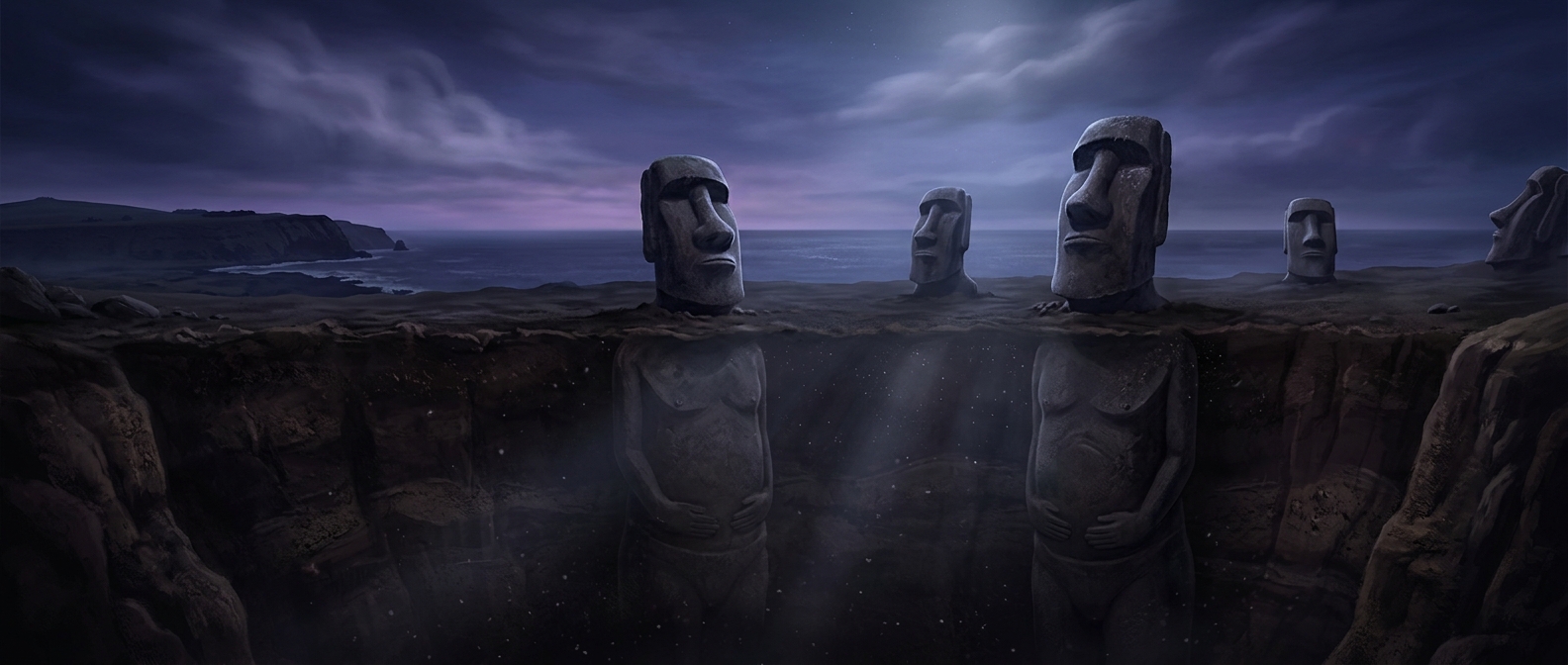
On Rapa Nui, the statues called moai are not oversized heads set on hidden pedestals. They are human figures, usually carved with a large head and a comparatively narrow torso. At the island’s Rano Raraku quarry, many stand or lie partly covered by soil and rock, so the ground can conceal most of the body and leave the face as the most visible feature.
How the Bodies Were Buried
The quarry sits on sloping terrain. Over time, soil and rock accumulated around statues left there, especially those still connected to the process of carving and moving them. Excavations removed some of that material, exposing torsos and, on some statues, carvings on their backs. The burial is part of the landscape’s long history, not evidence that the figures were designed as heads.
A Clue to the Quarry’s Work
Rano Raraku was a place where moai were carved from volcanic rock; statues at different stages of completion remain there. Their bodies and unfinished forms make the site more than a collection of mysterious faces: they preserve traces of how carving took place. A statue partly swallowed by the slope can still show a carefully shaped torso once the earth around it is cleared.