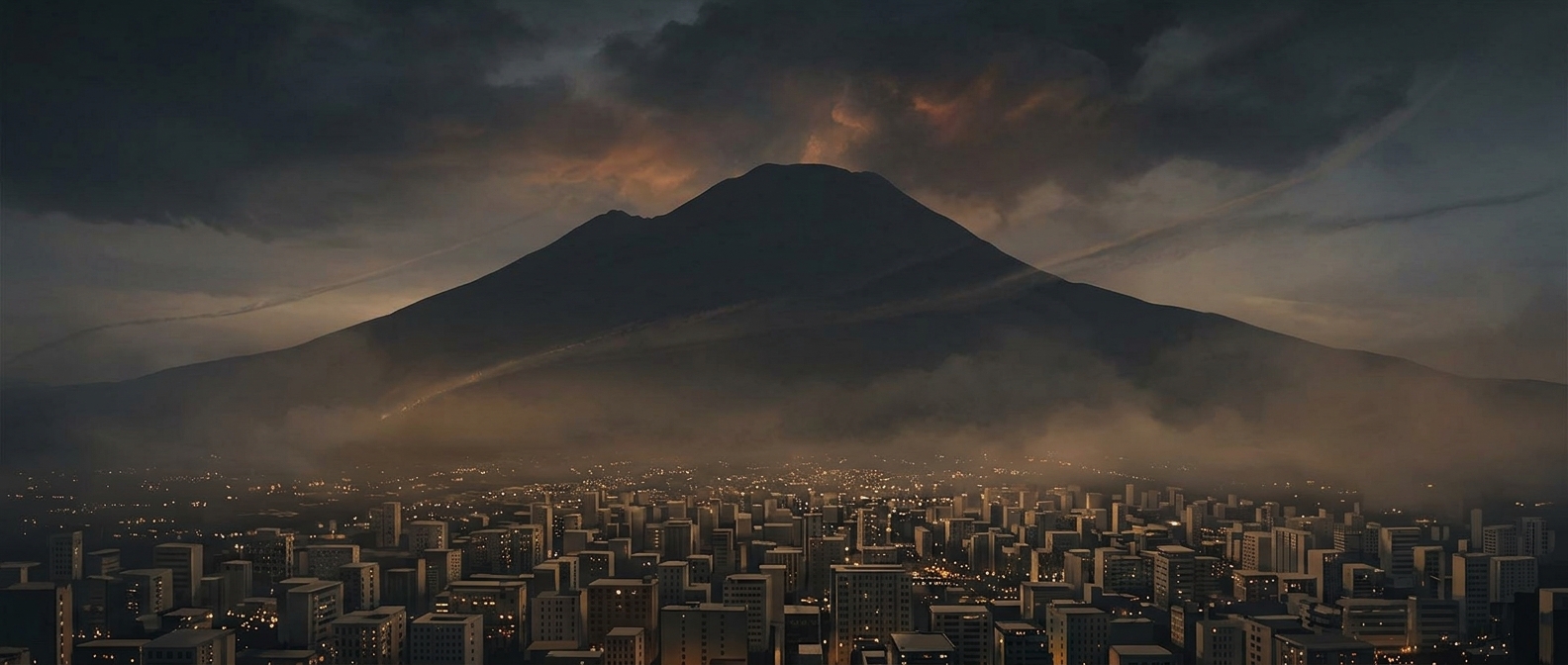
Why Vesuvius is dangerous even without a lava flow
Lava is only one way a volcano can threaten a town—and often not the fastest. In a powerful explosive eruption, expanding gas can blast apart magma and rock, sending a turbulent mixture of hot gas, ash, and fragments downhill. These pyroclastic flows can race across the ground and remain hot enough to destroy buildings and kill people before they have time to escape.
The danger is not limited to the volcano’s slopes. Eruptions can also propel ash high into the atmosphere. As it falls, ash can accumulate on roofs, adding weight until they collapse; it can also make streets difficult to cross and disrupt breathing and transport. A town does not need to be touched by molten lava to be devastated.
How the danger reached Pompeii and Herculaneum
During Vesuvius’s ancient eruption, Pompeii was buried largely by falling ash and pumice, while Herculaneum was overwhelmed by hot surges of gas and volcanic debris. The difference matters: an eruption can expose nearby places to several hazards, arriving in different ways and at different times. The cities’ fate was not simply a matter of lava rolling down a slope.
Why nearby towns face a difficult choice
The communities around Vesuvius occupy land close to the volcano, so an eruption could leave little time to respond once dangerous flows begin. Ashfall can reach areas beyond the path of those flows, making the threatened region broader than the most visibly exposed slopes. That is why planning has to account for both the fast-moving ground-level threat and the widespread burden of falling ash—not just whether lava might reach a street.