How a cell builds—and rebuilds—its internal tracks
The cell’s framework is not a rigid cage. One important part of it, the microtubule network, is made from tubulin proteins assembled into hollow tubes. These tubes can grow by adding tubulin at their ends and shrink when subunits come off. That continual remodeling lets a cell rearrange its internal layout as its needs change.
Microtubules also have direction: their two ends are chemically different. That gives motor proteins a route to follow rather than leaving cargo to drift at random. Kinesin motors generally move toward one end of a microtubule, while dynein motors generally move toward the other. By using energy from ATP, the cell’s main readily usable energy molecule, these motors take steps along the tube while attached to cargo such as membrane-bound packets or organelles.
A delivery system with consequences
The distinction between the two directions helps organize traffic. Cargo can be moved toward the cell’s outer regions or back toward its interior, depending on which motor is attached and the track’s orientation. In a long, narrow cell such as a neuron, this transport is especially consequential: materials made near the cell body may need to travel along the cell’s extended processes to reach distant sites.
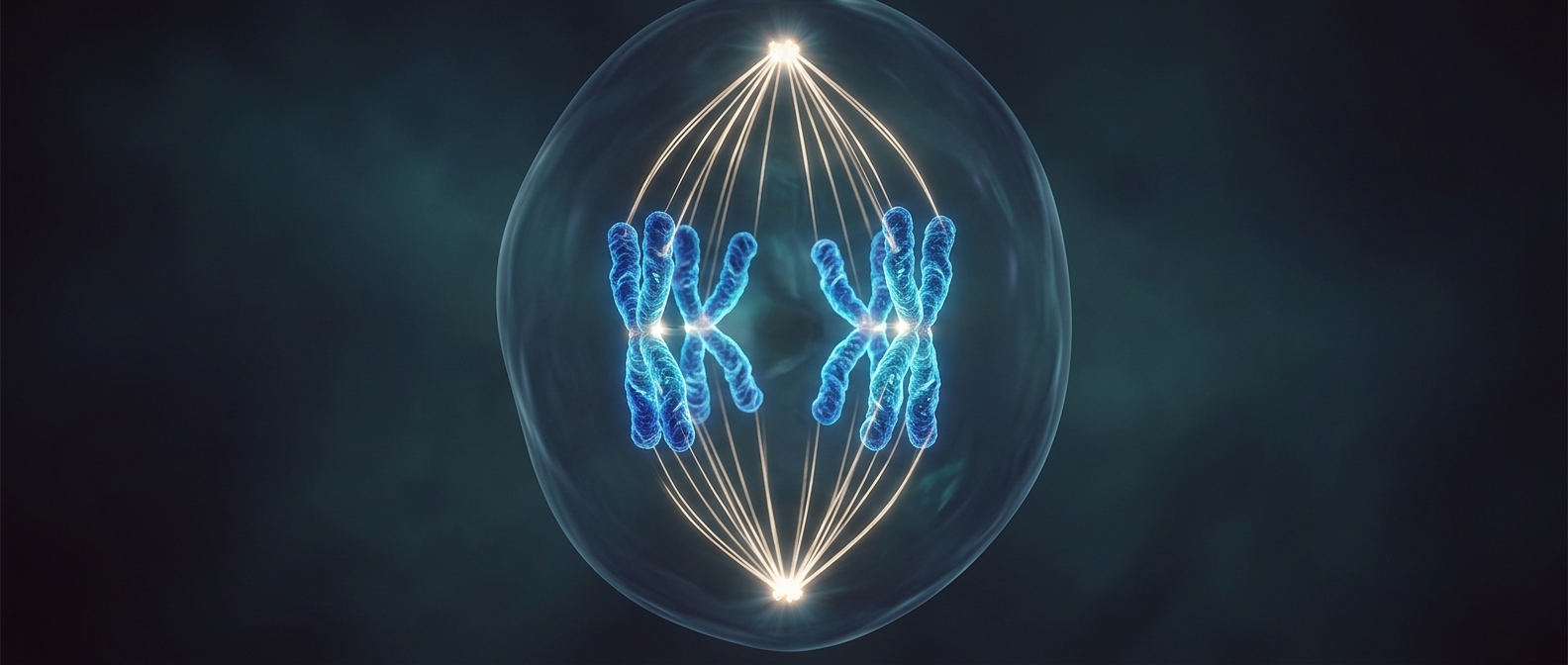
Microtubules do more than carry deliveries. When a cell divides, they reorganize into a spindle, a structure that helps separate duplicated chromosomes. The same basic tubes can therefore serve as transport routes in one situation and as part of the machinery for dividing a cell in another. The framework’s key advantage is that it is both sturdy enough to guide movement and dynamic enough to be rebuilt when the cell’s job changes.