Why a translated line may not fit the scene
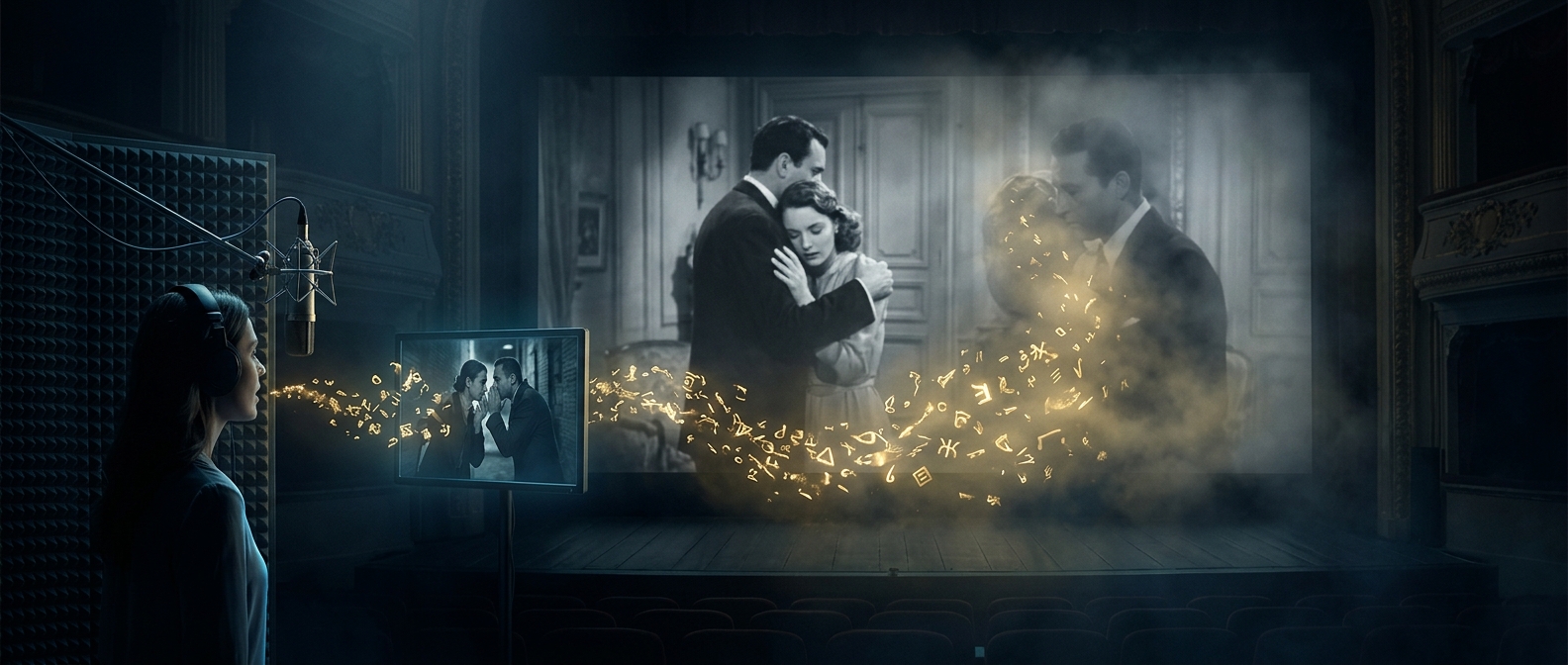
A dub has to work twice: the new dialogue must sound natural in another language, and it must appear to come from the actor on screen. The original performance sets a visible rhythm—when the mouth opens, closes, or pauses—and viewers notice when the voice seems to drift away from it.
That rhythm can make a direct translation unusable. Languages differ in word length, syllable patterns, and where speakers place emphasis. A short phrase in one language may require many more sounds in another, leaving the dub running after the actor’s lips have stopped. Mouth shapes matter, too: a clearly visible closed-lip sound can make a line beginning with an open vowel look especially out of sync.
The translator is adapting a performance
Dubbing writers therefore reshape lines, not just words. They may choose a shorter expression, move an idea earlier or later, or replace a literal phrase with one that conveys the same intention while fitting the actor’s timing. The voice actor then performs within those limits, matching pauses and emotional shifts as closely as possible.
Each adjustment involves a tradeoff. A line that fits the mouth movements may lose a joke, a shade of politeness, or the original speaker’s sharpness. A more faithful translation may sound awkward or visibly mismatched. The goal is often to preserve what the moment means and feels like, even when the exact wording has to change. That is why two dubs of the same scene can deliver different lines while trying to create the same on-screen moment.