A closed mouth creates a timing problem
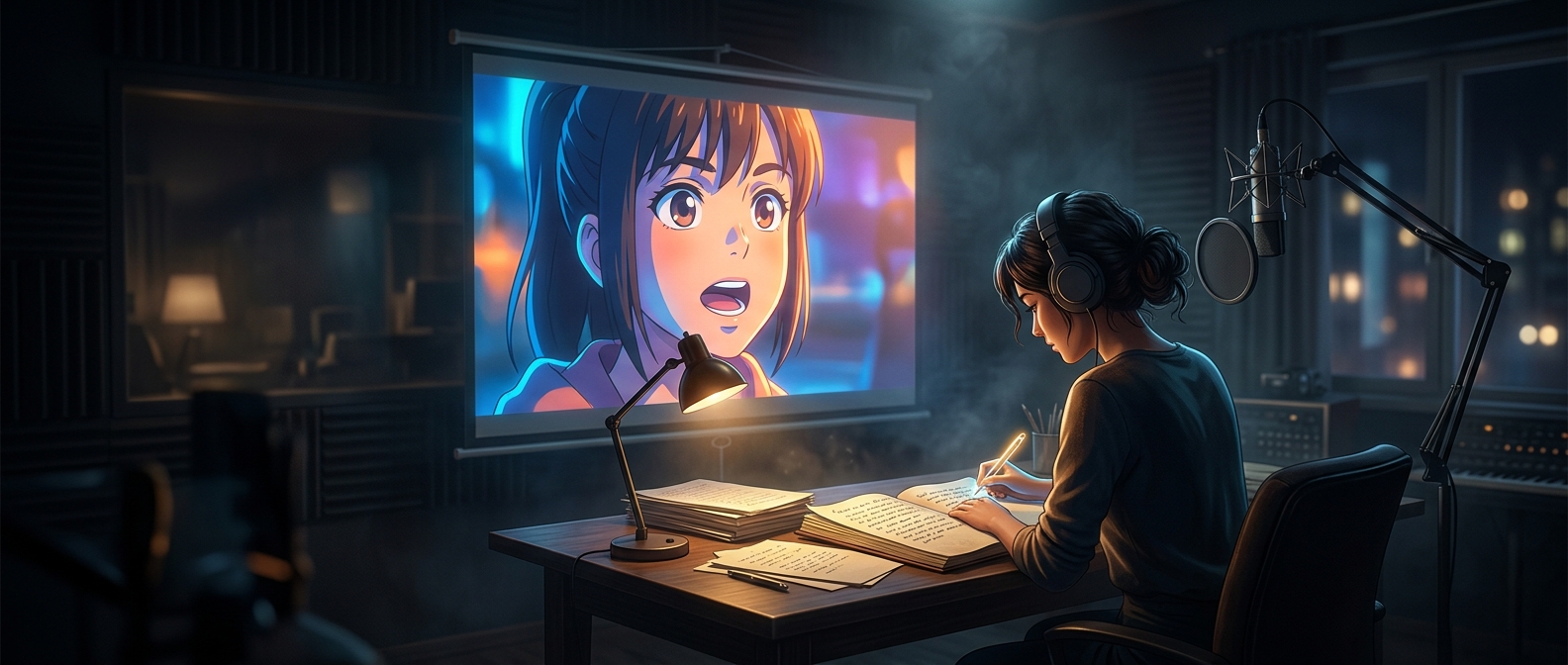
In animation, a line of dialogue has to fit more than the time between mouth movements. The dub also has to make its sounds roughly match what viewers see. When a character’s lips come together at the end of a shot, a voice track that finishes on an open vowel can feel visibly out of sync—even if the line ends at exactly the right moment.
That matters because Japanese and English often build words differently. Many Japanese syllables end in a vowel, while English has plenty of words that finish with a consonant. The match is not automatic, and the visible mouth shape may matter as much as the exact sound: sounds such as “m,” “b,” and “p” are made with the lips closed, so they can make a convincing final beat when the character’s mouth shuts.
The script has to serve the image
A dubbing writer may therefore reshape a sentence rather than translate each word directly. They can choose different wording, shift the order of an idea, or replace a phrase with one that lands on a lip-closing sound at the right instant. The goal is to preserve the scene’s point and emotional effect while giving the actor a line that fits the animation.
That is a constrained writing problem: the line must make sense, sound natural aloud, fit the available time, and cooperate with the character’s visible movements. A small change in wording can solve the visual mismatch, but it may also nudge the sentence’s meaning. In a well-adapted dub, the audience follows the scene without noticing the repair: the mouth closes, and the spoken line seems to close with it.