Why the Paint Went on the Back of an Animation Cel
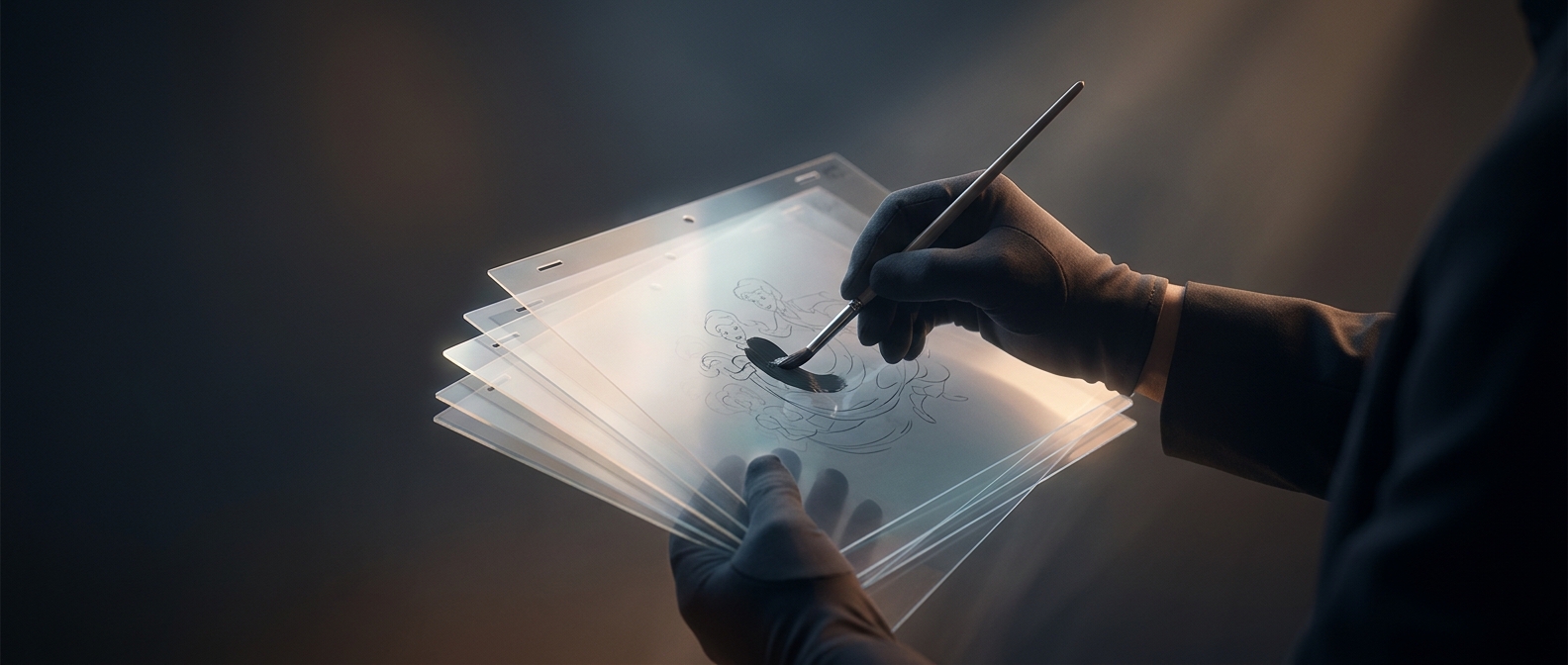
A cel was a clear plastic sheet carrying a character or other moving element. The artist inked its outlines on the side facing the camera, then applied opaque paint to the reverse. The viewer looking through the plastic saw the color beneath the drawing—but the inked contours stayed clean and unobscured.
That arrangement turned the cel into a kind of image sandwich: crisp black lines on the front, color on the back. If paint had been brushed over the outlines on the camera-facing side, it could have softened or covered them. Painting behind the ink let artists fill shapes right up to their boundaries while preserving the finished line art.
A Reusable Layer in a Frame-by-Frame Image
For a shot, artists could place painted cels over a background and photograph the assembled scene. The background might stay in place while a character’s cel changed from one frame to the next. Because the plastic was transparent, the layers combined into a single image without requiring the entire scene to be redrawn each time.
The reverse painting also protected the visible surface: the ink and color were separated from handling and contact with other layers. Each cel became a carefully prepared component, not a complete picture by itself. Its clear areas allowed the background—or another cel beneath it—to show through, while its painted shapes supplied the moving parts. That separation is what made a stack of individually painted sheets read as one changing scene when photographed frame by frame.