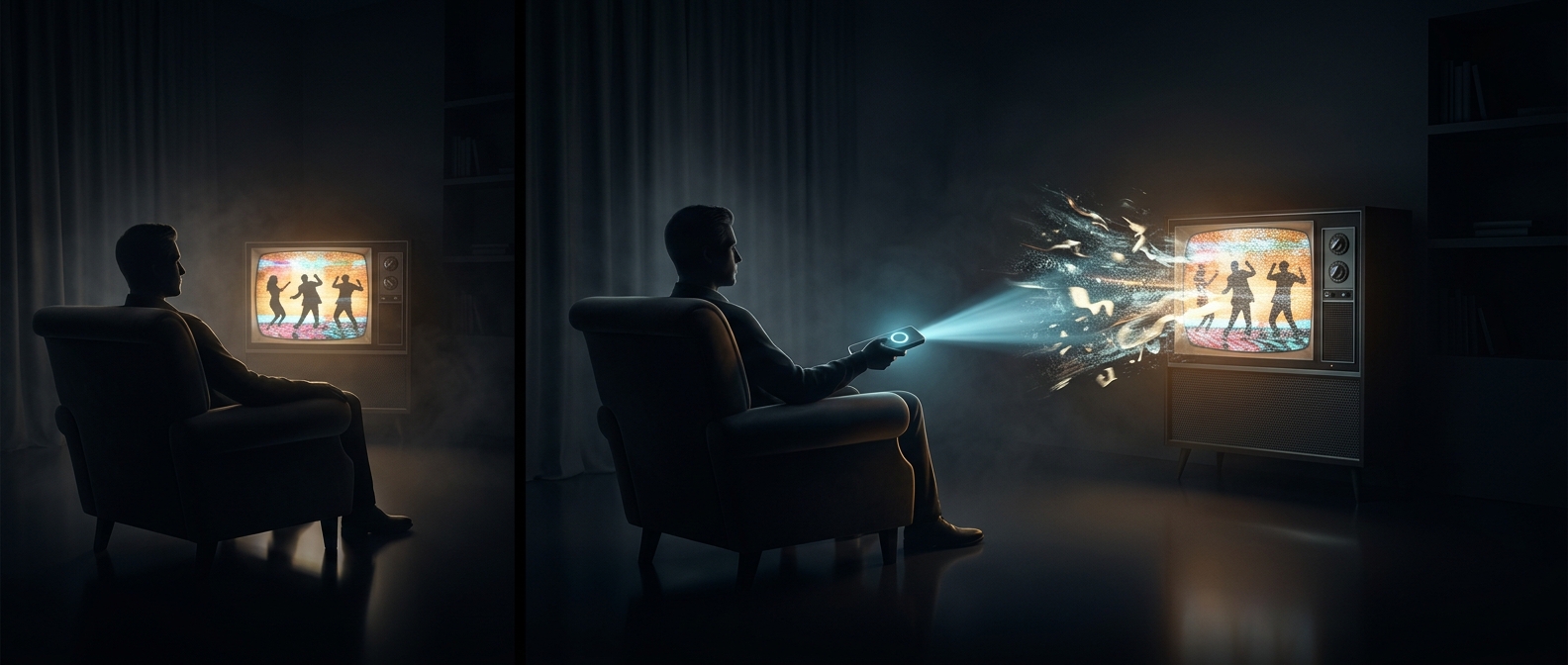
Describing a fight from Daredevil’s point of view
Audio description fills visual gaps for blind and low-vision viewers by narrating important on-screen information during pauses in dialogue. A conventional fight description might identify who moves where and who lands a blow. But in Daredevil, that can tell only part of the story: Matt Murdock is blind, and the show often makes sound and other senses central to how he reads a space.
From visible action to sensory clues
A sensory-first description shifts attention from what a sighted viewer can see to what Matt can perceive. In a hallway fight, that can mean foregrounding a footstep’s direction, a change in breathing, or a nearby impact—not merely reporting that one person punches another. The description still has to make the physical action legible, but it can emphasize the clues that shape Matt’s response.
That choice matters because the scene’s suspense depends on uncertainty and perception. If narration simply maps every movement from an outside observer’s perspective, it may explain the choreography while missing the experience the scene is built around. Sensory detail helps the audio track carry both the action and the character’s way of navigating it.
A different kind of access
Audio description is not just a spoken inventory of visible objects; its timing and point of view affect how a scene feels. In this case, the approach aligns the narration with the show’s storytelling, giving blind and low-vision viewers cues that are meaningful within Matt’s world. A hallway becomes more than a place where blows land: it is a space he interprets through sound, temperature, and smell.