Why One Element Can Have Several Atomic Weights
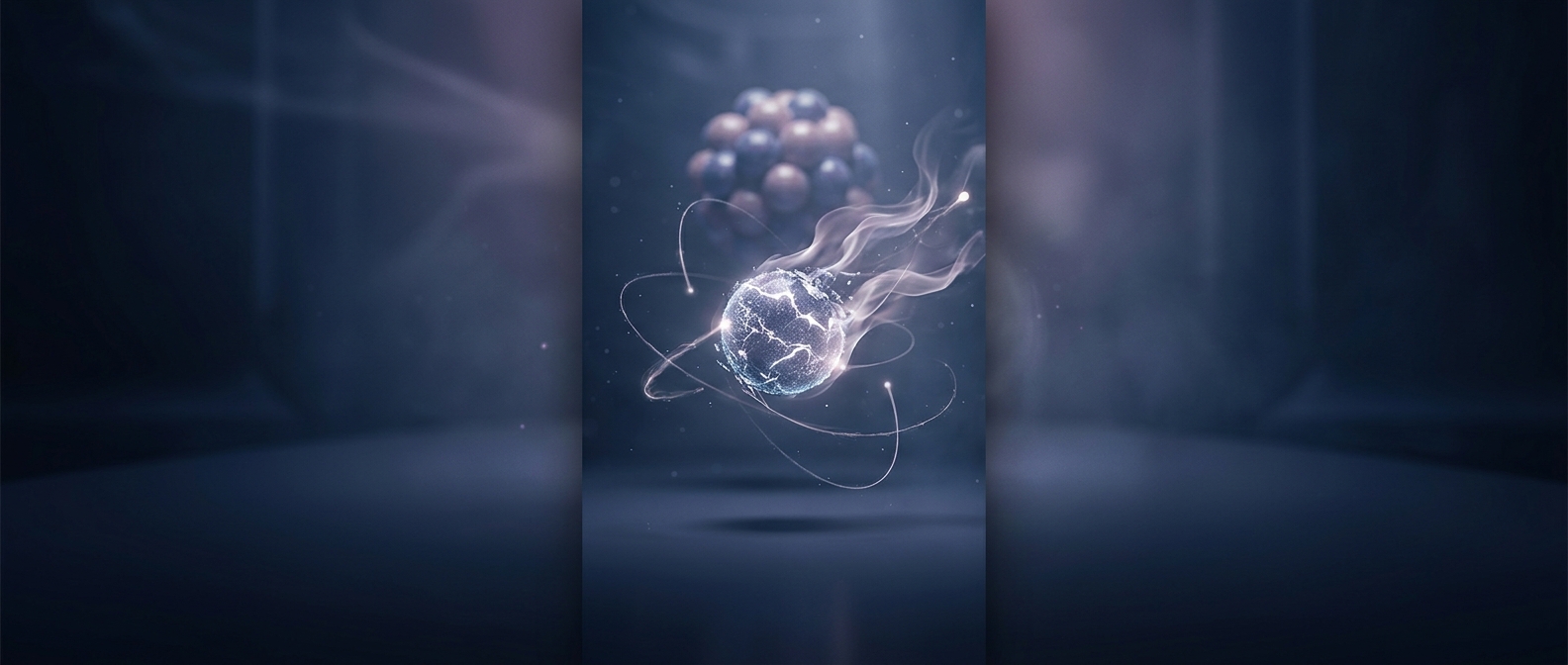
An element is defined by the number of protons in its atoms. Carbon, for example, always has six protons—but a carbon atom may have six, seven, or eight neutrons. Those variants are isotopes. Because neutrons add mass without changing the element’s identity, isotopes of one element have different atomic weights.
The nucleus is a tight bundle of protons and neutrons. Protons repel one another because they carry the same positive electric charge, while a powerful short-range force binds nearby nuclear particles together. A particular balance of protons and neutrons can make a nucleus stable; another balance may leave it with energy or structure it can shed by transforming.
How an Unstable Nucleus Becomes a Clock
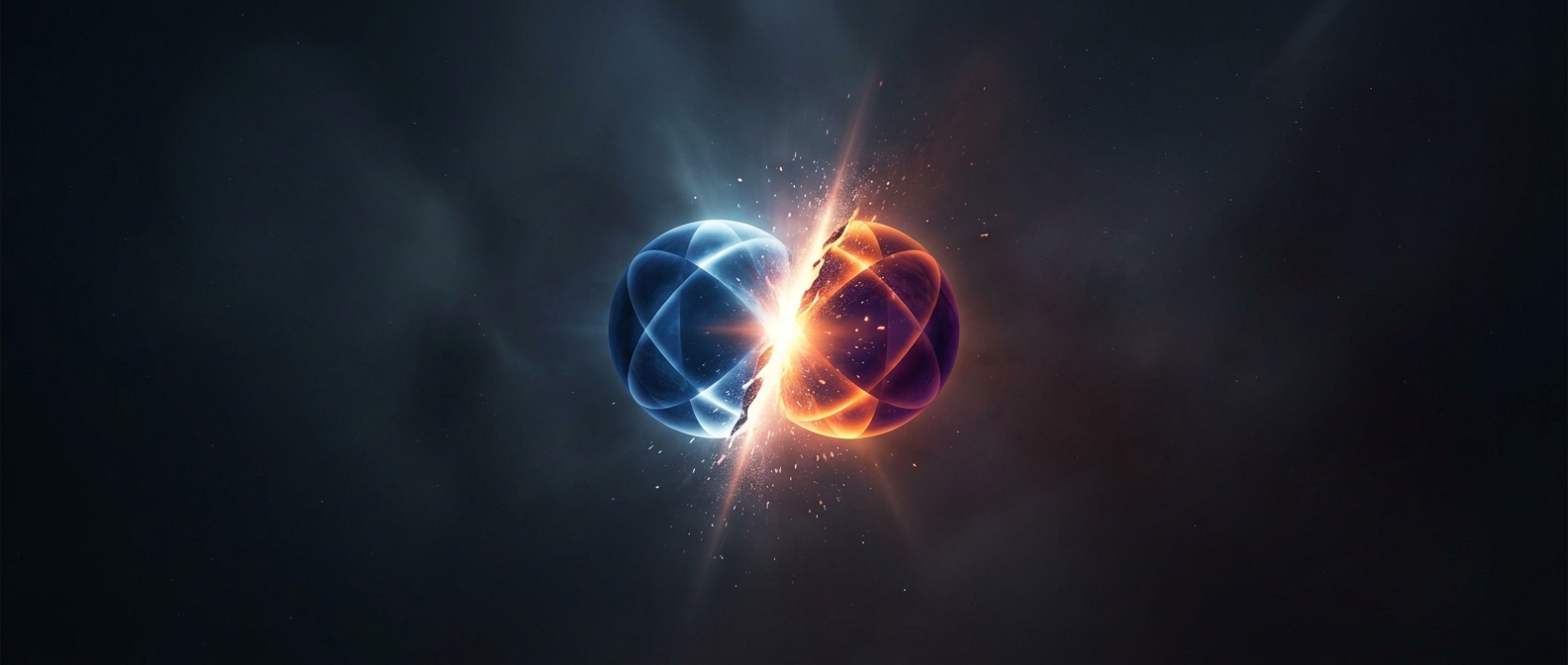
A radioactive isotope changes through radioactive decay: its nucleus emits particles or energy and becomes a different nuclear form. For a given isotope, the chance that any one atom will decay in a particular interval is fixed. The exact moment for an individual atom is unpredictable, but across a large group the share that remains falls in a regular pattern.
The time it takes for half the atoms in a sample to decay is called its half-life. After one half-life, half remain; after another, half of that remainder remains. Scientists can compare the radioactive isotope left in a material with the decay products it has generated to estimate how much time has passed.
What the Clock Can—and Cannot—Tell
An isotope clock works only when scientists can interpret the sample’s history: for example, whether the relevant atoms stayed in place or were later added or lost. Different isotopes decay at different rates, so the useful clock depends on the material and the timescale being investigated.
The striking point is that a radioactive atom is not a tiny stopwatch counting down to a known moment. It is one uncertain member of a vast population whose collective change follows a dependable pattern—enough to turn invisible nuclear transformations into a measure of elapsed time.