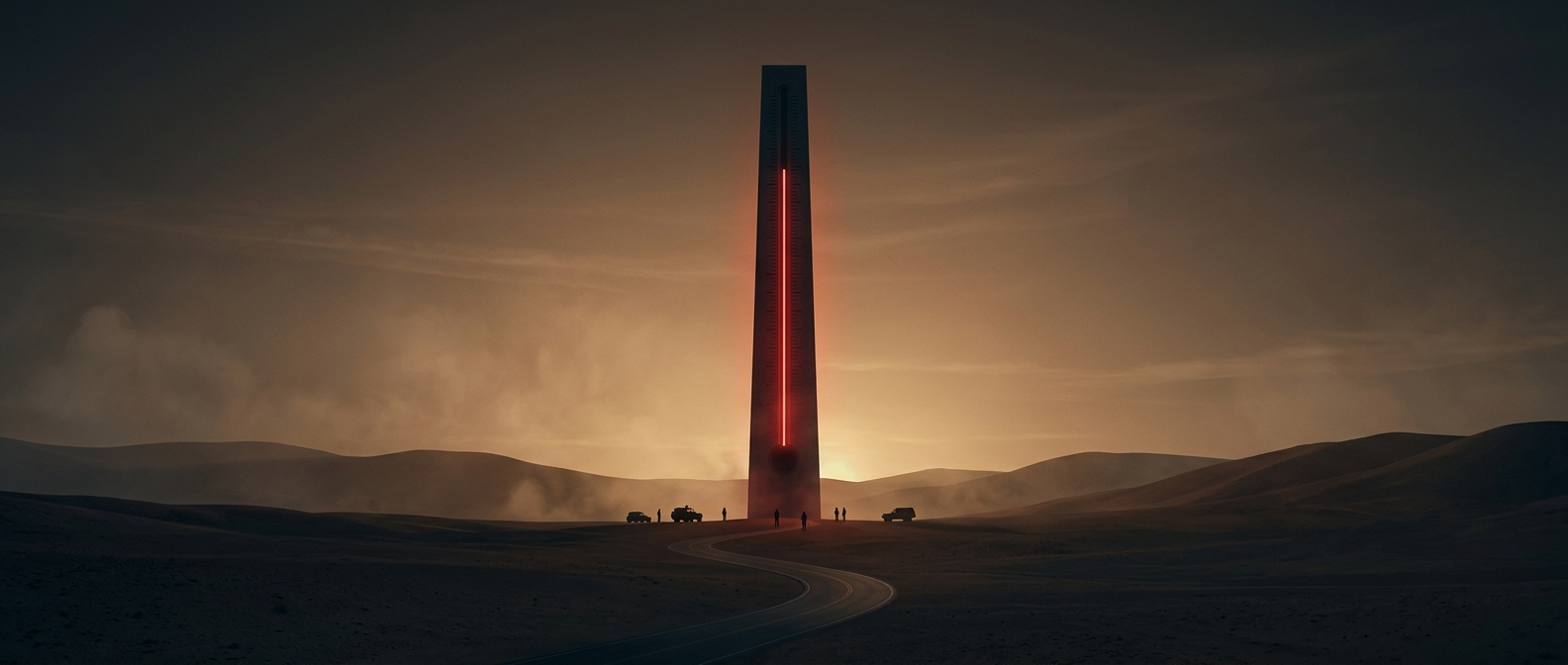
A roadside landmark built around a local extreme
Baker sits on Interstate 15, a busy route between Los Angeles and Las Vegas, in the Mojave Desert near Death Valley. Its giant thermometer turns the region’s defining feature—heat—into something drivers can see before they even step out of the car. Rather than relying on a sign that simply says the desert is hot, the town made temperature itself the attraction.
The tower’s height carries a specific reference: 134 feet, matching the temperature in Fahrenheit associated with Death Valley’s record-setting heat. That makes the structure more than an oversized instrument. It is a monument to a number that has helped define the region’s reputation.
From passing traffic to a reason to stop
A landmark beside a major highway can catch the attention of travelers who might otherwise pass through without noticing the town. The thermometer gives Baker a distinctive roadside identity and a natural subject for photos: the landscape’s heat is made visible in a single, towering object.
That choice fits the setting. In a place where summer temperatures shape the experience of travel, the display connects a familiar inconvenience—checking how hot it is—to the larger desert environment. The thermometer’s real draw is not just its reading; it is the way its scale turns local heat into a spectacle.