A brooch that could move
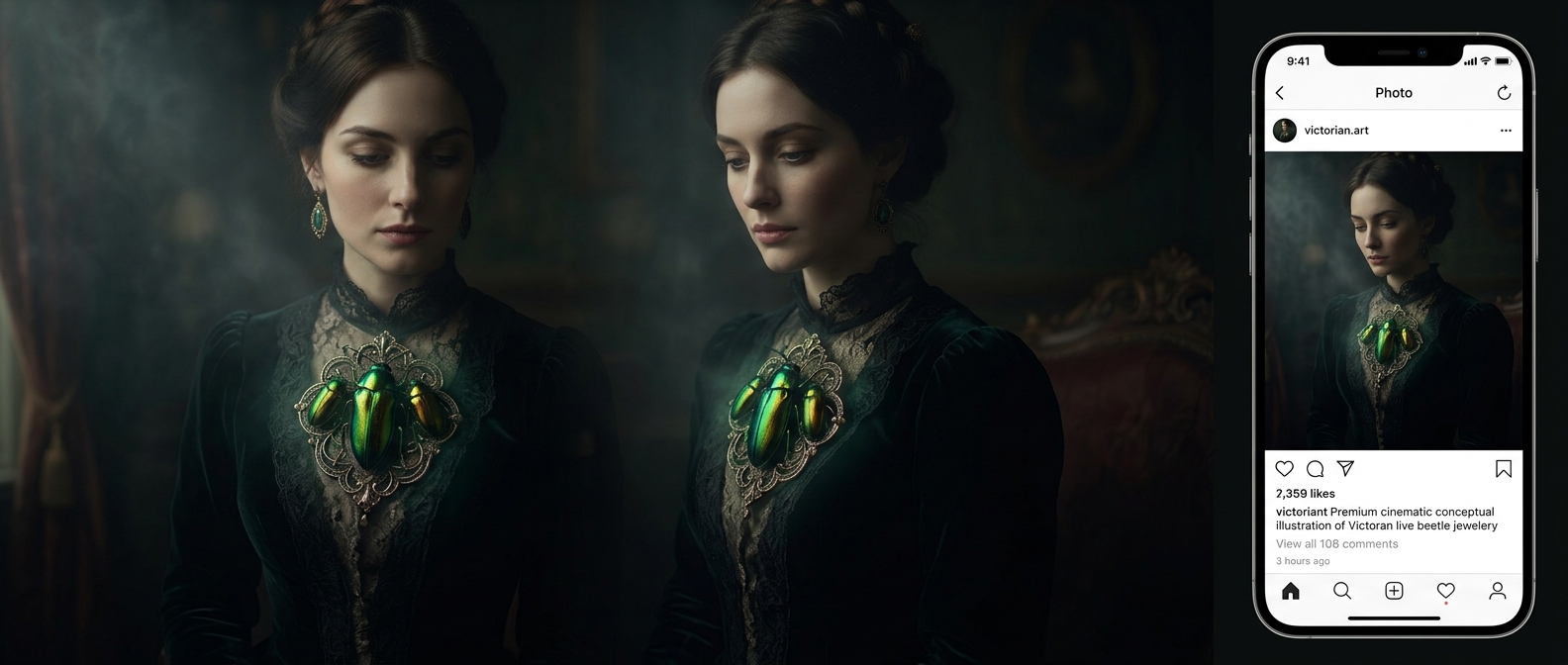
Some Victorian dress ornaments were not carved or enamelled imitations of insects. They were living beetles, chosen for their naturally metallic-looking shells and worn as moving jewelry. A small pin secured the ornament to a dress, while a fine gold chain tethered the beetle so it could crawl over the fabric without wandering away.
That arrangement turned the insect’s movement into part of the display. Instead of sitting rigidly like a conventional brooch, the beetle shifted position and caught the light from different angles. Its shimmer came from the shell itself: tiny structures in the hard outer covering reflect light, producing vivid color without a layer of paint.
Fashion made nature part of the spectacle
Victorian fashion often prized elaborate ornament and novelty, and a live insect offered both. The wearer could display a creature that looked jewel-like but behaved unmistakably like an animal. The tether was the practical compromise: it preserved that movement while keeping the beetle close to the dress.
The effect also depended on a delicate balance. A beetle had to remain alive and active to make the ornament distinctive, yet it was being restrained for someone else’s display. The brooch was not merely shaped like nature; it brought a small, moving piece of nature onto the wearer’s clothing.