Why a desert cargo route can favor trains
A truck can reach places where no railway exists, but each truck carries only a fraction of what a freight train can haul. When heavy loads must travel the same long route again and again, that difference changes the economics: a railway requires a large upfront investment, but once built, one train crew can move many loads in a single trip. Fewer separate vehicles are needed to shift the same volume of cargo.
That is why a businessman accustomed to trucks might turn to rail. The goal is not to make trucks obsolete; it is to use trains for the long, repetitive haul, then rely on trucks where rail lines do not reach. This division works best when the cargo flow is steady enough to keep the railway busy and the destination can handle freight arriving in large batches.
The railway trades flexibility for capacity
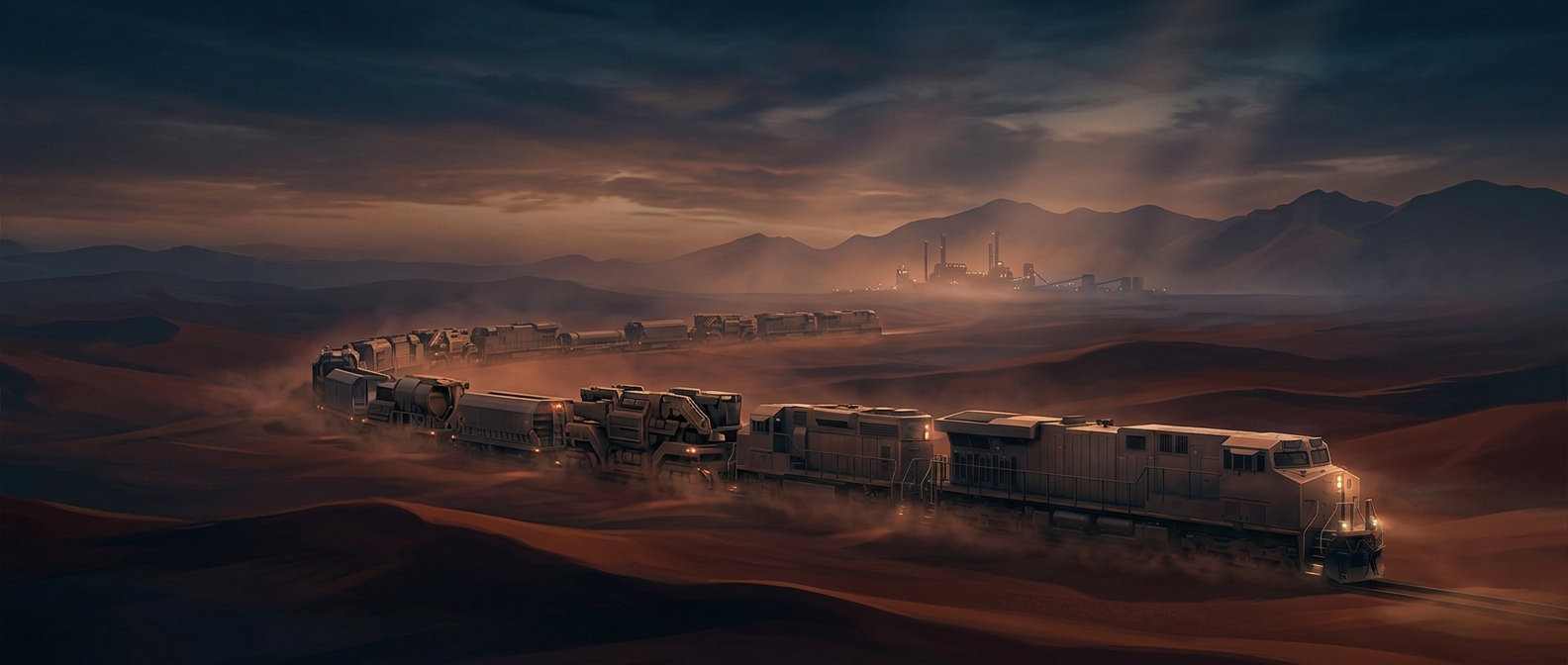
A truck route can bend around obstacles and serve individual sites. A railway is less flexible: its track must be surveyed, built, and maintained along a fixed corridor. In a remote desert, that means taking on the cost and difficulty of construction far from established transport networks. Windblown sand and intense heat can also make track and equipment upkeep a continuing concern.
The payoff is a different kind of scale. Instead of dispatching a stream of trucks over a long distance, a railway concentrates cargo onto a small number of heavy trains. The desert’s distance does not disappear; the railway makes each trip carry more of the burden.