A refrigerator built around a different kind of cooling
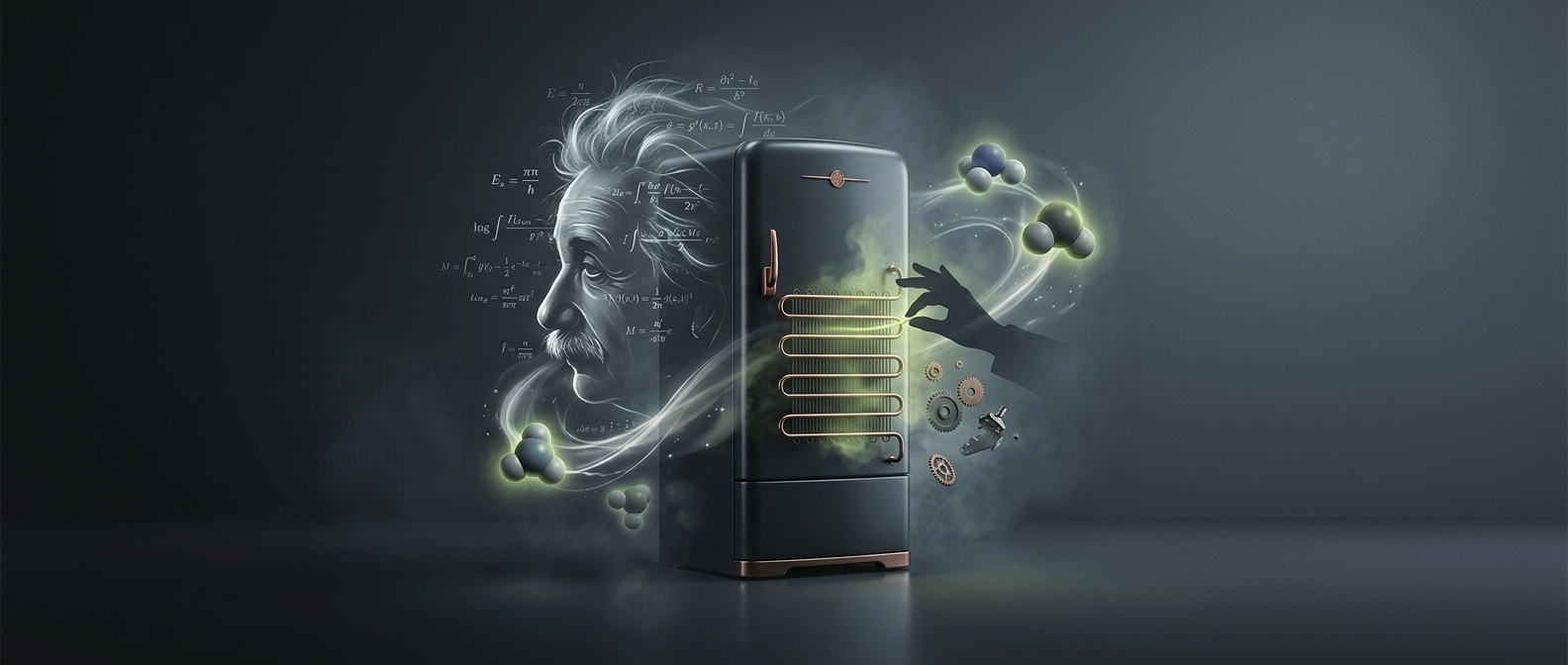
Most refrigerators of the time relied on a motor-driven compressor to squeeze and circulate a refrigerant. The Einstein–Szilard design instead used heat to drive a sealed cycle of fluids. Ammonia, butane, and water each played a role: as the substances evaporated and were absorbed in turn, the cycle carried heat out of the refrigerated space. The design avoided the conventional compressor, but replacing one familiar machine with a more complicated chemical process brought its own engineering demands.
Why a safer idea struggled to sell
A patent established that the design could be protected; it did not make the appliance practical for a household. The refrigerator proved noisy and inefficient, while conventional models were becoming easier to manufacture and more effective at keeping food cold. A refrigerator that addressed the danger of leaking refrigerant still had to compete on the everyday measures buyers noticed: performance, cost, and convenience.
The timing also worked against it. Freon-based refrigerators became the commercial standard, giving manufacturers and consumers a familiar alternative. The Einstein–Szilard design was therefore overtaken not because safety was irrelevant, but because safety alone could not compensate for a clunky machine that cooled less effectively. Its story captures a hard rule of invention: a safer technology must also fit the practical expectations of the people who will use it.