Why a dead star does not keep shrinking
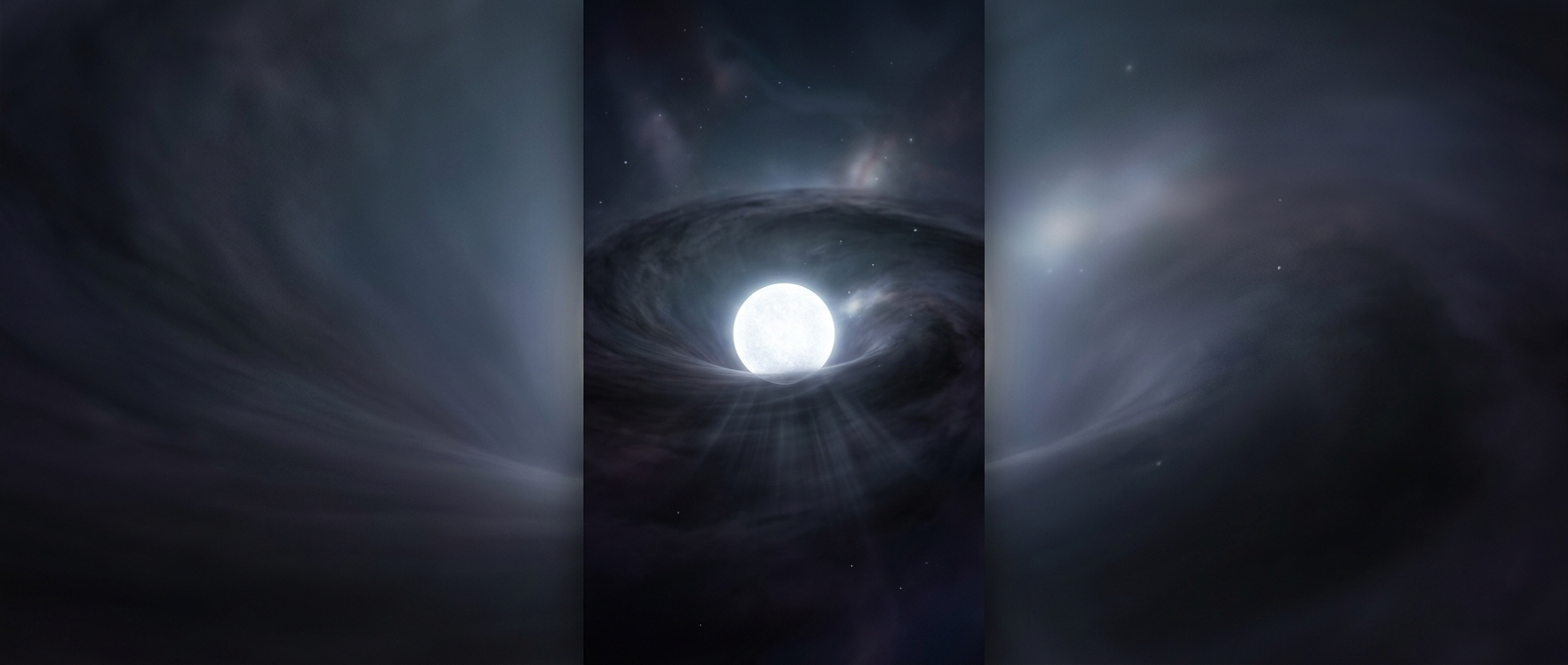
A star shines because nuclear reactions in its core release energy, helping its hot interior push outward against gravity. When a star like the Sun runs out of usable fuel, that outward support fades. Its outer layers drift away, leaving the core behind as a white dwarf: a compact object with roughly the mass of a star packed into a body about the size of Earth.
The quantum pressure holding it up
Gravity keeps squeezing the remnant, but the electrons inside it resist being packed arbitrarily close together. Electrons are fermions, particles governed by a quantum rule that prevents them from sharing the same complete state. As the star is compressed, more electrons are forced into higher-energy states, creating a pressure called electron degeneracy pressure. Unlike the pressure in an ordinary gas, it does not depend on the star continuing to generate heat through fusion.
That distinction explains how a white dwarf can remain stable after its core has stopped producing energy. It slowly loses its stored heat and dims, while electron degeneracy pressure continues to counter gravity. The remnant is not being held up by fresh nuclear fuel; it is supported by the crowded electrons’ quantum behavior.
A limit to the support
Electron pressure can resist collapse only up to a point. If a white dwarf gains too much mass—for example, by drawing material from a nearby companion star—gravity can overwhelm that support. The star may then collapse further or undergo a powerful thermonuclear explosion, depending on the circumstances.
The familiar comparison that a teaspoon of white-dwarf matter would weigh several tons conveys the scale of the compression: the atoms have been stripped apart, and their nuclei and electrons are packed far more tightly than in ordinary matter. The star’s survival depends not on burning brightly, but on a quantum rule that keeps its remnant from being crushed still smaller.