The Light Comes From the Fall
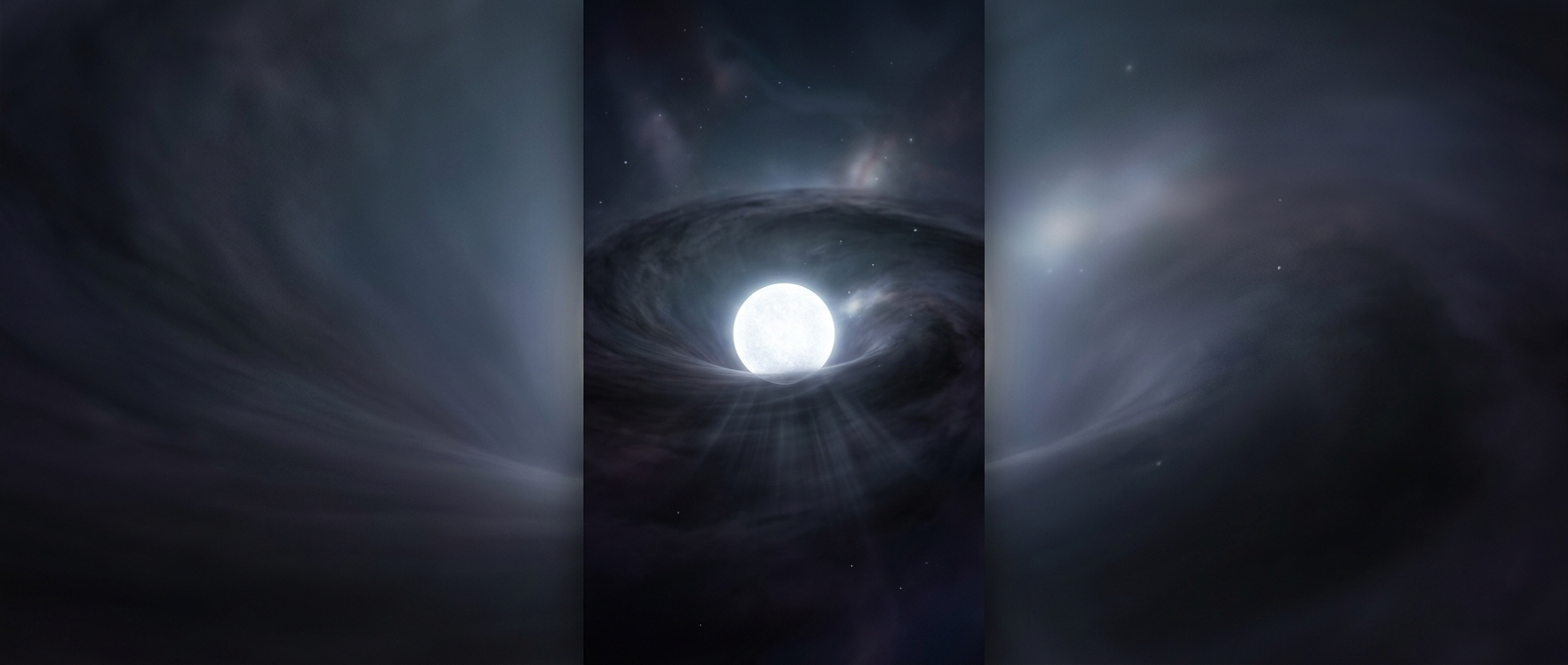
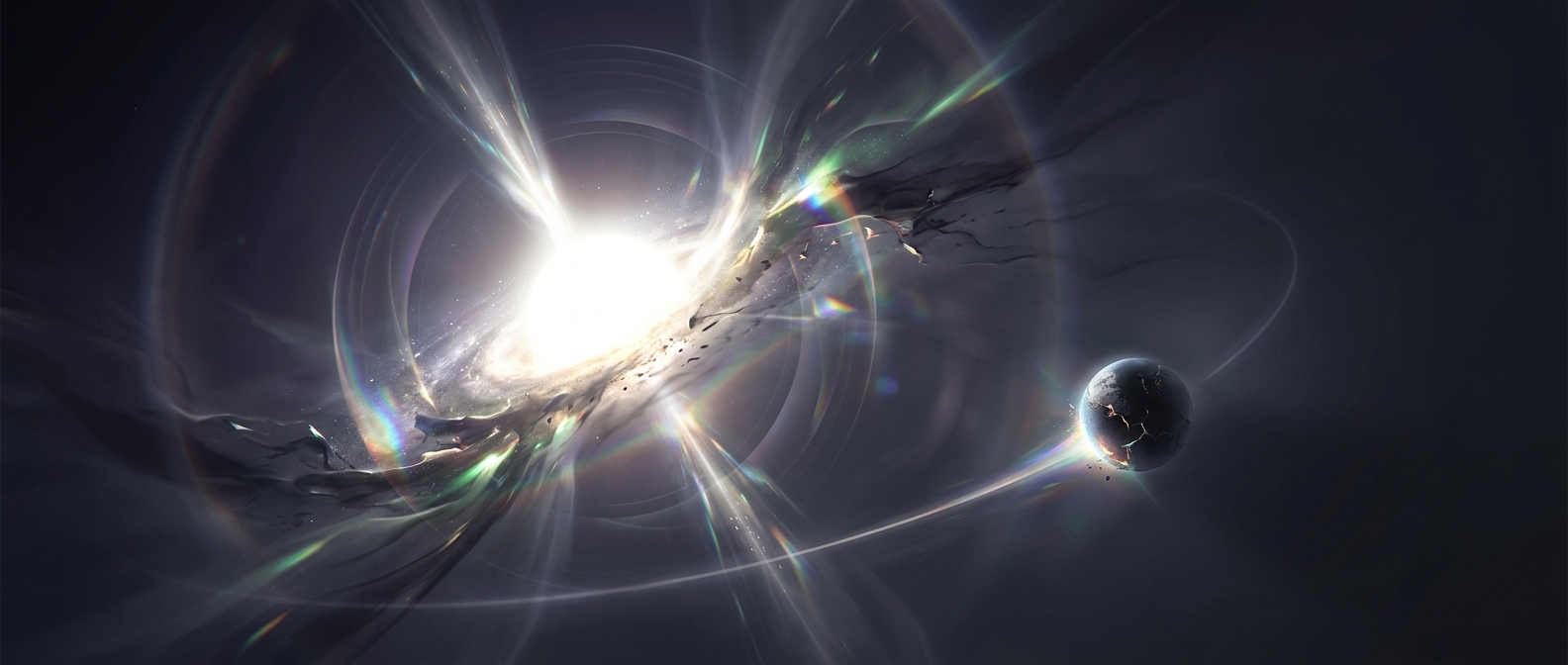
A quasar is the intensely bright center of a distant galaxy. Its black hole does not emit the visible glow. Instead, the glow comes from an accretion disk: a flattened, rapidly swirling supply of gas and dust moving inward under the black hole’s gravity.
The material does not simply drop straight in. As neighboring layers orbit at different speeds, they rub and tug on one another, converting some of their orbital energy into heat. Closer to the black hole, the gas can become hot enough to radiate across many wavelengths, including visible light and X-rays. Because the disk contains enormous amounts of matter and releases energy efficiently, it can outshine the stars in its host galaxy.
Why Some Matter Escapes
Not everything in the disk crosses the black hole’s boundary. Strong magnetic fields in the swirling gas can help funnel a portion of the material and energy into narrow jets that shoot outward at nearly the speed of light. The jets are distinct from the disk’s glow: they carry energy away from the central region and can spread its influence far beyond the black hole’s immediate surroundings.
That contrast is what makes a quasar especially striking. Gravity draws matter inward, powering an extraordinarily bright disk, while the same turbulent environment can send jets outward. The black hole remains unseen behind its boundary; astronomers detect the energetic activity around it, sometimes from so far away that the light began its journey toward Earth billions of years ago.