Why a comet’s gas tail points away from the Sun
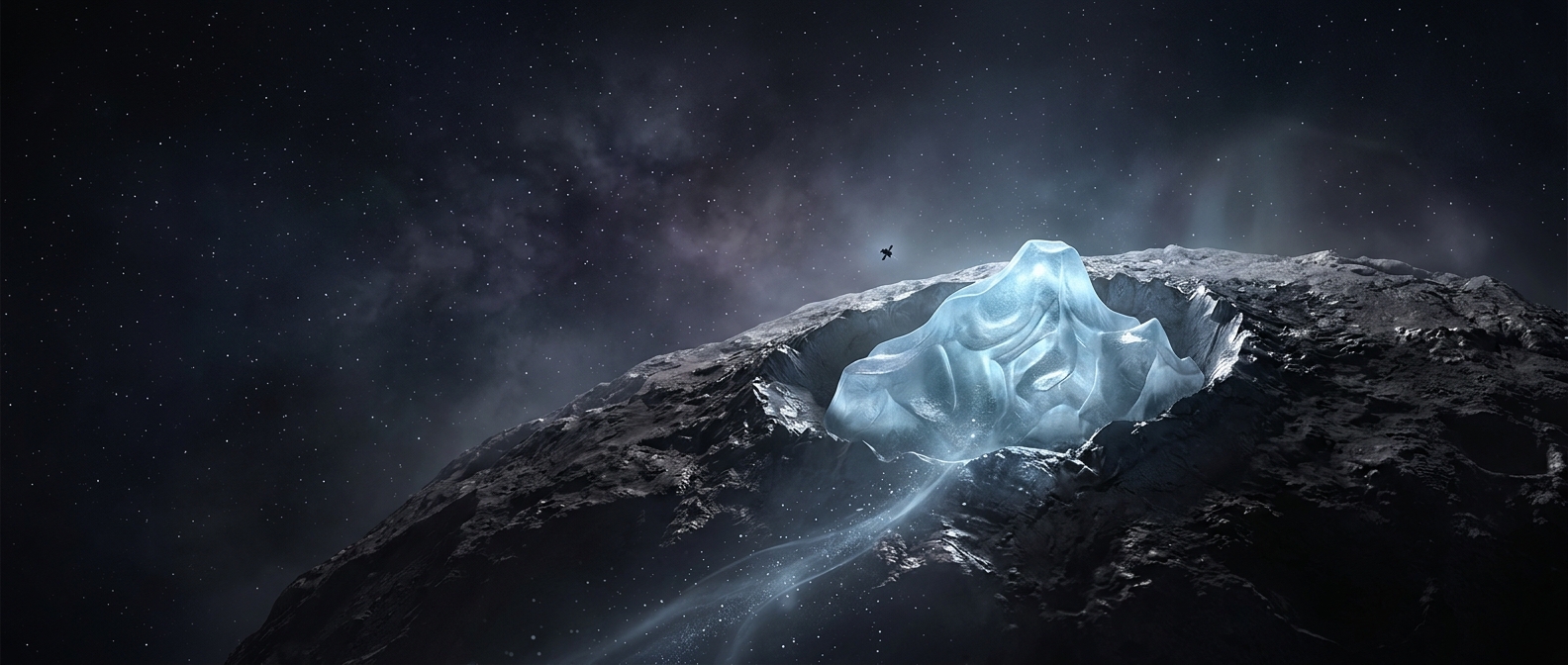
A comet is a small body of ice and dust. As it approaches the Sun, sunlight warms its surface and releases gas. Sunlight also knocks electrons loose from some gas atoms, turning the gas into electrically charged particles called ions. This escaping material forms a plasma tail—a narrow stream of charged gas.
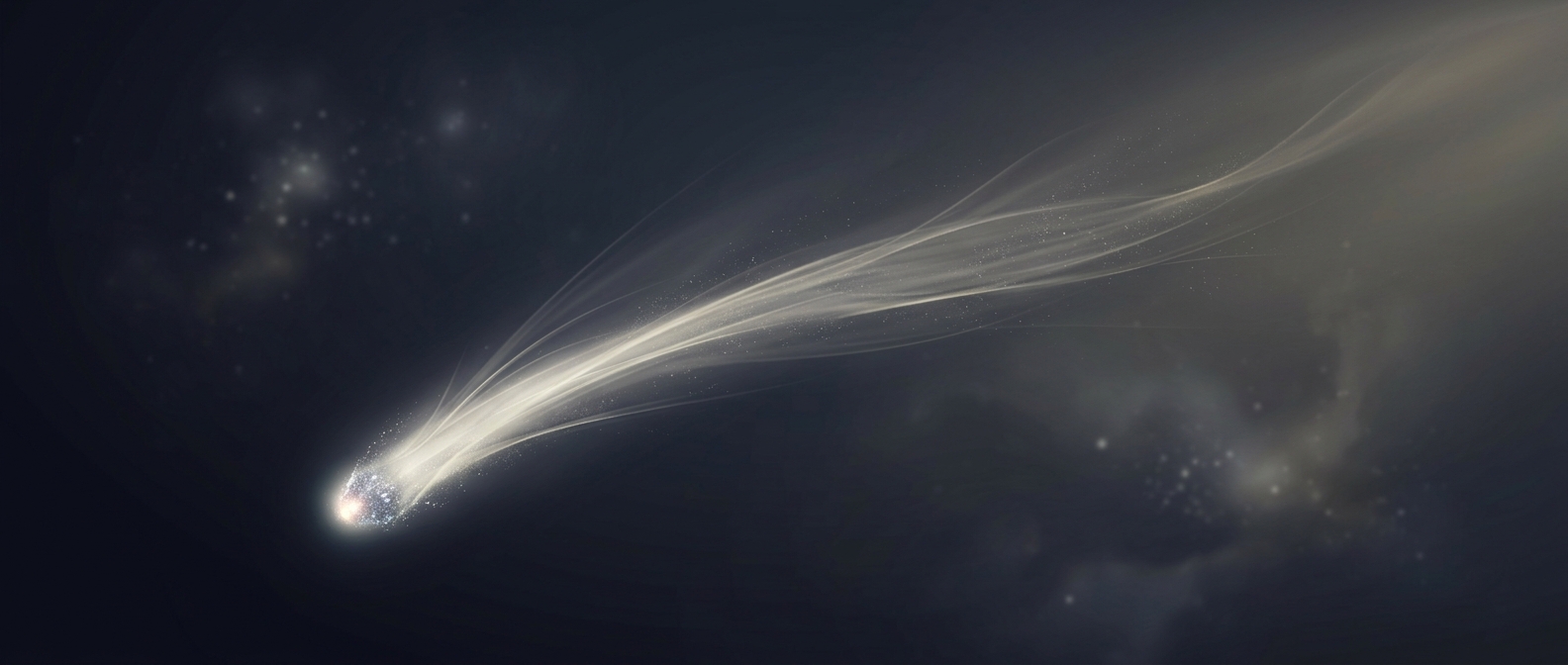
The solar wind, a flow of charged particles from the Sun, carries the comet’s ions outward. Magnetic fields embedded in that flow help sweep the ions into a tail extending away from the Sun. The direction is set mainly by the solar wind, not by the comet’s motion through space, so the tail can point sideways or even appear to lead the comet as it travels along its orbit.
Why the dust tail behaves differently
Dust released from the comet is not pushed around in the same way. Sunlight exerts a gentle pressure on each grain, while the Sun’s gravity continues to pull it inward. The balance depends on grain size: smaller grains are affected more strongly by sunlight, while larger ones follow paths closer to the comet’s own orbit.
Because each grain keeps moving along its separate path after release, the dust spreads into a broad, curved tail. Some of that material can lie ahead of the comet along its orbit. The two tails therefore trace different forces: the straight ion tail records the solar wind’s outward push, while the dust tail preserves a curved trail of particles left behind as the comet moves.