How a neutron-star crash builds gold
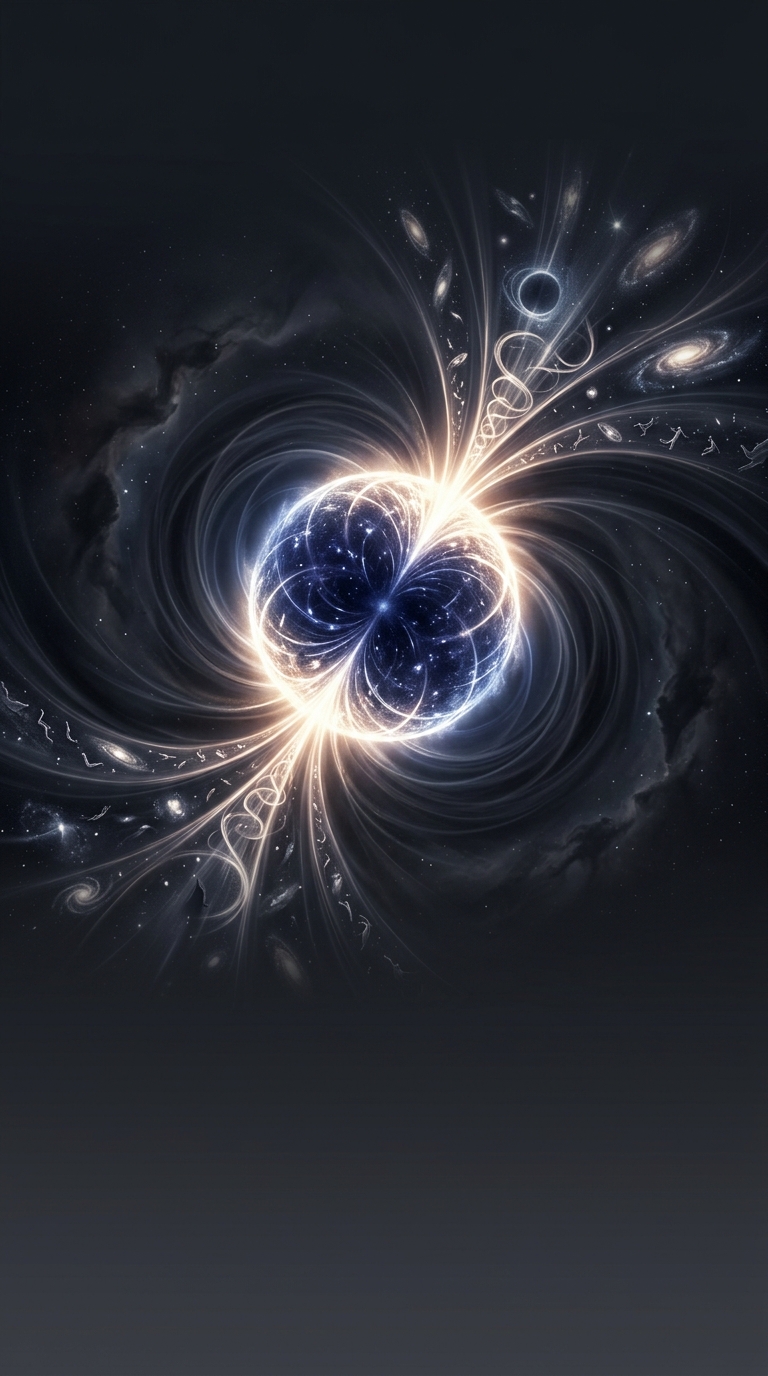
Gold’s origin lies in a process called rapid neutron capture, or the r-process. In the wreckage of merging neutron stars, atomic nuclei are exposed to an extraordinary supply of free neutrons. They can absorb neutrons faster than they can decay, becoming very heavy, unstable nuclei. As those nuclei later shed energy and transform into more stable forms, some end up as gold.
The collision does not make a finished nugget. It flings newly made elements into space as hot, expanding debris. As that material cools, atoms and dust can mix with the gas between stars. The gold is then part of the raw material from which later stars and planetary systems form.
From stellar debris to Earth
Earth formed from a cloud of gas and dust roughly 4.6 billion years ago, long after the cosmic events that supplied some of its ingredients. Gold in that cloud became part of the young planet. During Earth’s early melting, much of its gold—an element that readily joins iron—likely traveled downward with metal toward the core. Gold that remained in the rocky outer layers, along with material added later, is part of the supply humans can reach.
Scientists can identify neutron-star mergers as a powerful way to produce heavy elements, but the precise share of Earth’s gold that came from them remains an open question. Other extreme cosmic environments may also contribute, and the relative importance of different sources is still being worked out.
That makes a gold ring more than ancient matter: its atoms may have been made in a stellar collision, scattered through space, folded into the cloud that formed the Solar System, and carried through Earth’s own violent beginnings before they ever reached the surface.