How a tap could call up a flight plan
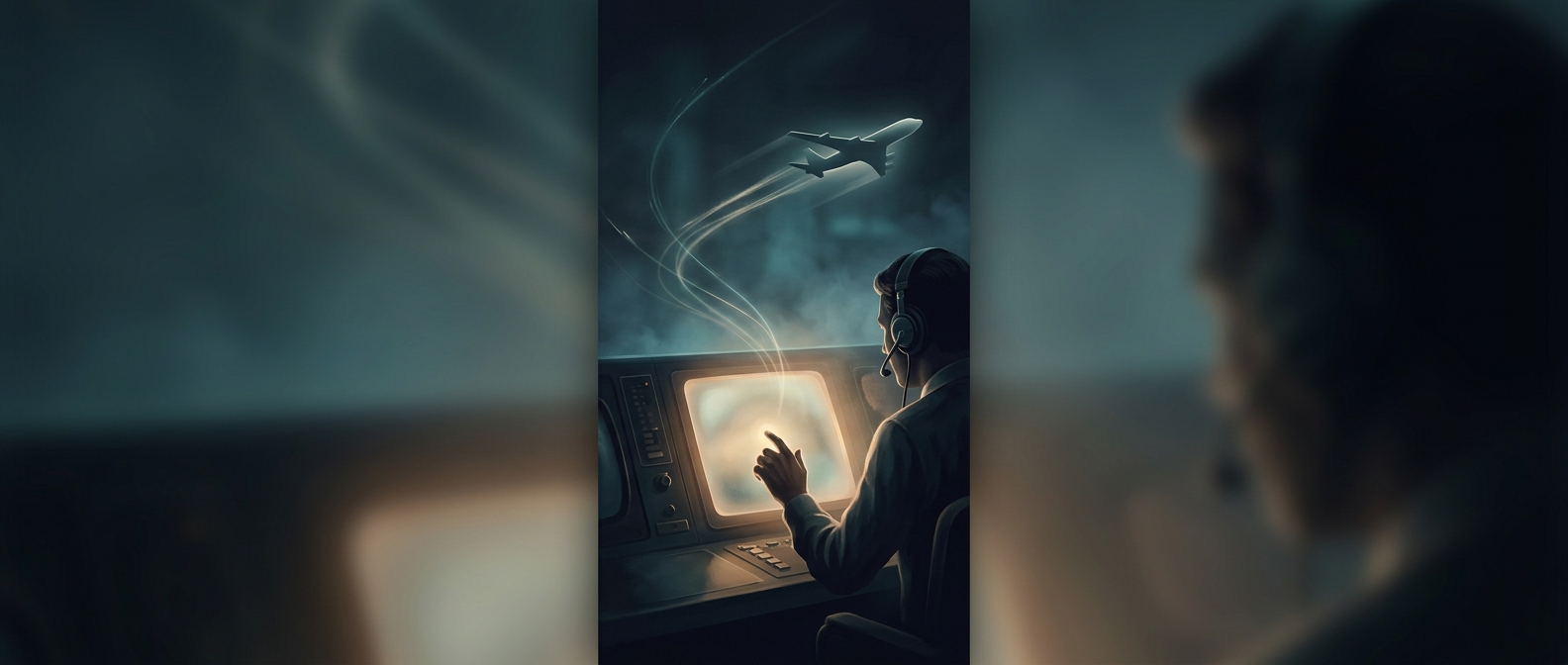
A radar display shows more than an aircraft’s position: each plotted symbol is connected to a record of that flight, including its route and identifying details. In the British air-traffic-control system described here, a controller could touch the symbol on the display and bring up its associated plan, rather than locate the record through typed commands.
The key step was linking a spot on the screen to the computer’s data. The system had to interpret where the controller touched, match that location to the aircraft symbol, and select the right flight record. The screen was therefore not merely showing information; it had become a way to address and act on it.
A tool shaped by the control room
That mattered in a setting where controllers needed to move quickly between the radar picture and detailed flight information. Typing required translating a visible target into commands; touching let the controller start from the target itself. It made the display a more direct interface between what the controller saw and what the computer knew.
These early systems were built for a specific, high-stakes job, not for the broad range of gestures and apps found on modern phones. Their significance lies in that practical change: a screen could serve as an input device, years before touch interaction became familiar in everyday electronics. In the control room, touching an aircraft symbol could connect a moving mark on radar to the information needed to manage its flight.