Fission supplies heat; the turbine makes electricity
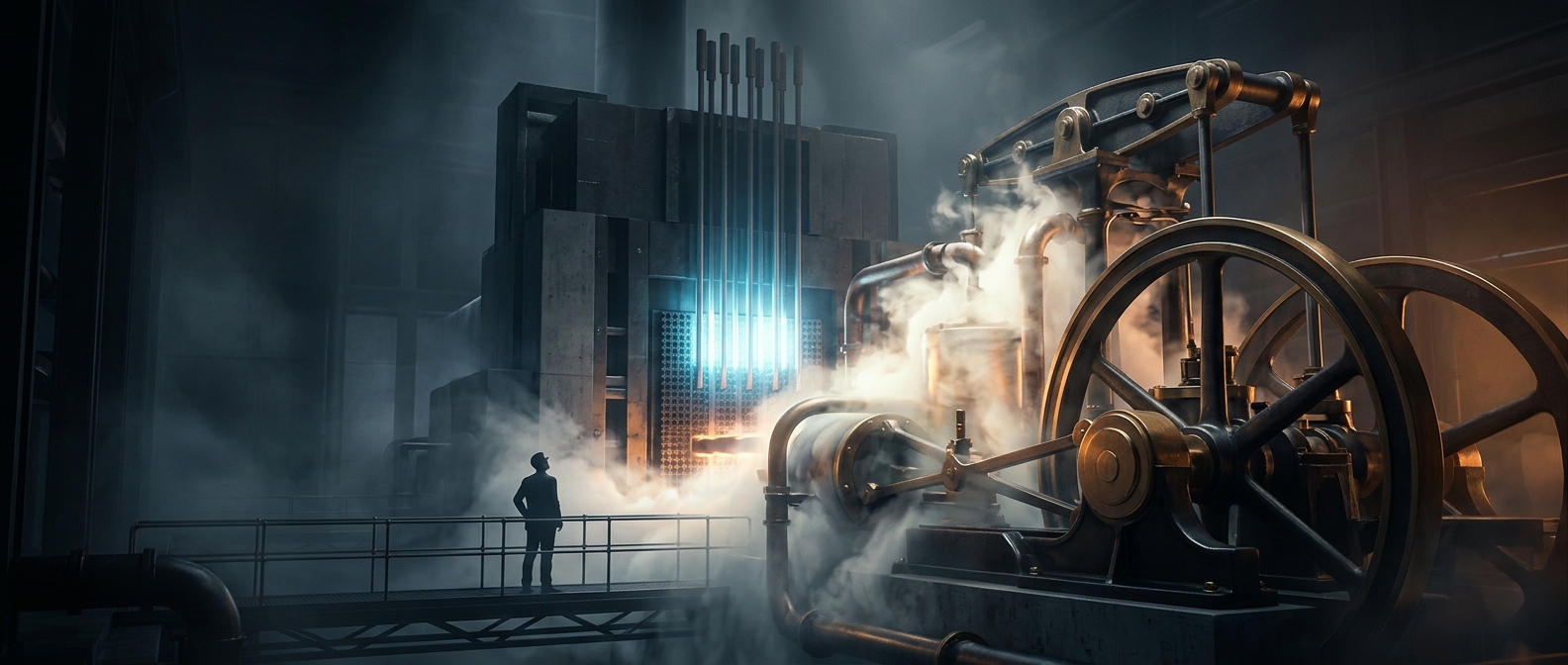
Inside a reactor, atoms of nuclear fuel split in a process called fission. Each split releases heat and neutrons, which can trigger further splits. Control rods absorb some of those neutrons, helping operators regulate the chain reaction and the heat it produces.
A coolant carries that heat away from the fuel. In many reactors, water is involved in two distinct jobs: it removes heat from the reactor core, and steam turns the turbine. Some designs boil water directly in the reactor; others use the hot reactor water to heat a separate supply of water into steam. Keeping the circuits separate can help keep radioactive material from reaching the turbine system.
Steam completes the familiar power cycle
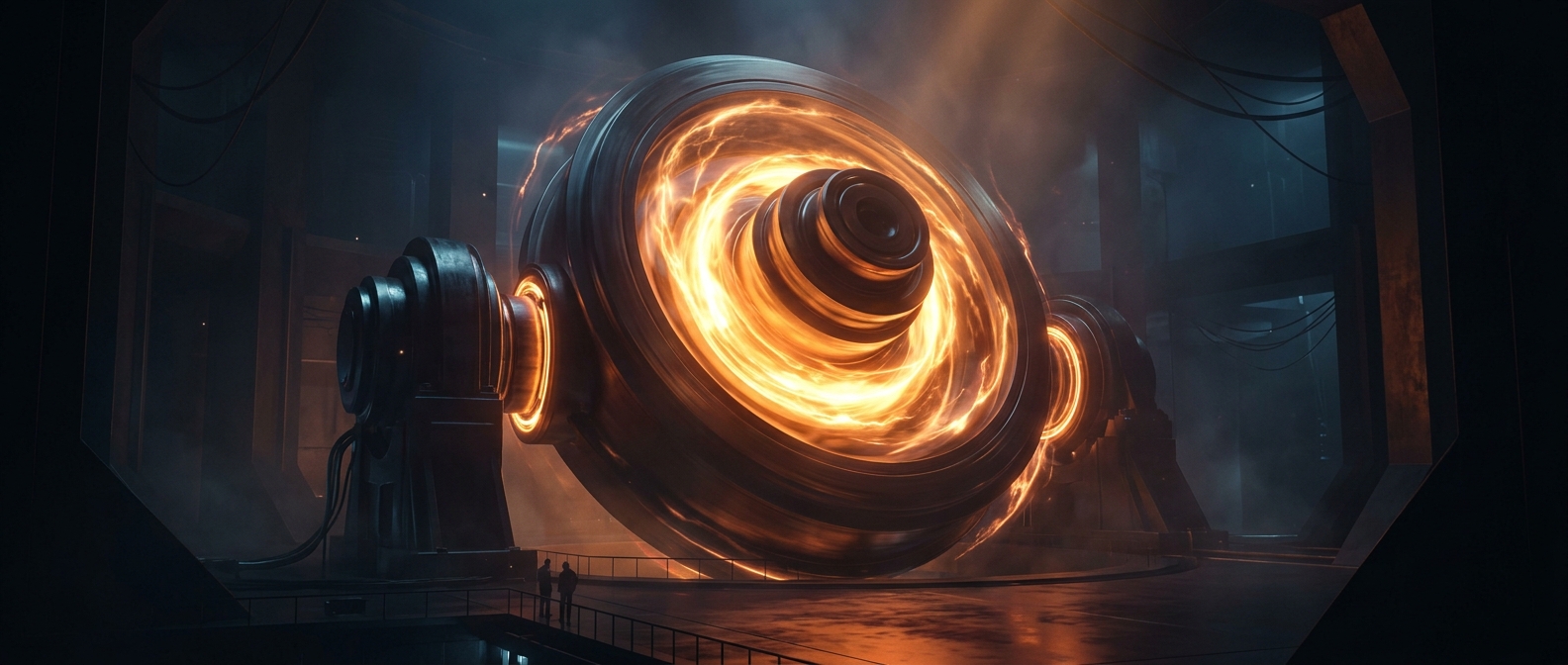
The steam rushes through blades on a turbine, making its shaft spin. That shaft turns a generator, where moving magnets and coils produce electric current. The reactor provides the heat, but the turbine-generator is what converts the steam’s motion into electricity—a process shared with many fossil-fuel and solar-thermal power plants.
After passing through the turbine, steam is cooled back into water in a condenser and pumped around for reuse. So the “giant steam engine” comparison is more than a visual analogy: the plant repeatedly turns heat into moving steam, then mechanical motion, then electricity. What is unusual is the heat source—fission rather than burning fuel.