What Cold Does to Rubber’s Molecular Clock
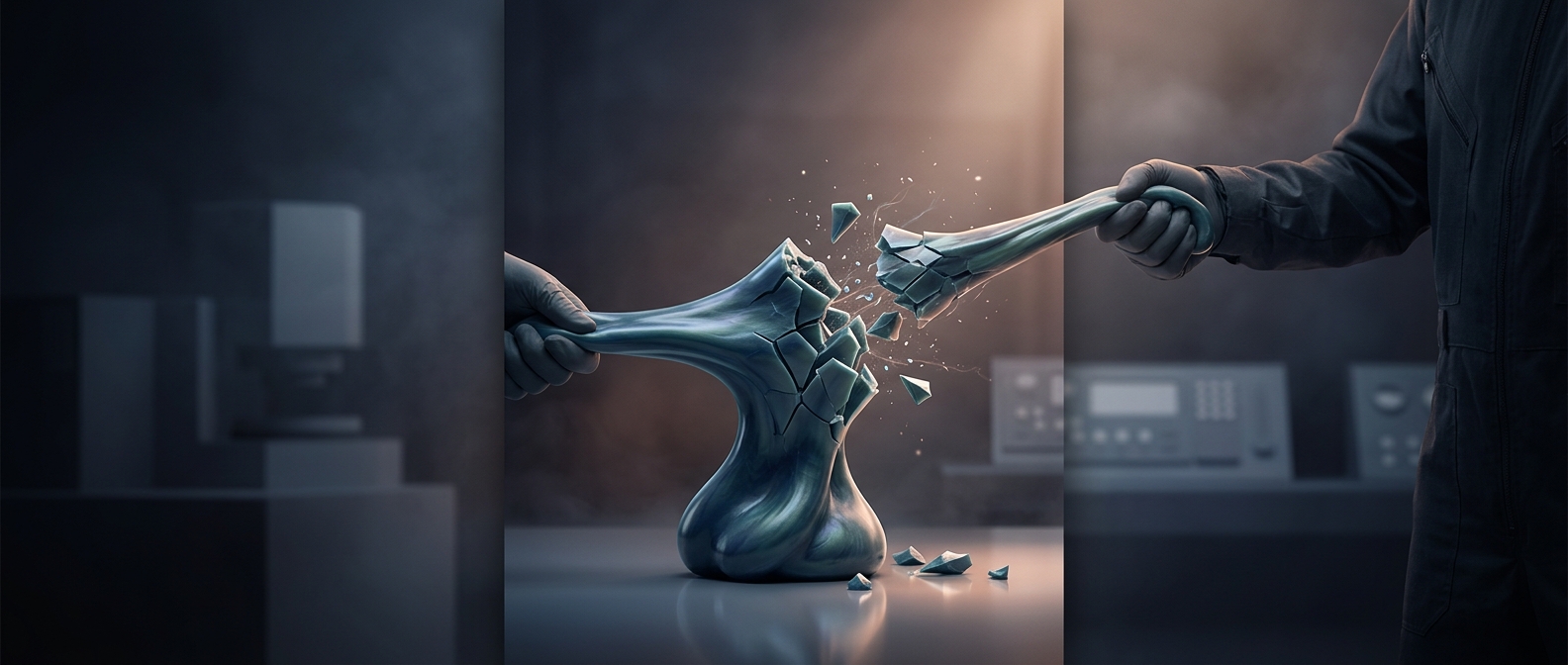
A rubber band stretches because its long polymer molecules—chain-like structures—can uncoil and slide past one another, then recoil when released. Over time, oxygen and other environmental stresses alter those chains. Some links break; others form extra bonds between chains. Either change can make rubber less able to flex, so it cracks instead of stretching.
Those changes are chemical reactions, and most proceed more slowly at lower temperatures. Cooling a band therefore slows one route to brittleness; it does not repair damaged chains or halt aging altogether.
Why a Chilled Band Feels Different
Cold also makes rubber temporarily less flexible. Its molecules have less thermal motion, so the chains cannot shift as readily when the band is pulled. That stiffness is not necessarily permanent damage: as the band warms, it can become more pliable again. The distinction is between a reversible change in how rubber moves and the lasting chemical changes that accumulate with age.
A cool place can extend a band’s useful life, especially compared with a hot one, but the benefit depends on the rubber and its surroundings. The practical payoff is modest but real: a band kept cool may remain stretchable longer, while still aging in the meantime.