How a Tag Registers Without a Projectile
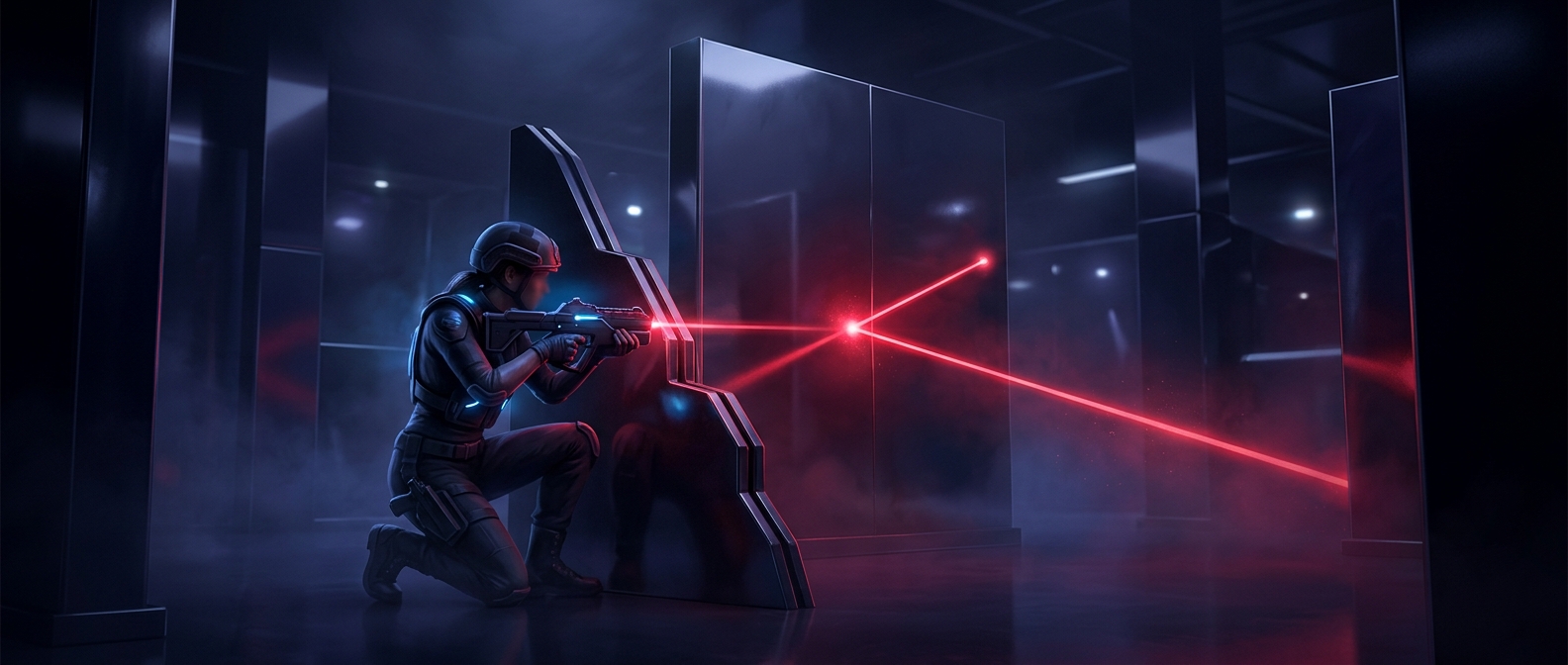
The shot in laser tag is usually a coded pulse of infrared light, the same kind of invisible light used by many remote controls—not a bullet and generally not a visible laser beam. A player’s blaster sends the pulse toward a sensor on another player’s vest or equipment. If the sensor receives a valid signal, the system records a hit and may briefly disable the tagged player’s ability to score.
The vest’s glow and the room’s dramatic lighting are separate from that invisible signal. Lights make players and equipment easier to see, while the sensors do the actual detection. Keeping the room dim helps the glowing gear stand out, but the game still depends on players having a clear enough view to aim and move safely.
The Rules Are Built Into the Equipment
Each blaster can identify its own shots, and the game system can use that information to decide whose score changes. That turns a chase into more than a test of aim: players must also manage where they move, when they fire, and how exposed their sensors are. The equipment handles the bookkeeping that would otherwise require referees to judge every hit.
Because the beam carries a signal rather than force, a hit is recognized electronically instead of felt. That makes the game easy to reset and lets players keep moving, while the visible vest lights provide immediate feedback in a dark arena. The central trick is that the spectacle is visible, but the tag itself is a message the sensors read.