How Bone Could Change an Iron Blade
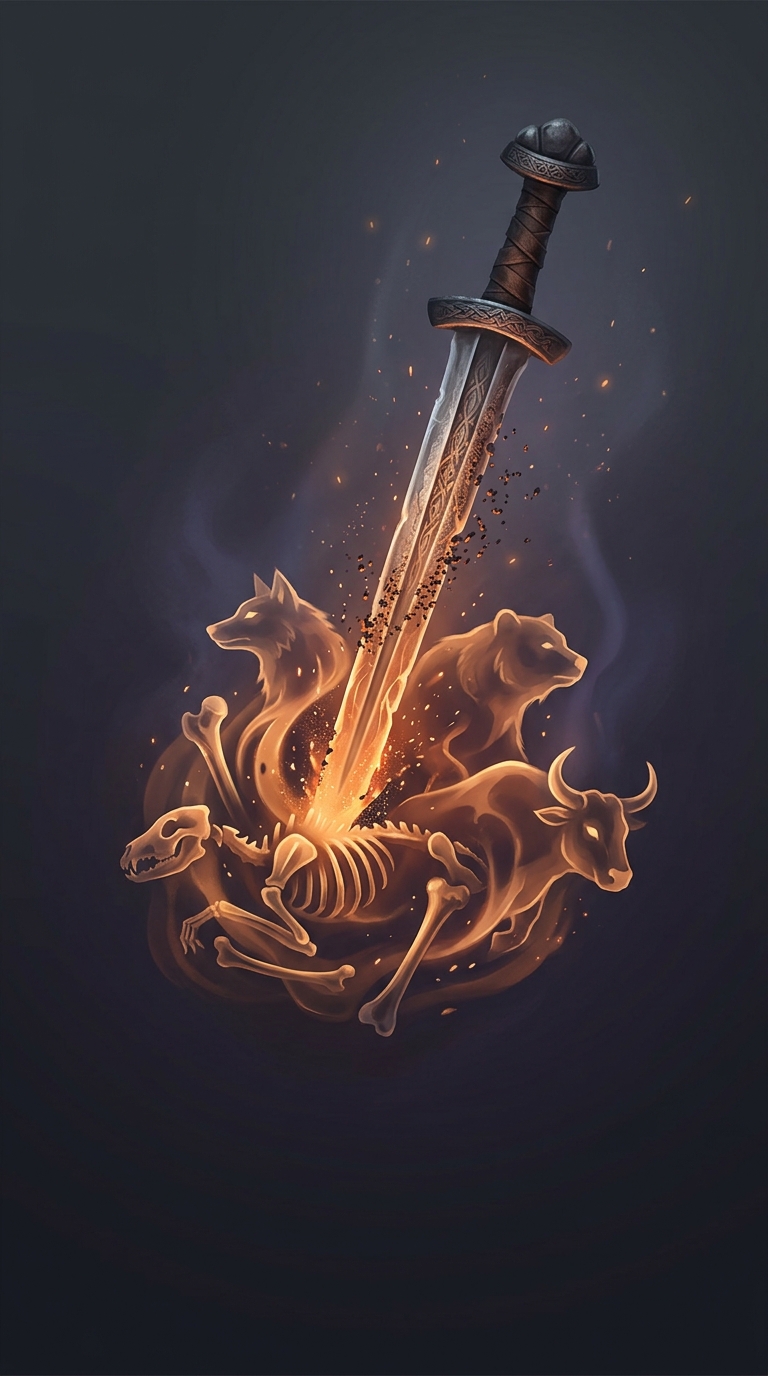
The idea behind bone-treated swords joined two kinds of power: the animal’s imagined force and a real chemical effect. Iron by itself is relatively soft. Add a small amount of carbon, and the metal becomes steel, which can take and hold a sharper edge.
Bone is not a ready-made supply of metal-strengthening carbon. Its mineral structure is mixed with collagen, an organic material. When bone is heated in a low-oxygen environment, that organic matter can char into carbon-rich material. If iron is heated alongside it, carbon can seep into the iron’s surface—a process called carburization. The result can be a harder outer layer around a tougher core.
Strength Had to Be Balanced
More carbon was not automatically better. Too little leaves iron comparatively soft; too much can make steel brittle, so a blade may crack rather than bend under stress. A smith’s challenge was to produce a useful balance and then shape and heat the blade so its edge and body could withstand different demands.
That practical uncertainty helps explain why the story could carry both a technical and a spiritual meaning. A blade made through a treatment involving an animal’s remains could be understood as carrying something of that animal into combat, while the carbon offered a material benefit. The belief and the craft were not necessarily separate explanations: one described what the weapon meant, the other what its treatment could do.
A Material Change with a Human Meaning
The important distinction is that bone could contribute to a blade’s carbon treatment, but the effect depended on how the metal was heated and worked. The bone did not simply make any sword stronger. The striking idea is the attempted fusion of two kinds of transformation: turning iron into a harder material, and turning an animal’s remains into a source of power for the person who carried the blade.