The sidewalk becomes part of the trick
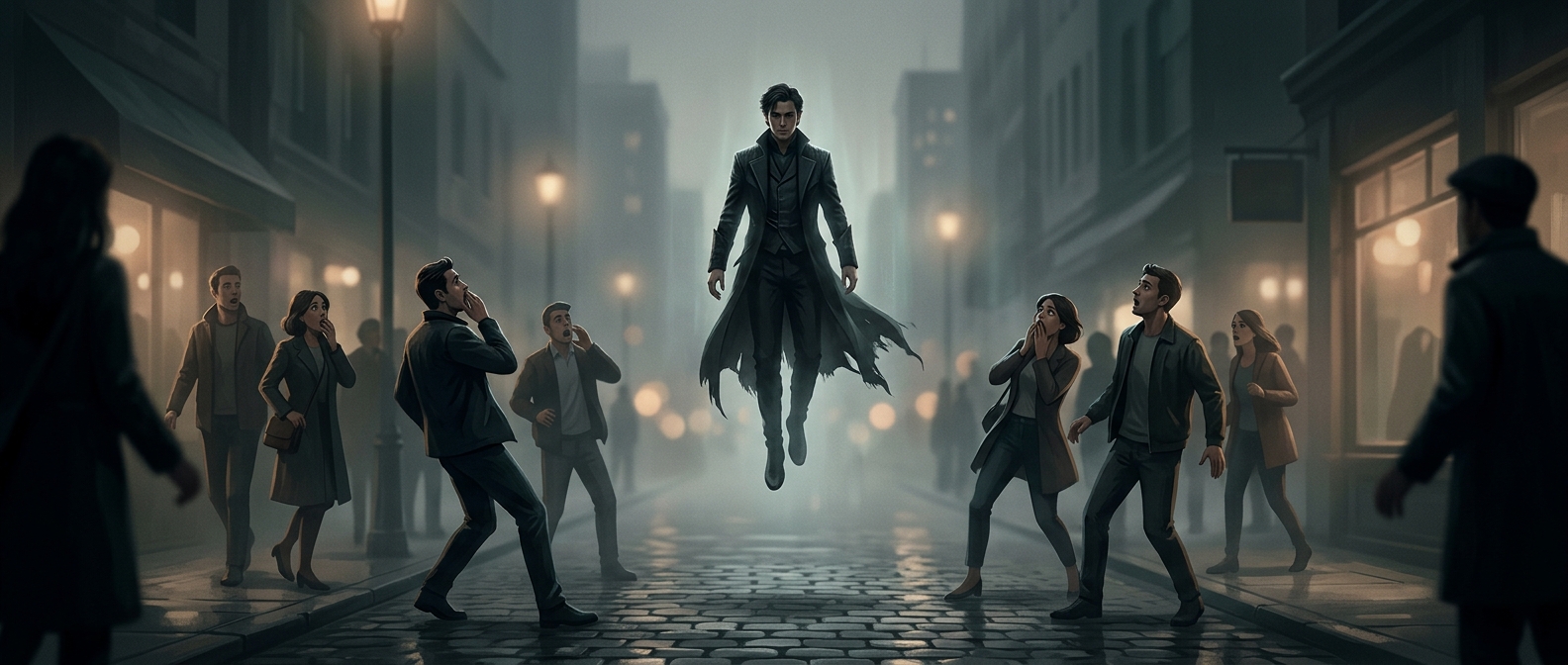
A street levitation usually depends less on lifting the whole body than on controlling what a passerby can see. In a familiar version, the performer turns partly away from the audience and rises briefly while balancing on one foot. The other foot, positioned in front of it, hides the supporting shoe and the small shift in balance that makes the pose possible.
From the intended viewing angle, both feet appear to leave the pavement. From the side or behind, the support is easier to spot. That is why the magician chooses a spot where people naturally gather in front—often a curb, wall, or open patch of sidewalk—and keeps the “flight” short.
A moment built for the eye
The performer’s body supplies the illusion’s scale. A raised coat hem, a bent knee, or an arm movement can make the body seem to lift as a single unit, while the hidden foot remains close to the ground. The audience is looking at the apparent gap beneath the shoes, not carefully tracking every point of contact.
The trick also works best when viewers see it in a quick burst. A sudden rise gives them little time to shift position and inspect the support; a long hover invites them to move around and test what they are seeing. The performance is therefore designed around a narrow viewing angle and a fleeting moment, not an impossible feat of strength.
That limitation is part of the street setting: people stop where they are, see the effect from roughly the same direction, and react before they have time to investigate.