The Box Is Part of the Performance
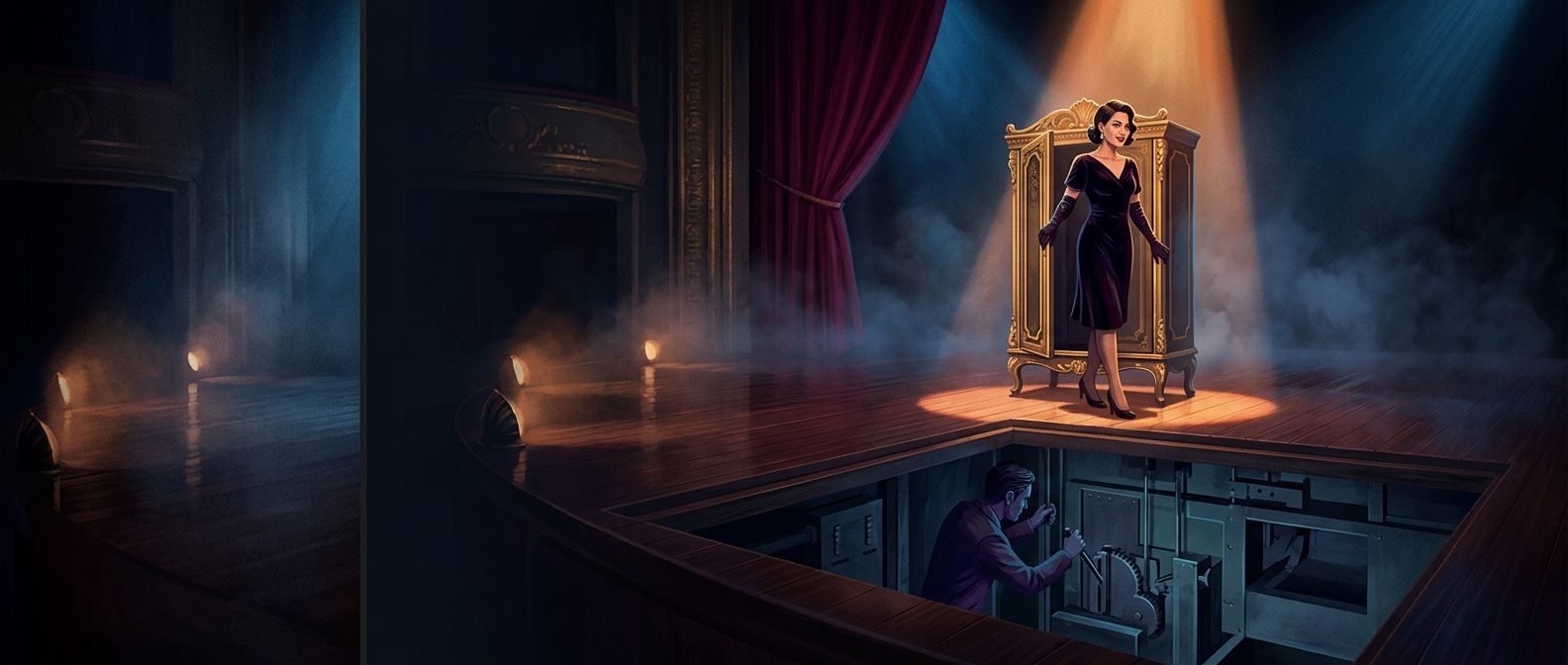
A hidden compartment has to solve two problems at once: give a performer somewhere to fit, and look like an ordinary, solid prop from the audience’s seats. That makes the carpenter’s job less about building a simple hollow box than controlling what viewers can see. The walls, seams, trim, and any openings must blend into the design, while the structure remains sturdy enough to handle movement onstage.
Sightlines Make the Secret Work
The illusion is planned around the audience’s point of view. A panel or opening that is obvious from the side may disappear when the crowd faces the stage, so the prop’s shape and placement matter as much as its construction. Lighting and the performer’s position can further draw attention toward the visible action and away from the compartment’s boundaries.
The hidden space also has to permit a practical entrance, exit, or change of position without revealing the method. Those movements are rehearsed as part of the act: a brief turn, gesture, or moment of distraction can give the performer time to move while the audience follows a different cue.
The result is a collaboration between carpentry and choreography. The compartment supplies the physical hiding place; the staging teaches the audience where to look. A successful prop does not merely conceal a person—it makes the concealment seem like the least likely explanation.