The Table Creates a Place for the Body to Go
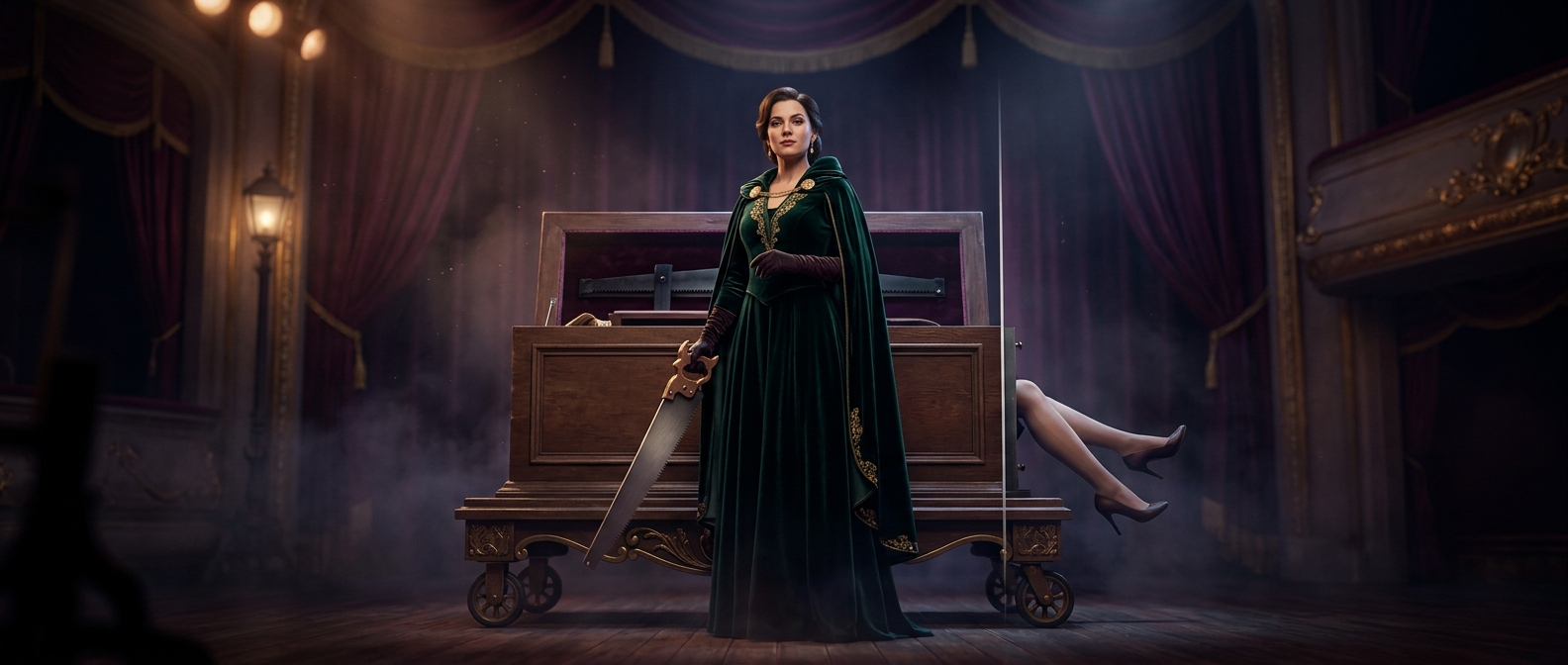
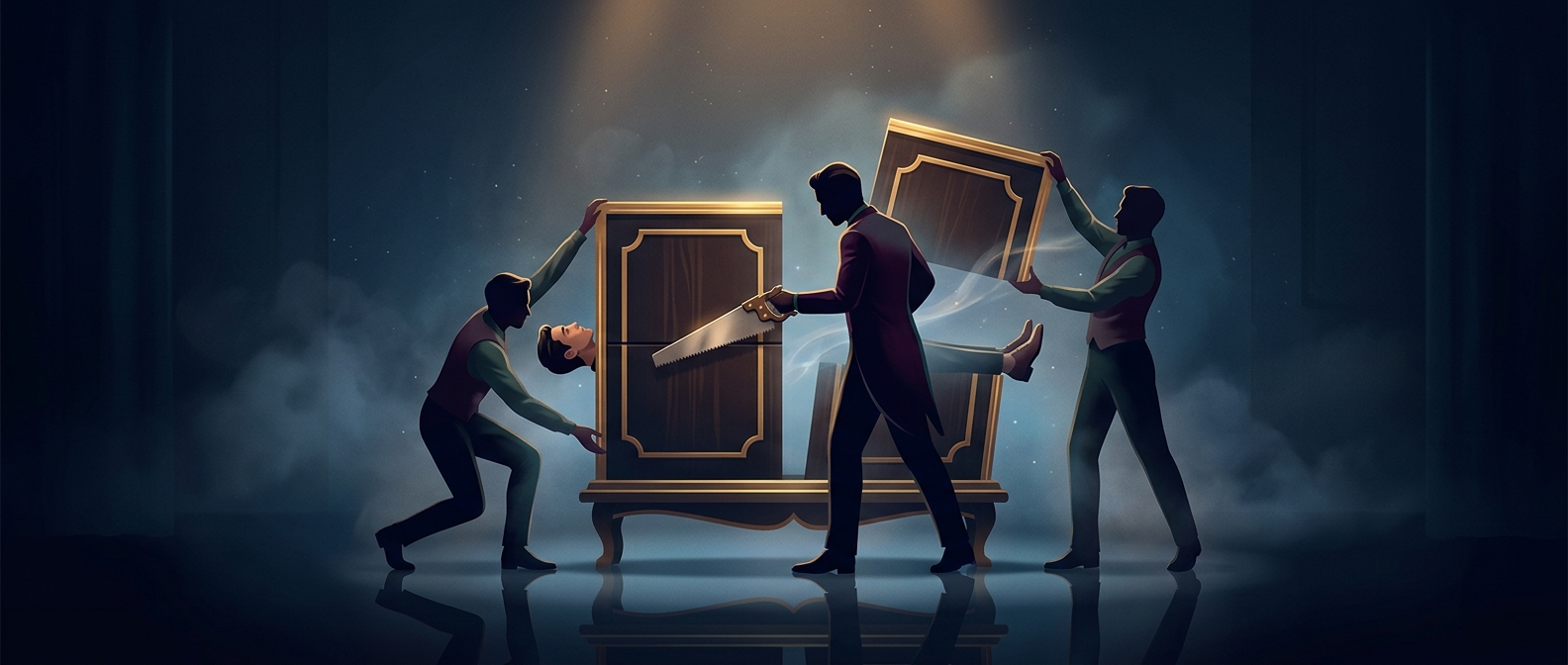
In this version of the sawing illusion, the oversized table is more than a prop: its hollow interior gives the assistant room to bend and tuck out of the audience’s expected sightline. From the seats, the person appears to lie straight across the tabletop, with legs extending where legs should be. The table’s depth lets the actual body occupy a different shape and position than that simple outline suggests.
That mismatch is the heart of the trick. The audience reads the visible legs as proof that the assistant’s whole body continues straight through the table, even though the furniture hides the space needed to arrange the body differently.
Why the Saw Seems to Confirm the Impossible
The saw supplies a clear visual story: it moves across the place where a body would be if the person were lying flat. But the blade’s path and the audience’s view are controlled by the setup. The table blocks the crucial angles, while the assistant’s flexibility makes the concealed arrangement possible. What spectators see is a convincing picture of a person in two parts, not an unobstructed view of what is happening inside the table.
The exact construction can vary, but the principle is consistent: combine concealment with a carefully managed outline. The trick works because viewers instinctively fill in the unseen space between the visible upper body and the apparent legs.
A Stage Illusion Built from Sightlines
This method depends on more than a secret compartment. The performer must keep the table between the audience and the hidden arrangement, and the assistant must hold a position that remains comfortable and convincing. The table’s size, the placement of the apparent legs, and the angle from which the audience watches all help sell the illusion.
The memorable image—a person apparently divided while both ends remain visible—comes from making the audience trust what the table allows them to see, and assume the rest.