Why the First Sawing Illusion Felt So Real
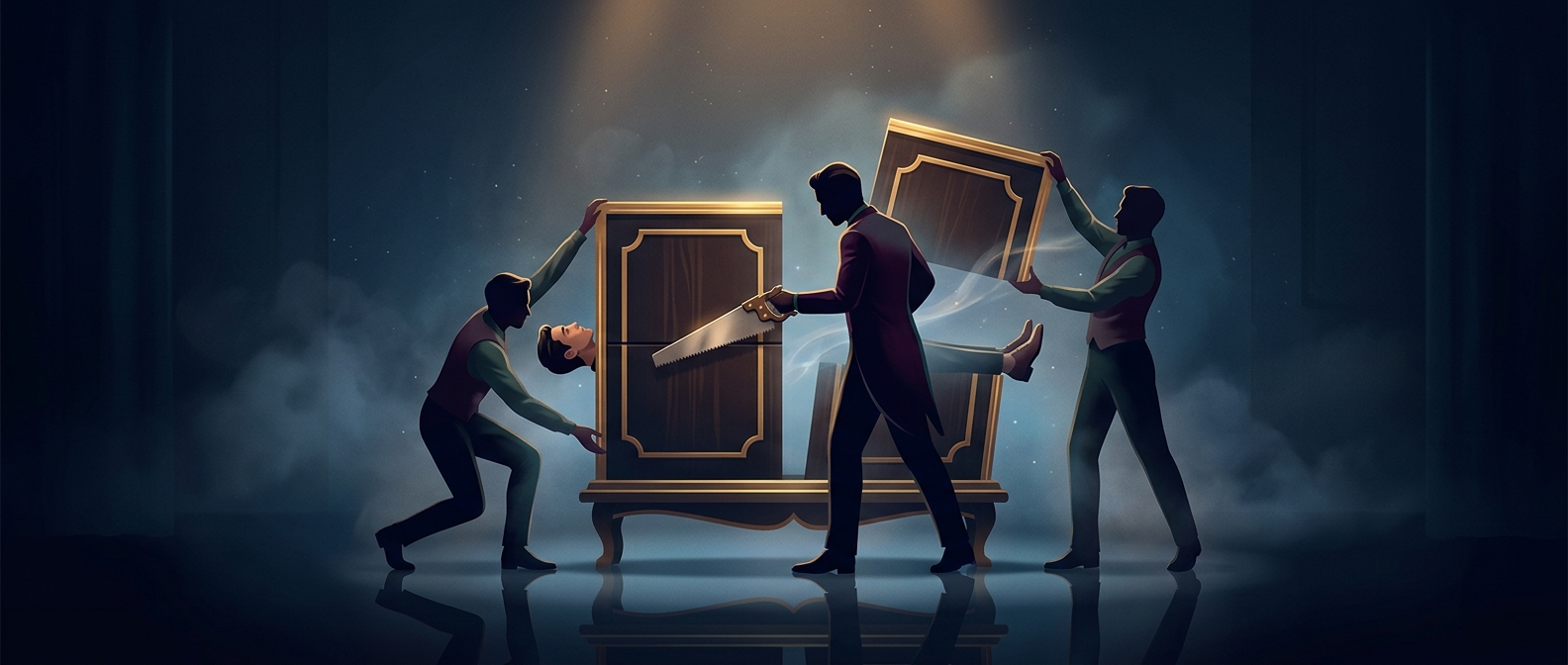
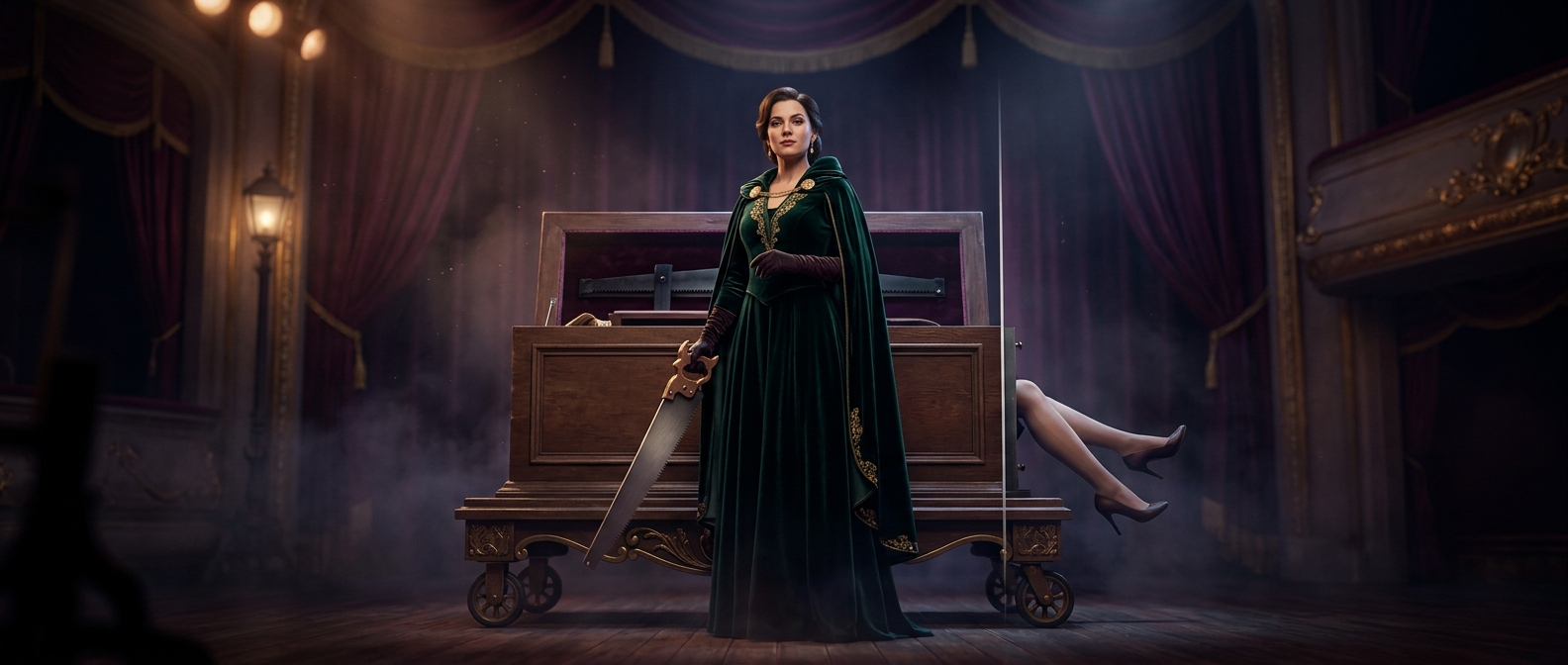
When the sawing-in-half illusion appeared onstage in the early 20th century, it turned a familiar prop—the magician’s box—into a scene of apparent bodily danger. The audience did not simply watch a person vanish or reappear. They saw someone restrained, a large saw brought down, and the body seemingly divided. That physical sequence made the trick unusually hard to watch, even though no injury occurred.
The Box Made the Impossible Seem Plausible
The effect depends on concealment and perspective, not on cutting a person. The assistant’s position and the box’s hidden space allow the audience to see a convincing arrangement while missing how the body is protected. The saw, restraints, and visible ends of the person supply a clear story; the magician’s timing and control of sightlines keep the method out of view. Different versions use different arrangements, but the central trick is the same: what looks like a single exposed body is not presented to the audience as it really is.
That combination of a recognizable tool and an apparently vulnerable person gave the illusion its shock. The audience could understand exactly what seemed to be happening, while the concealed mechanics denied them a way to make sense of it. The result was suspense without actual harm—and a stage image memorable enough to become one of magic’s enduring set pieces.