The hinge is part of the escape route
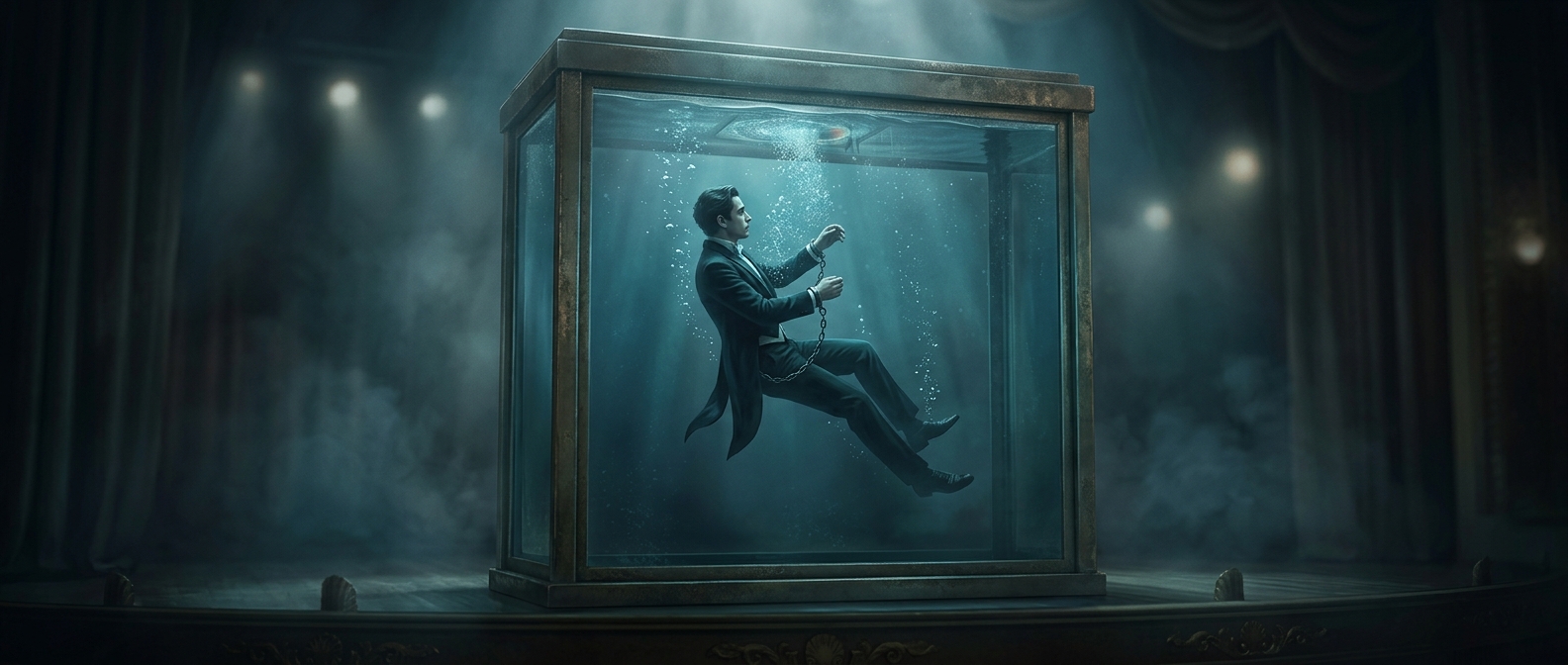
A tank lid can look locked in place while relying on a small, removable fastener at each hinge. A quick-release pin holds the hinge components together during the act; pull it free, and the lid can lift away instead of remaining attached to the tank. Because the pins sit in the hinges, they can be difficult for spectators to notice from outside.
That detail changes what “sealed” means. The lid may appear secured, but the performer’s route out depends on a release built into the hardware—not on breaking the tank or forcing the lid open. The escape is designed into the apparatus.
Illusion and access must coexist
The hardware has to do two jobs that pull in opposite directions: keep the lid looking firmly shut to the audience, yet allow it to move when the performer needs to get out. Concealing the release helps preserve the image of an impossible confinement; placing it at the hinge gives the performer a way to free the lid from within.
The pin is a small component with a large consequence. In a water-tank escape, the visible lock can sell the danger, while an unseen release determines whether the lid can actually be lifted.