Why a Hidden Coin Can Go Unnoticed
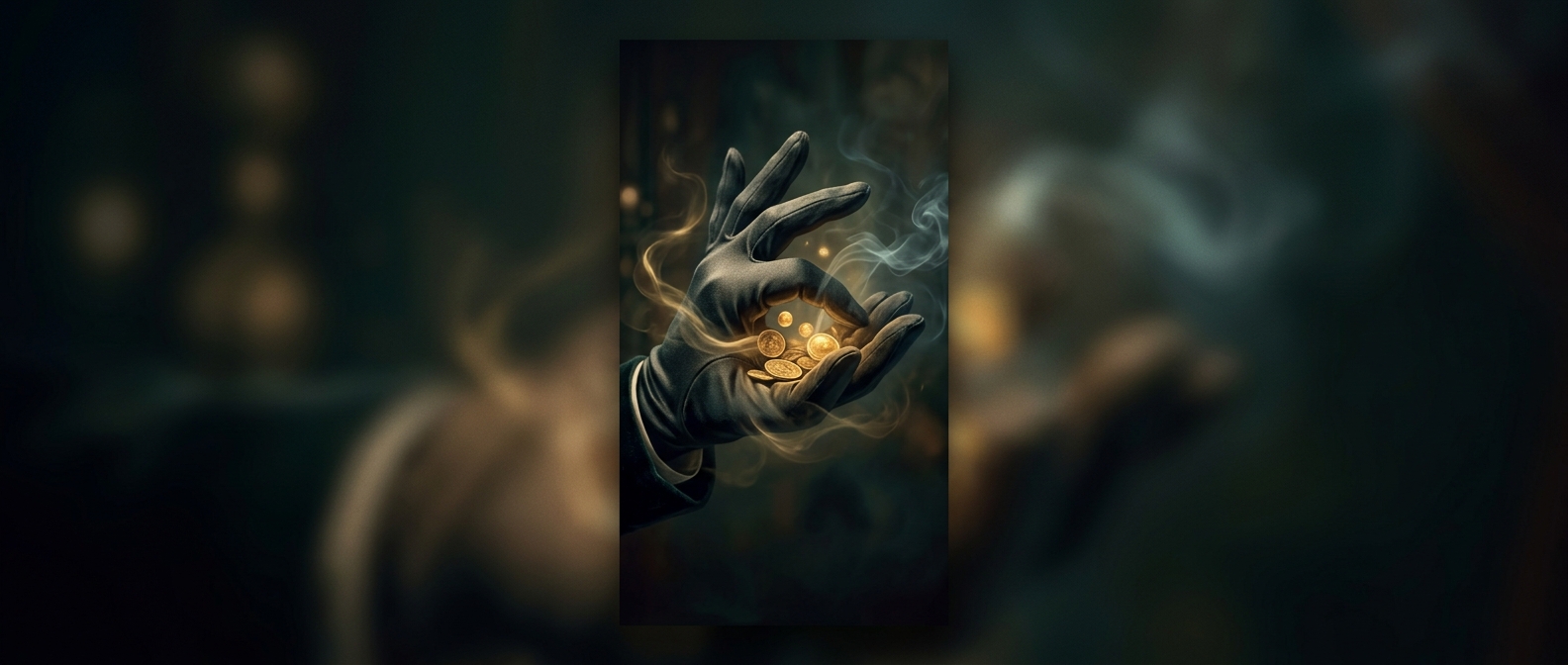
Palming works because an audience does not inspect a hand as if it were a photograph. People infer what a hand is doing from its shape, movement, and role in the moment. If it behaves like an ordinary hand—reaching, gesturing, or resting naturally—the concealed object may not become the focus of attention.
The magician’s challenge is to keep the coin secure without making the hand look stiff. Excessive pressure can tighten the fingers or alter the palm’s outline; an unnatural pose gives viewers a reason to look more closely. The concealment is therefore not just about where the coin sits. It also depends on controlling the visible signs that might reveal it.
The Whole Gesture Matters
A hand is seen from a particular angle and against a changing background. A position that hides a coin from the front may expose it from the side, so performers rehearse movements with the audience’s likely sightlines in mind. Lighting, distance, and the size of the object can all affect how convincing the concealment appears.
Attention is another part of the method. A clear action elsewhere—a gesture, a question, or an important-looking movement—can give viewers something more relevant to follow. This does not make people foolish; it uses the way attention naturally selects a few details from a busy scene.
The strongest palm is thus less a frozen hiding place than a practiced way of carrying the hand through a routine. When the hand’s movement looks unremarkable, the audience has little reason to suspect that the coin has been there all along.