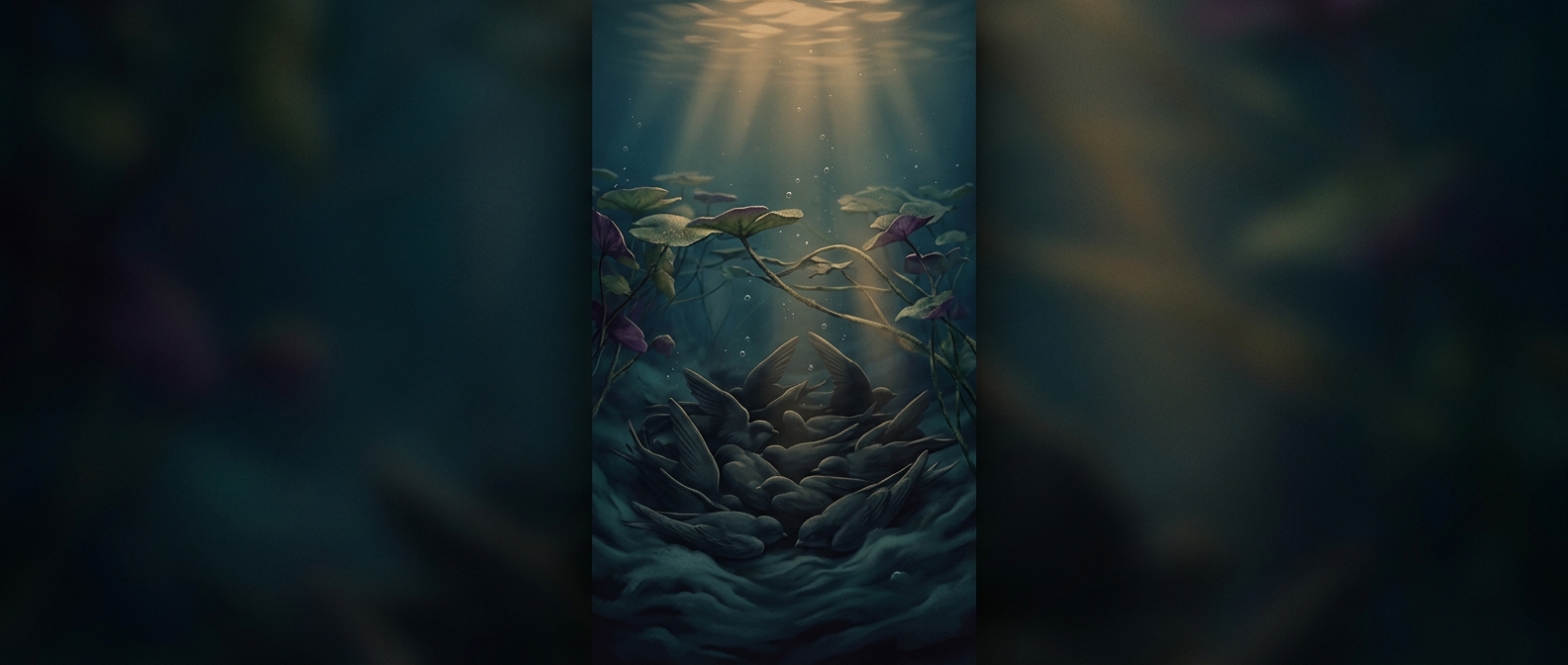
How a Missing Swallow Became an Underwater Sleeper
For people watching a village pond, the seasonal puzzle was vivid: swallows filled the summer sky, then disappeared, while the same kind of birds seemed to return months later. Without knowledge of migration routes, a bird’s sudden absence could look less like travel than a change in where it spent the winter. The pond offered a tidy answer: perhaps swallows sheltered in its mud until spring.
The idea belonged to an older way of explaining nature, in which an animal’s disappearance could be inferred from its appearance at another time. If no one had followed a bird beyond the familiar landscape, the gap between autumn and spring invited a hidden-life story. Reports and observations of birds gathering near water could seem to support it, even though gathering at a pond was not evidence that they went beneath the surface.
What Migration Explains
Swallows do not need a secret winter refuge. As colder weather reduces the flying insects they eat, they leave regions where food becomes scarce and travel to warmer areas. In spring, the return of insects makes those breeding grounds useful again. The journey is difficult to observe because it unfolds across great distances, often after the birds have vanished from the places where people know them.
The underwater theory was therefore an understandable inference from incomplete observation, not a description of swallow biology. Establishing migration required more than noticing that birds disappeared and reappeared: observers had to connect those seasonal sightings across places and time. The lasting lesson is concrete: a seasonal absence can conceal a journey, not a transformation. An empty pond could not tell observers where the swallows had gone.