Why the neighboring train can make yours seem to move
When the train beside you starts rolling, its windows and doors slide across your view. Because the two trains are close together and fill much of what you can see, that motion can become your strongest clue about movement. For a moment, your brain may interpret it as your own train moving the other way.
This is a visual reference-frame illusion: motion is judged relative to something else. If the neighboring train moves left across your view, that change is compatible with the idea that you are moving right while it stays still. In a station, either train might be the one departing, so the moving train alone does not settle which one it is.
Your senses do not all provide the same evidence
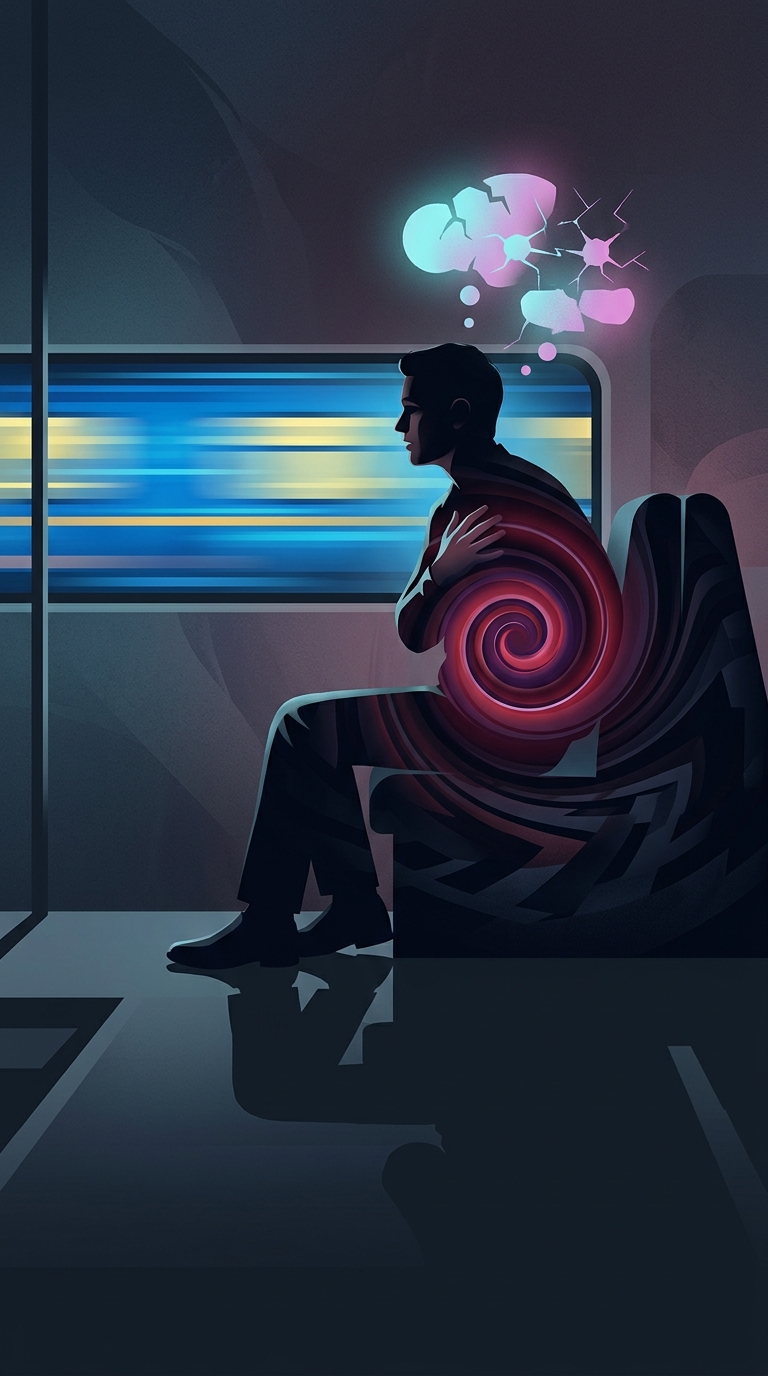
Your eyes are reporting motion, but your body may report that you are still. The balance system in your inner ear detects changes in acceleration; pressure against the seat and the feel of the floor offer additional clues. A train gliding smoothly may produce little sensation at first, while the nearby train’s movement is visually obvious.
The brain has to combine these signals quickly. When the outside view is dominated by another train, it can briefly give that visual evidence more weight than the subtler bodily cues. The result can feel convincing—not because your body has actually started rolling, but because the visual scene supports that interpretation.
A wider view can resolve the mix-up
Look beyond the neighboring train, toward the platform, a building, or another fixed feature. If the platform stays still while the other train moves, that gives your brain a more stable reference. The apparent motion often clears up once the scene supplies enough context.
The same visual ambiguity explains why a departing train can make passengers in a stationary train reach for the brake or feel a jolt of alarm. A striking view of motion is not, by itself, proof that you are moving.