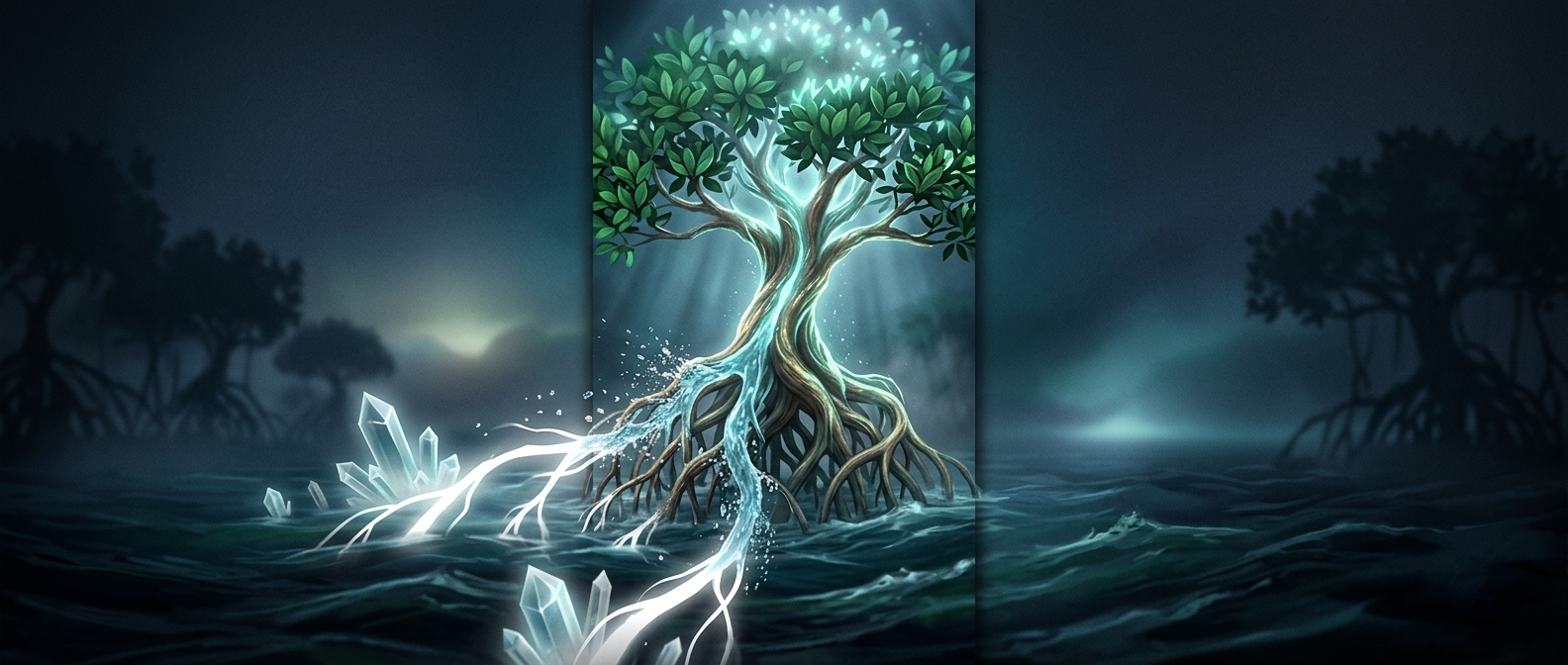
The root is a selective checkpoint
Seawater is not simply a convenient drink for a mangrove. Its dissolved salts make water harder for roots to absorb: water tends to move toward the saltier side of a membrane, so a salty root zone can pull moisture away from plant cells. Mangroves must take up enough water without letting excess sodium and chloride disrupt the chemistry their cells need to function.
In salt-excluding species, the root’s outer tissues and membranes act as a selective checkpoint. They impede much of the salt while water crosses into the plant. This is not a perfect seal; some salt can still enter. The plant also adjusts the chemistry inside its cells, helping retain water and keep essential processes running.
Other routes for salt out
Some mangroves move absorbed salt to specialized glands on their leaves. The glands release it onto the leaf surface, where it can dry into crystals or be washed away by rain. In other species, salt can build up in older leaves, which the tree later drops. These approaches shift the burden from the root to parts of the plant that can be discharged or shed.
The strategies are not interchangeable plumbing tricks: they reflect different ways of managing the same tight constraint. A mangrove must conserve water in a salty habitat while preventing salt from accumulating to damaging levels. That balance helps explain why the leaves may look dusty with crystals—or why an aging leaf can carry away some of the salt the tree took in.