Why a Headless Mantis Male Can Keep Mating
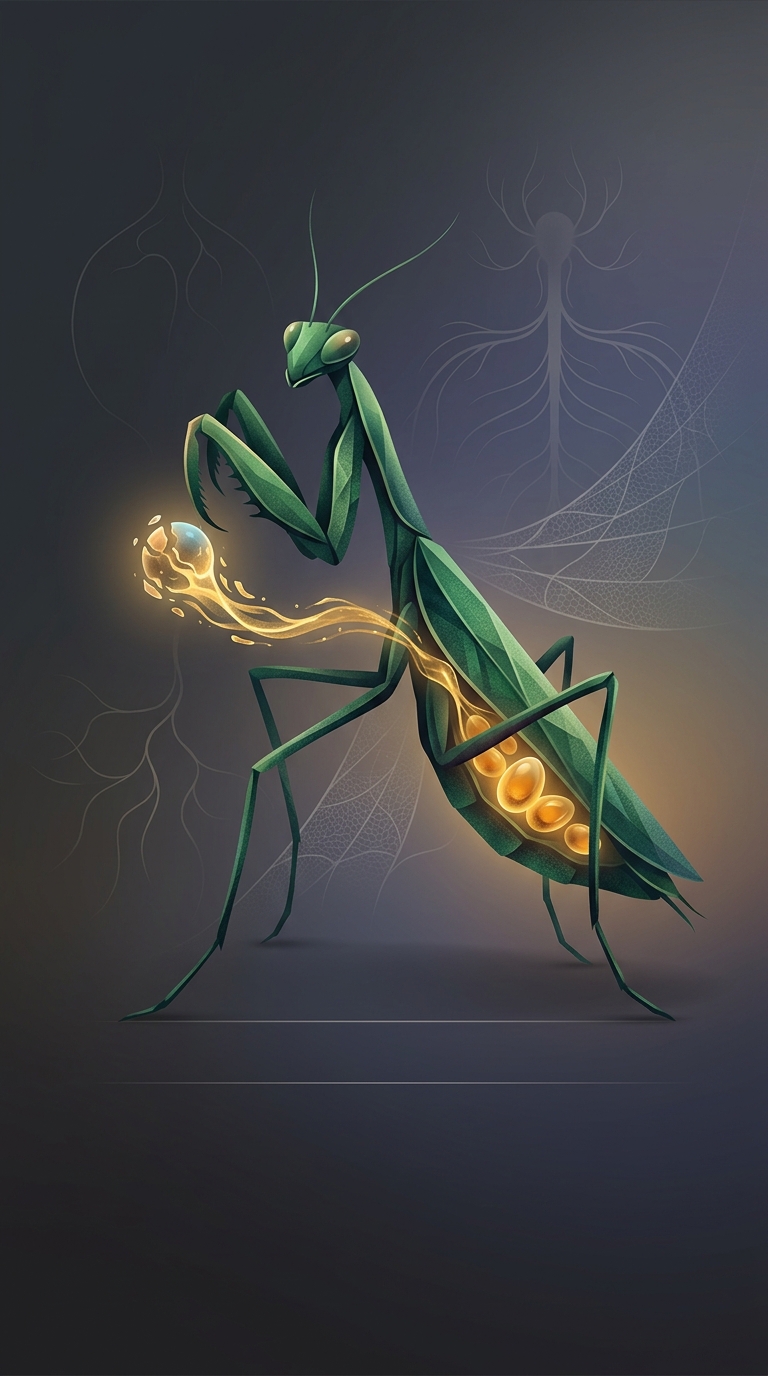
A praying mantis does not need its brain to direct every movement. Some of the nerve circuits that coordinate mating are located in the body, so they can keep producing the characteristic movements even after the male’s head is gone. This is an example of local control: parts of the nervous system can run a limited action without continual instructions from the brain.
That does not mean the male is unaffected. The head contains the brain and important sensory organs; losing it is catastrophic. What can continue is a narrow, already-established pattern of movement, not normal awareness or behavior.
How Cannibalism Can Affect Mating
Sexual cannibalism is the female eating the male during or around mating. If she attacks, the male may continue mating movements while being eaten, and the meal can provide the female with nutrients. Researchers have proposed that those nutrients may support egg production, though the outcome depends on the species and circumstances.
The attack is not an inevitable part of mating. Many males mate and escape alive. Whether cannibalism occurs can vary with the mantis species and conditions such as the female’s nutritional state and the encounter itself. The dramatic head-first attack is therefore one possible outcome, not the standard ending of every mating.
What the Behavior Reveals About the Nervous System
Mantis mating makes a useful distinction visible: a complex-looking action can be assembled from simpler nerve circuits rather than controlled moment by moment by a single central command. When the brain is removed, those circuits may still work briefly—but only within their limits.
That is why a male can appear to keep mating after losing his head. The movement is not evidence that the whole animal is functioning normally; it shows that some bodily circuits can continue a specific routine on their own.