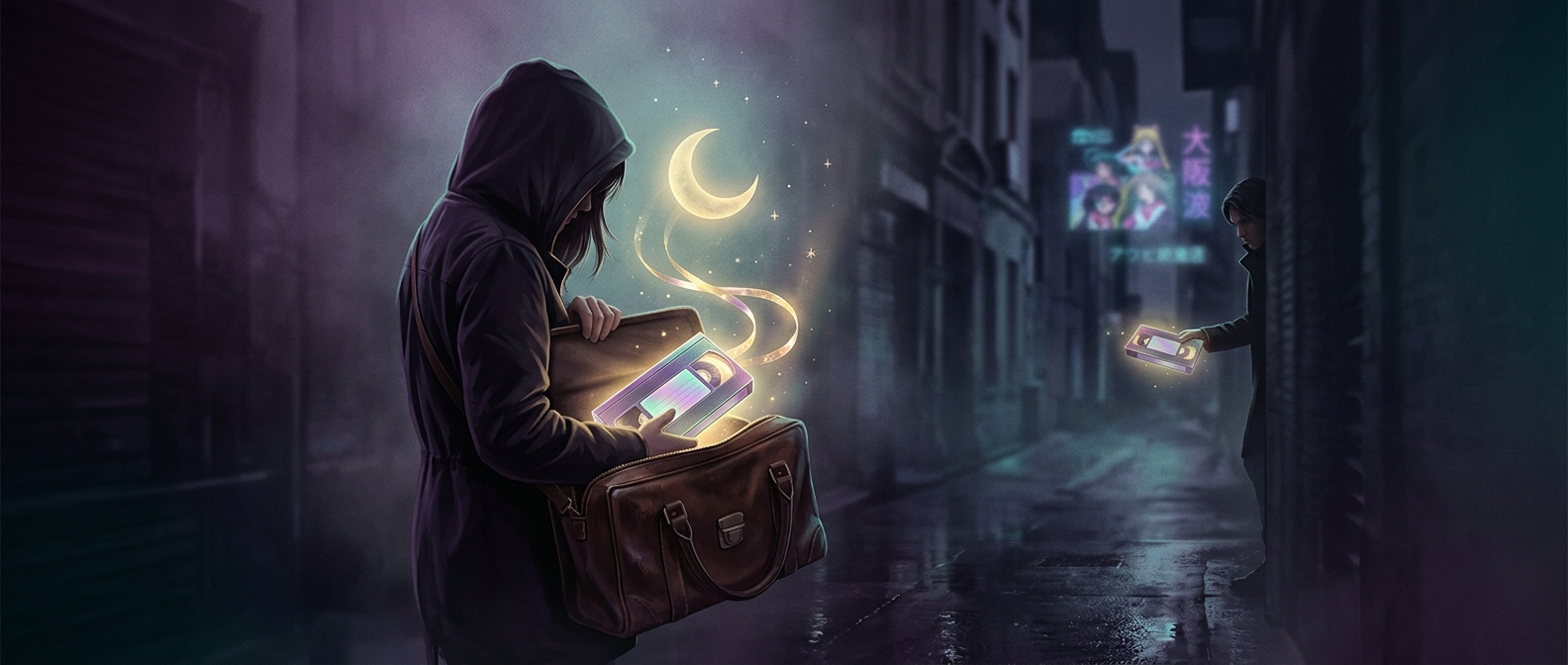
A VCR could become a tiny distribution network
In the pre-streaming era, an anime series might be easy to find in Japan and nearly impossible to watch elsewhere. A fan with a Japanese tape could translate the dialogue, add subtitles, and circulate copies to viewers who had no local release to buy. What began as a private viewing project could travel from one person’s living room to a network of fans in other cities or countries.
The work took more than translating the words. Someone had to listen closely, match each line to the moment it was spoken, and make the text readable on screen. Fans used computers and video equipment to prepare subtitled versions; VCRs then served both to record and duplicate the finished tapes. Copying from one machine to another made each new batch possible, though every generation could lose picture and sound quality.
The tape carried more than the episode
A mailed cassette was a physical link between people who might never meet. Fans could trade tapes, pass along new episodes, and share information about series that local broadcasters and video shops ignored. That circulation helped create audiences before many titles had official English-language releases—and gave viewers a way to encounter anime beyond the limited selection of dubbed programs available to them.
The process also shaped how fans experienced the medium. Subtitles preserved the original spoken performances, while the tape’s journey made viewing dependent on a community: someone had to translate, copy, and send the next episode. When anime later became easier to license and distribute, that audience was already there. The bootleg tape was not just a low-quality substitute; it was often the first route by which a series reached the people who would ask for more.