A person turns the intersection into a conversation
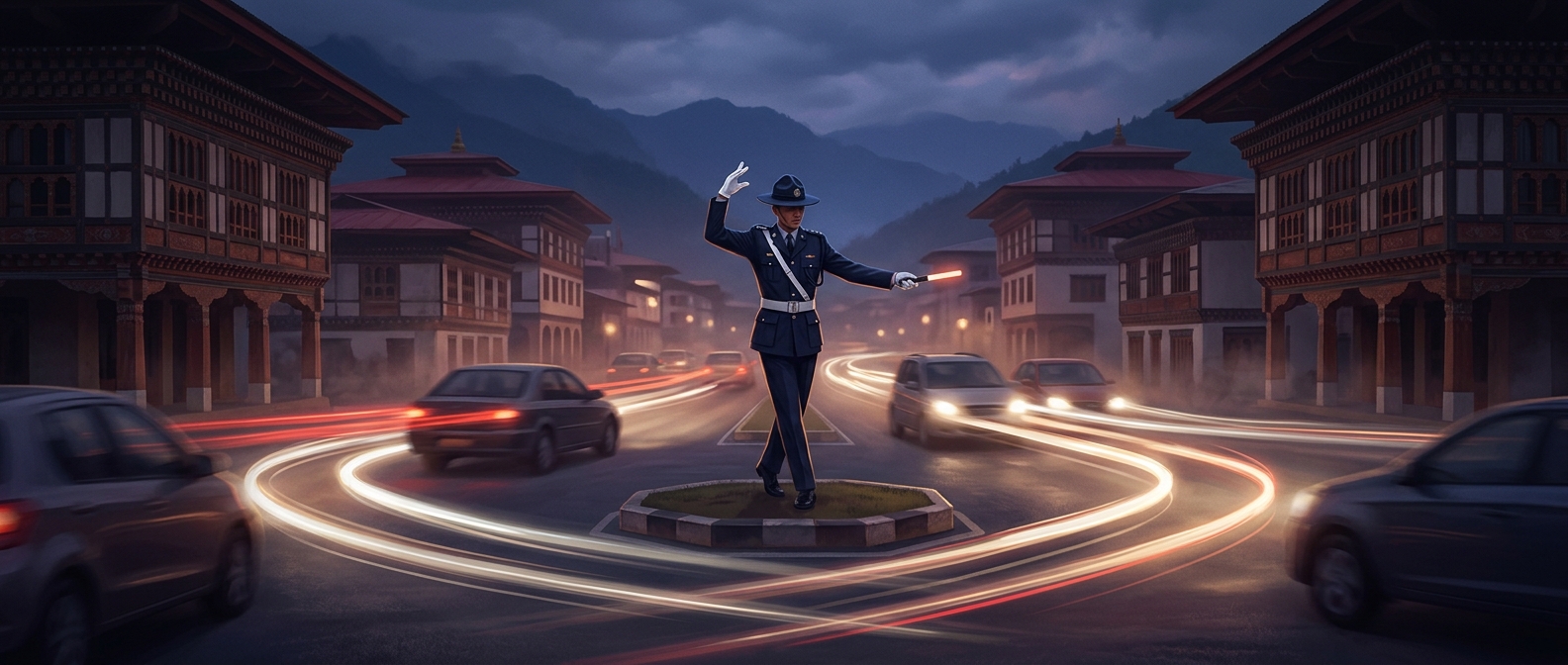
At a signalized intersection, a programmed cycle assigns each direction its turn, whether or not cars are waiting. A traffic officer can respond in real time: hold one stream while a queue clears, then use clear hand signals to release the next. Drivers read the officer rather than a changing light, and the officer can adjust the sequence to what is actually happening on the road.
That flexibility comes with a human requirement. The officer must stay visible, communicate unambiguously, and keep track of several approaches at once. Unlike a traffic light, a person cannot direct an intersection unattended or maintain the same schedule through every shift.
Why the human touch mattered in Thimphu
The trial installation was not rejected because lights could not control traffic. The objection was that they felt too impersonal. Having an officer direct vehicles keeps the interaction visibly human: motorists respond to someone standing in the street, not just to a color changing overhead.
The result is a striking tradeoff. A light offers consistency; an officer offers judgment and presence. In Thimphu, the choice means that the rhythm of an intersection depends on a person’s gestures—and that a familiar civic encounter remains part of the city’s everyday movement.